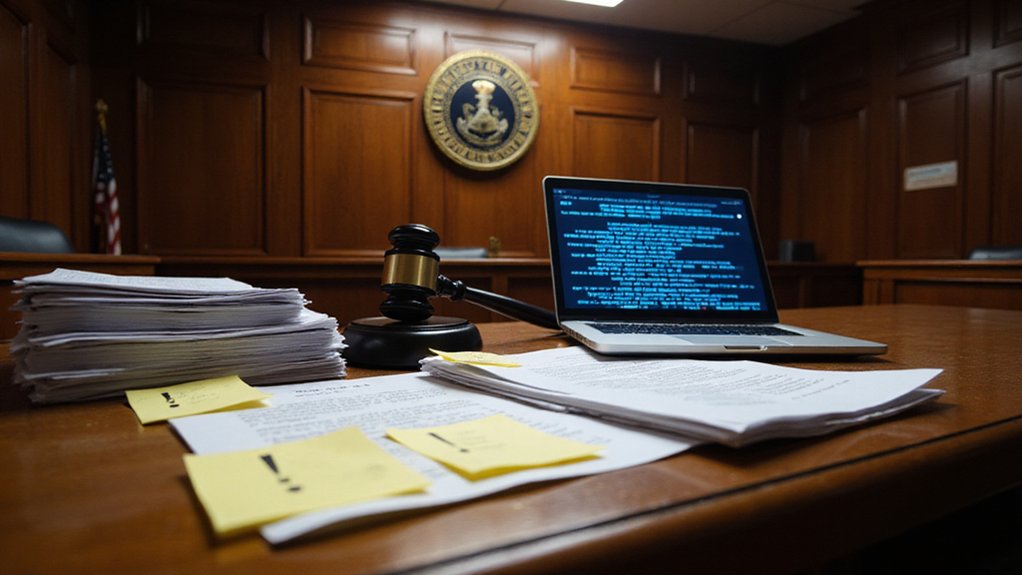

While AI technology itself is neutral, humans make decisions that drive its risks. Companies often prioritize profit over safety when developing AI systems. This leads to issues like biased algorithms, job displacement, and the spread of misinformation. The lack of adequate regulations allows powerful tech giants to operate with minimal oversight. Safety concerns grow as AI becomes more integrated into critical areas like military applications. The true challenge lies in how we control these powerful tools.
While the rapid advancement of artificial intelligence has sparked fears about machines taking over, the real threat may be closer to home. Experts point to growing evidence that human decisions behind AI systems pose the greatest risks to society. Companies and governments are using narrow AI tools to manipulate people through disinformation campaigns and invasive surveillance programs.
The technology itself isn’t making ethical choices – humans are. Developers often prioritize power and profit over safety, creating systems without proper safeguards. This has led to an increase in AI-powered crimes like deepfakes and sophisticated fraud schemes. The lack of transparency in these algorithms makes it difficult to identify when harm is occurring. People’s reliance on these tools reflects a concerning trend of digital dependence that distances individuals from authentic human experiences. Effective accountability structures are essential for ensuring those who develop AI systems take responsibility for their impacts.
Meanwhile, AI’s socioeconomic impact continues to grow. Many workers face unemployment as automation replaces human labor across industries. Algorithmic decision-making in hiring, lending, and policing often reinforces existing biases, widening the gap between privileged and marginalized groups. As tech giants dominate AI development, wealth becomes increasingly concentrated.
Regulatory frameworks haven’t kept pace with technological advancement. Corporations deploy powerful AI systems with minimal oversight, and global enforcement mechanisms remain weak. Some experts have called for pauses in developing self-improving AI until proper safety measures exist, especially for military applications where human judgment is removed from critical decisions. Current regulations are far more focused on present risks rather than addressing potential existential threats to humanity.
AI’s influence on creative industries raises additional concerns. Machine-generated content is homogenizing thought across platforms, while dependence on AI tools may erode human problem-solving abilities. The emotional depth and nuance that define human creativity are increasingly replaced by algorithmic efficiency.
Perhaps most troubling is AI’s effect on information integrity. Engagement-driven algorithms create echo chambers that deepen societal divisions and spread misinformation. These systems don’t understand the ethical implications of the content they promote.
As AI development accelerates, the focus must shift to the human intentions guiding these technologies. The true danger isn’t in the tools themselves but in how people choose to use them.