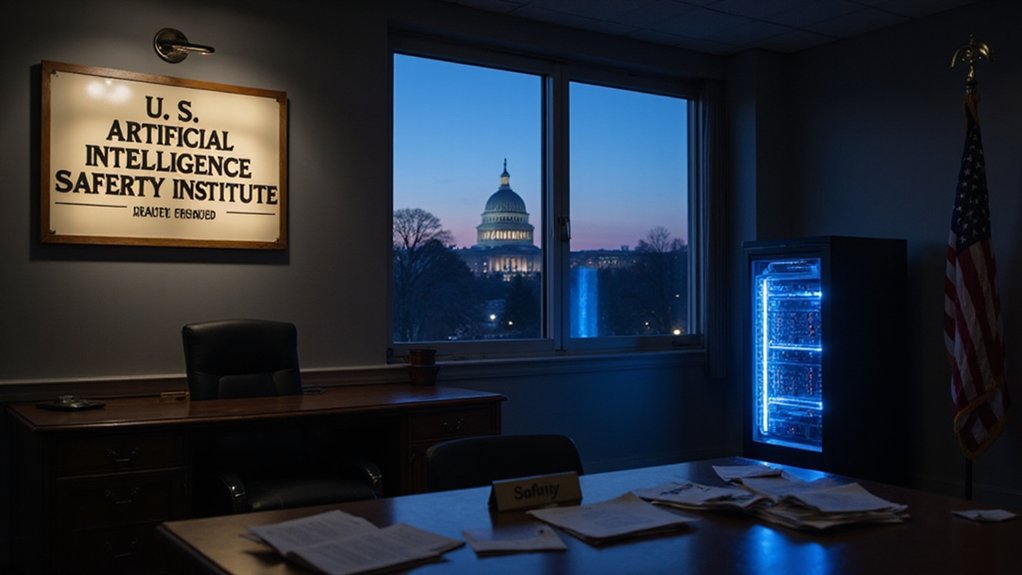

In a swift policy reversal revealing the new administration’s priorities, the U.S. government has officially stripped the word “safety” from its premier AI research body. The Commerce Department announced on June 3, 2025, that the U.S. Artificial Intelligence Safety Institute would now be known as the Center for AI Standards and Innovation. Goodbye safety, hello innovation.
The rebranding comes amid significant leadership turbulence. Elizabeth Kelly, the institute’s director and a pivotal figure in U.S. artificial intelligence policy, resigned back in February 2025. Her departure created a vacuum at the top of an organization now undergoing a fundamental identity shift. Perfect timing, right?
Leadership vacuum hits right as the AI organization abandons safety for a shiny new innovation-focused rebrand.
Commerce Secretary Howard Lutnick confirmed the name change on June 4, framing it as liberation for AI developers. “Innovators will no longer be limited” by regulations, he declared. Lutnick criticized what he called “censorship and regulations” previously implemented “under the guise of national security.” Because who needs safety when you can have profits?
The institute, originally established in 2023 through a Biden administration executive order, was designed to focus on “Safe, Secure, and Trustworthy Development and Use of AI.” Now, CAISI will “evaluate and enhance U.S. innovation” in commercial AI systems while maintaining security standards. This name change echoes a similar move by the UK, which renamed its AI Safety Institute to AI Security Institute for clarity about addressing tangible risks. The shift happens approximately 18 months after the institute’s creation.
Despite the name change, the AI Safety Institute Consortium continues operating with over 280 member organizations spanning industry, academia, nonprofits, and government. They met in person for the first time at the University of Maryland in December 2024, developing science-based guidelines for AI.
Policy experts have noted the significance of these changes. In March 2025, the Brookings Institution emphasized that the institute is “key to U.S. leadership” in secure AI development. The selection of new leadership is expected to further clarify the administration’s AI governance approach. This leadership change represents a critical national priority as questions about AI safety and regulation remain unresolved.
For now, the message is clear: safety’s out, innovation’s in. We’ll see how that works out.
References
- https://www.nist.gov/caisi/artificial-intelligence-safety-institute-consortium-aisic
- https://www.brookings.edu/articles/a-technical-ai-government-agency-plays-a-vital-role-in-advancing-ai-innovation-and-trustworthiness/
- https://getcoai.com/news/resignation-of-us-ai-safety-institute-chief-throws-policy-direction-in-question/
- https://www.meritalk.com/articles/commerce-dept-ditches-safety-in-aisi-rebrand/
- https://www.nextgov.com/artificial-intelligence/2025/06/commerce-rebrands-its-ai-safety-institute/405803/