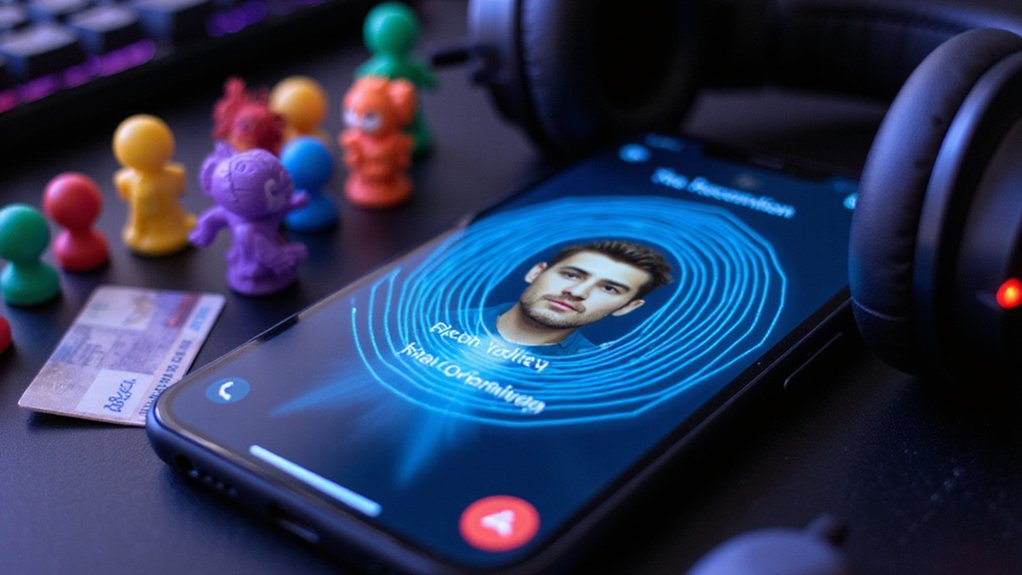

While millions of kids flock to the virtual playground that is Roblox, they’re now facing an unexpected gatekeeper: their own faces. The popular gaming platform has implemented a controversial new policy requiring users to verify their age through facial recognition technology or government ID if they want access to enhanced chat features. No face scan? No ID upload? No chatting freely with friends. Simple as that.
The feature in question, “Trusted Connections,” allows users 13 and older to communicate without the stringent filters typically applied to younger players. Kids under 13 remain stuck with heavily restricted communication options. Want to talk more freely? Better be ready to let Roblox scan your face.
Welcome to the new Roblox reality: show your face, or accept that you’ll never speak freely with friends.
Parents are caught in the crossfire. Roblox has rolled out new tools for them—spending notifications, social connection insights, screen time trackers—presumably to sweeten the deal. But these enhancements don’t address the fundamental privacy trade-off being forced on families: surrender biometric data or accept limited functionality.
The timing isn’t coincidental. Roblox faces mounting pressure from regulators and lawmakers concerned about child safety. Florida’s Attorney General recently slapped the company with a subpoena over concerns about inappropriate content reaching minors. Their response? Create a system that collects even more sensitive data from young users. Brilliant. The platform’s new measures were implemented after numerous reports of predatory behavior toward minors on the platform.
When users join virtual events, Roblox shares their username, email, and user ID with third-party partners. Add biometric data to that mix, and the privacy implications become more concerning. All of this falls under their privacy policy—that thing nobody reads. This pattern mirrors broader AI privacy concerns seen across the tech industry, where personal data is increasingly vulnerable to breaches and misuse.
The real twist? These enhanced chat features aren’t some premium upgrade—they’re basic functionality locked behind a biometric paywall. Can’t verify? Can’t chat properly. Tough luck.
Roblox frames these changes as safety measures. Critics see a data grab dressed in child protection clothing. The platform maintains that the video selfies for age estimation are analyzed securely without storing facial data permanently. Either way, the price of admission to this digital playground now includes something deeply personal: your face or your government ID. Play on those terms, or don’t play at all.
References
- https://techcrunch.com/2025/07/17/roblox-introduces-new-safeguards-for-teens-including-age-estimation-tech/
- https://corp.roblox.com/newsroom/2025/07/advancing-safety-on-roblox-with-age-based-communication
- https://devforum.roblox.com/t/updating-experience-guideline-policies-to-keep-our-younger-users-safe/3249079
- https://en.help.roblox.com/hc/en-us/articles/115004630823-Roblox-Privacy-and-Cookie-Policy
- https://corp.roblox.com/newsroom/2025/07/roblox-ai-moderation-massive-scale