Job seekers face a new reality as artificial intelligence transforms the hiring process. Over 80% of companies plan to use AI to review resumes in 2025. About 70% will integrate AI into their entire hiring process. Major businesses now use AI to filter resumes before any human sees them.
The numbers show a considerable shift in recruitment. Currently, 24% of firms rely on AI to conduct entire interviews. That figure will jump to 29% by year’s end. Most recruiters let AI reject candidates without human oversight. This raises concerns about bias and transparency in hiring decisions. Studies show AI favors white-associated names 85% more than Black-associated names in resume screening. Similar to educational AI systems, these hiring tools often reflect the biases of their primarily white developers.
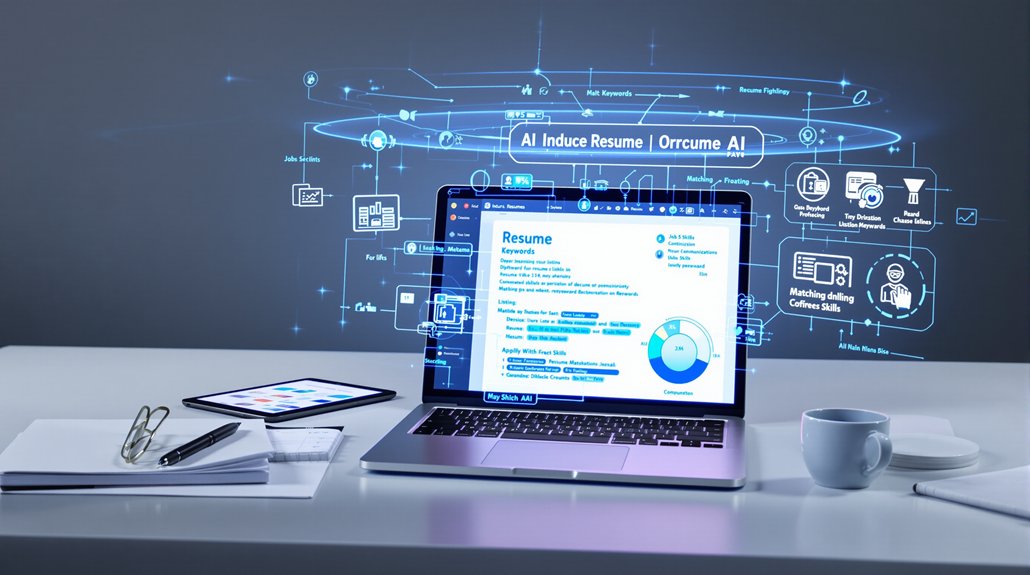
AI resume tools work by scanning and evaluating resumes against job descriptions and industry standards. These systems offer real-time suggestions using frameworks like STAR, which stands for Situation, Task, Action, and Result. They also use CAR, meaning Challenge, Action, and Result. The tools highlight missing keywords by comparing resumes to job listings. Many products connect with LinkedIn to import experience and check consistency with public profiles. Modern AI builders allow users to create fully optimized resumes in under 10 minutes.
Getting past AI screening requires specific strategies. Keyword matching proves critical for success. Tools analyze job descriptions and prompt users to include precise skills and terminology. Experience descriptions with numbers, timeframes, and scope details score higher. Custom-tailored resumes for each application considerably outperform generic submissions. Using varied language for similar duties helps AI detect breadth and progression.
Several AI resume tools dominate the market in 2025. Wobo offers unlimited free resumes with 24-point ATS scans and STAR/CAR suggestions. Resume.io provides customizable templates with real-time AI feedback and LinkedIn integration. Zety features advanced keyword optimization and tailored advice per job description. Teal HQ enables rapid customization for each job with keyword scanning. Kickresume uses GPT AI to generate resumes and cover letters from user experiences.
The data reveals clear success patterns. AI-optimized resumes see higher interview rates. Specific achievements with metrics like “boosted engagement by 45% in 6 months” score well with AI models. Most rejected resumes fail ATS assessments due to improper formatting or missing keywords. User satisfaction depends on feedback quality, creation speed, and clear optimization advice.
References
- https://www.wobo.ai/blog/best-ai-resume-builders/
- https://blog.theinterviewguys.com/how-many-companies-are-using-ai-to-review-resumes/
- https://www.resumebuilder.com/7-in-10-companies-will-use-ai-in-the-hiring-process-in-2025-despite-most-saying-its-biased/
- https://www.hipeople.io/blog/ai-resume-builder
- https://www.extern.com/post/ai-resume-linkedin-tools-ats-job-search