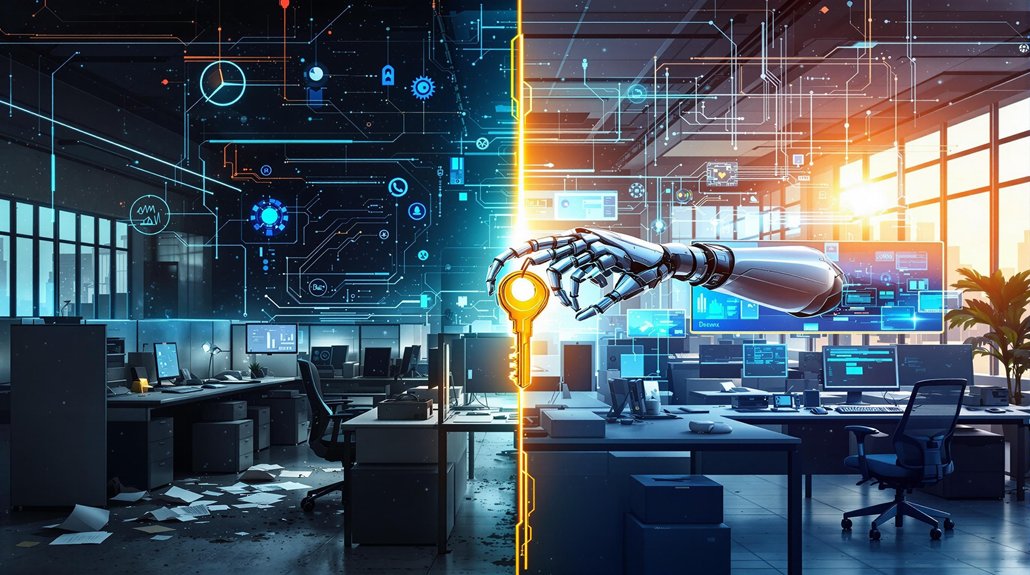

As concerns about artificial intelligence continue to grow, a leading figure in the AI field has issued a stark warning about the technology’s impact on employment. Geoffrey Hinton, widely regarded as an AI patriarch, has cautioned that many jobs could disappear by 2026, adding his voice to growing concerns about rapid workforce displacement.
Economic forecasts paint a troubling picture. Goldman Sachs projects that up to 300 million jobs worldwide could be lost or degraded due to AI automation. Some experts predict that half of entry-level white-collar positions might vanish within five years as companies implement AI systems to handle routine tasks.
The jobs at highest risk are those involving repetitive structured work. Data entry clerks, basic accountants, and customer-support staff face immediate threats. Law firms are already using AI for document review, reducing the need for junior associates. Software developers performing routine coding tasks may also see their roles change dramatically. This aligns with Eric Schmidt’s prediction that most programming work will soon be handled by AI systems.
“Massive unemployment” could emerge within just a few years, according to Hinton and other experts. Hinton attributes this disruption to the capitalist system rather than AI technology itself. Corporate adoption of AI is happening quickly, with industry surveys suggesting significant job losses could appear by 2026-2027, especially for new workers entering the job market.
The economic impacts won’t be felt equally. AI’s benefits—increased productivity and profits—are likely to flow mainly to business owners and large tech companies. This could widen the gap between rich and poor if no protective measures are put in place. Workers who lose jobs to AI may find themselves with less bargaining power and stagnant wages.
Some regions will be hit harder than others. Areas with high concentrations of white-collar work face greater disruption, potentially worsening regional economic inequality. Despite these concerns, McKinsey estimates AI could generate productivity growth of up to $4.4 trillion across global economies.
While timing remains uncertain and depends on regulations and reskilling efforts, the message from experts like Hinton is clear: AI-driven job displacement is coming faster than many people expect, and the workforce changes could be dramatic in specific sectors within just a few years.