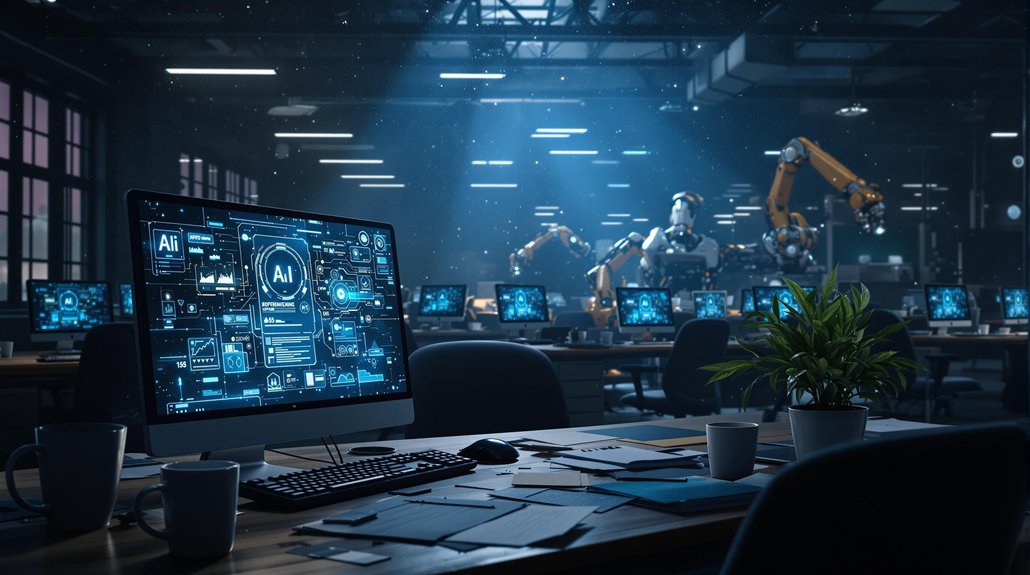
The year 2026 is shaping up to be a turning point for artificial intelligence. From hospitals to offices, AI’s touching nearly every part of life. And the changes are happening fast.
One of the biggest stories is how AI’s moving beyond simple tasks. It’s no longer just a tool that follows orders. In 2026, AI’s starting to understand the bigger picture — things like workplace roles, priorities, and goals. It’s helping cut down on distractions by filtering out unnecessary alerts and surfacing what actually matters. Advanced calendars powered by AI are even helping workers stay focused for longer stretches.
But not every company’s keeping up. According to BCG, only about 56% of businesses are expected to adopt AI by 2026. Many are stuck testing small projects without making bigger changes. The companies that do fully embrace AI are completely reinventing how they operate.
Meanwhile, China’s already opened the world’s first AI hospital, where robot doctors treat around 3,000 patients every single day. AI doctors there have achieved a 93.06% success rate on U.S. medical licensing exam questions, signaling a dramatic shift in how healthcare could be delivered globally. AI tools are also streamlining hospital operations, with administrative paperwork reported to drop by 30 to 50 percent when healthcare providers fully integrate these systems.
The tech giants aren’t slowing down either. Google’s updated its Vids app with new AI models for creating videos through simple text prompts. It’s also released Gemma 4, a set of open AI models free for developers to use. ElevenLabs launched ElevenMusic, letting users create and remix songs using text. Microsoft released three new foundational AI models to compete with OpenAI.
Not everything’s going smoothly, though. Perplexity’s facing a lawsuit over claims it shared user data in its “Incognito Mode.”
Looking ahead, experts predict big transformations in AI agents, robotics, cybersecurity, and healthcare between 2026 and 2030. The pace of change is described as unprecedented. Multimodal AI — which can handle text, images, and audio together — is opening doors to even broader uses.
But ethical concerns are growing too, especially around commercialization and responsible practices.
Events like the AIRevolutionSummit2026 in Singapore are bringing together over 200 top AI leaders to discuss what’s next. Organized by TraiCon Events, the summit is an invitation-only gathering expected to host pre-screened participants from finance, healthcare, and technology sectors. It’s clear the AI revolution isn’t coming. It’s already here.
References
- https://aiml.events/events/ai-revolution-summit-2026
- https://www.dailymotion.com/video/xa1lmik
- https://www.youtube.com/watch?v=BX0lX_-1ehM
- https://coaio.com/news/2026/04/2026s-tech-revolution-ai-breakthroughs-space-races-and-security-2lgc/
- https://hackernoon.com/ai-between-2026-and-2030-the-next-technology-revolution-is-already-taking-shape
- https://www.theinformation.com/events/financing-the-ai-revolution-2026