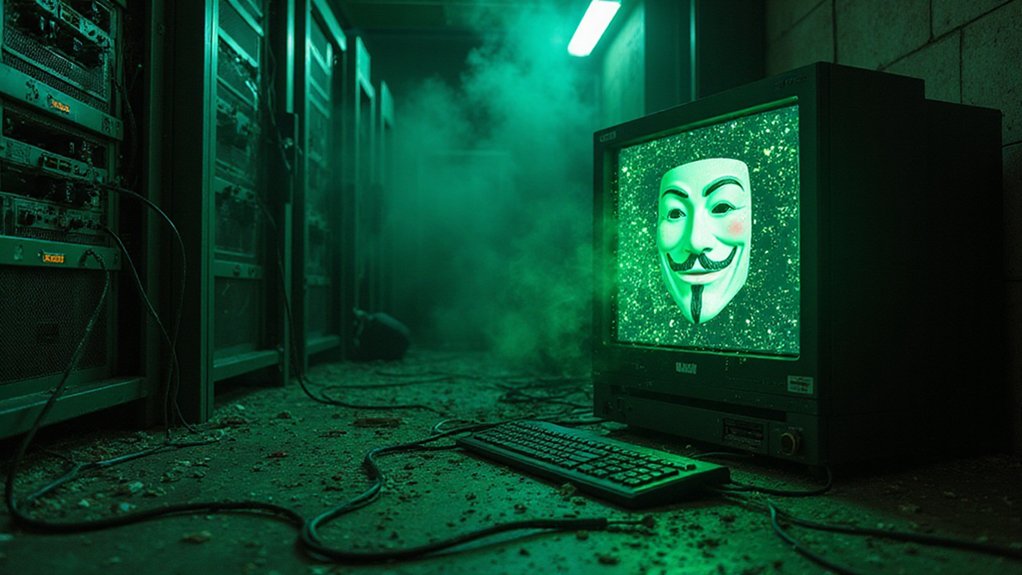

4chan, founded in 2003 as an anonymous image board, has spread its toxic influence across the internet. The site’s lack of accountability created a breeding ground for hate speech, harassment, and extremism. While birthing popular memes like Pepe the Frog, it also spawned coordinated attacks and digital terrorism. Its legacy continues as trolling techniques and radical content have migrated to mainstream platforms. The full extent of 4chan’s digital poison reaches further than most realize.
While the internet has spawned countless communities over the decades, few have left as controversial a legacy as 4chan. This anonymous image board, founded in 2003, has become infamous for its lack of moderation and accountability. Without persistent user identities, people can post virtually anything without consequences, leading to rampant hate speech and harassment.
The site’s structure deliberately fosters a chaotic environment. Posts disappear quickly, encouraging users to act impulsively and post extreme content before it vanishes. This ephemerality creates a frantic pace where shocking or offensive material thrives. Without reputation systems or consistent archives, there’s little incentive for thoughtful discussion. 4chan originated as a space for Japanese anime fans but rapidly expanded to include numerous topic boards with varying levels of extremism.
4chan’s influence extends far beyond its own domains. The platform has served as an incubator for major internet memes and digital trends that eventually spread to Twitter, Reddit, and other mainstream sites. Many familiar internet jokes and symbols originated on 4chan’s boards, particularly /b/ (random), affecting how people communicate online everywhere. The site has been responsible for popularizing viral internet phenomena like Pepe the Frog and Rickrolling that eventually became mainstream cultural references.
Perhaps most concerning is the site’s role in organizing coordinated attacks. Users have launched denial-of-service attacks, harassment campaigns, and mass pranks against individuals and organizations. The hacker collective “Anonymous” emerged from these activities, though it later evolved separately. Media outlets have described such behaviors as forms of digital terrorism.
The toxic behavior patterns pioneered on 4chan have unfortunately spread across the internet. Trolling techniques, harassment strategies, and extremist recruitment tactics developed there now appear on mainstream platforms. The site’s culture has normalized offensive content and contributed to online polarization.
Despite calls for regulation, 4chan’s anonymous structure makes enforcement difficult. The site continues to operate as a breeding ground for digital extremism. Its legacy lives on in today’s fractured internet landscape, where harassment and hate speech have become commonplace.
What began in 4chan’s digital underground has infected the wider web, creating problems that social media companies and society at large continue to struggle with.