The U.S. Copyright Office maintains that AI systems cannot qualify as authors under copyright law. A March 2025 ruling by the DC Circuit Court reinforced this stance, emphasizing that only humans can claim authorship. Works containing AI-generated elements may receive protection if they include significant human creative input. The Copyright Office rejects applications listing AI as authors, insisting that meaningful human creativity remains essential for copyright eligibility. The debate continues as technology evolves.
While technology continues to advance at a rapid pace, the U.S. legal system has firmly established that artificial intelligence cannot be recognized as an author under copyright law. The U.S. Copyright Office and courts have consistently maintained that human creativity must remain the cornerstone of copyright protection.
Despite technological advances, U.S. law remains clear: AI cannot be an author, as human creativity defines copyright protection.
In March 2025, the DC Circuit Court reinforced this stance by ruling that AI systems cannot be considered authors of copyrightable works. This decision aligns with the U.S. Constitution and Copyright Act, which define “author” exclusively as a human creator. The Copyright Office has made it clear that simply providing prompts to an AI system doesn’t qualify as authorship.
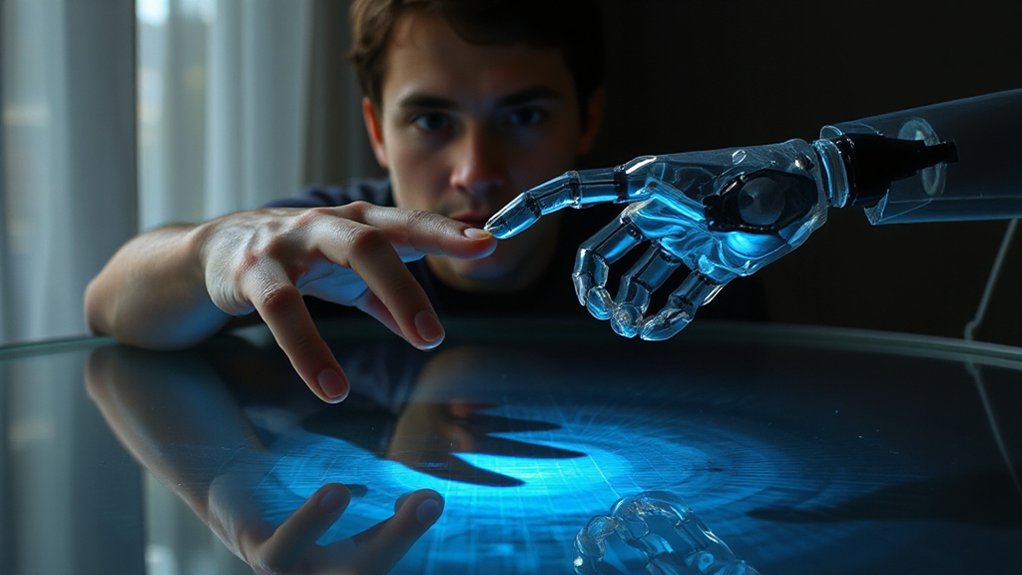
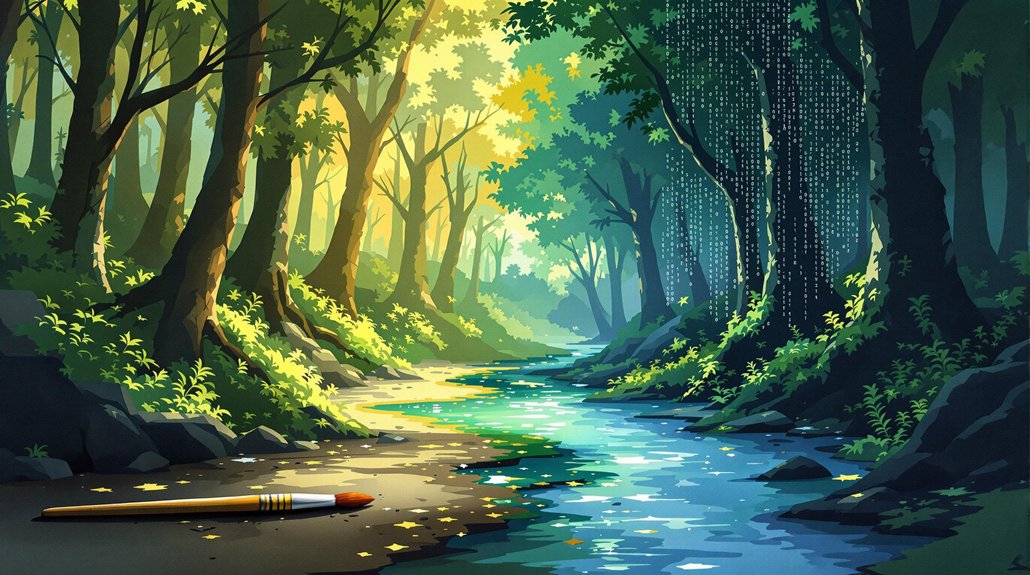
For content creators working with AI tools, there’s still a path to copyright protection. Works that include AI-generated elements can be copyrighted if humans provide significant creative input to the final product. This means making meaningful modifications, arrangements, or contributions that demonstrate human creativity. The process requires sufficient human involvement for copyright eligibility to be maintained.
The distinction isn’t always straightforward. When determining if a work qualifies for copyright protection, officials examine how much of the expressive elements came from human decisions rather than machine algorithms. Content that relies heavily on AI without substantial human input won’t receive copyright protection.
Many creative industries have challenged AI companies over the use of copyrighted materials to train their systems. These lawsuits have brought additional scrutiny to AI’s role in creative processes and copyright law. Courts consistently emphasize that any changes to include AI as an author would require action from Congress, not judicial reinterpretation. The recent case involved a computer scientist who attempted to list an AI model as the author of an artwork, but was rejected by the Copyright Office.
The Copyright Office has resisted creating special protections for AI-generated content, arguing that extending copyright to machine-created works would undermine the constitutional goals of copyright law. Public feedback strongly supports maintaining human authorship requirements. International approaches to AI authorship vary considerably, with countries like the UK and China demonstrating more flexibility in their copyright frameworks.
As AI technology evolves, the legal framework will face ongoing challenges in addressing new forms of creative collaboration between humans and machines. For now, human creativity remains the essential requirement for copyright protection in the United States.