Travel through airports is changing fast, but many passengers don’t notice the AI working behind the scenes. Facial recognition now speeds up check-in at major airports. Smart systems manage crowds and predict where bottlenecks might form. Security screening uses AI to identify potential risks while reducing wait times. Baggage handling has become more reliable with predictive maintenance. These invisible technologies are reshaping the entire journey from curb to gate.
While travelers once endured long lines and frustrating delays at airports, artificial intelligence is now transforming the entire flying experience. Behind the scenes, AI systems are working to make airports more efficient and travel less stressful. Many passengers don’t even realize how much technology is smoothing their journey from curb to gate.
Facial recognition and biometric systems are speeding up check-in and boarding processes. Instead of showing passports or boarding passes multiple times, cameras can now identify travelers automatically. Self-service kiosks powered by AI let passengers check in without staff help, cutting wait times considerably.
Security screening is getting smarter too. AI analyzes passenger data to flag potential risks, allowing most travelers to move through checkpoints more quickly. These systems monitor for unusual patterns while machine learning models predict busy periods, helping airports deploy staff where they’re needed most.
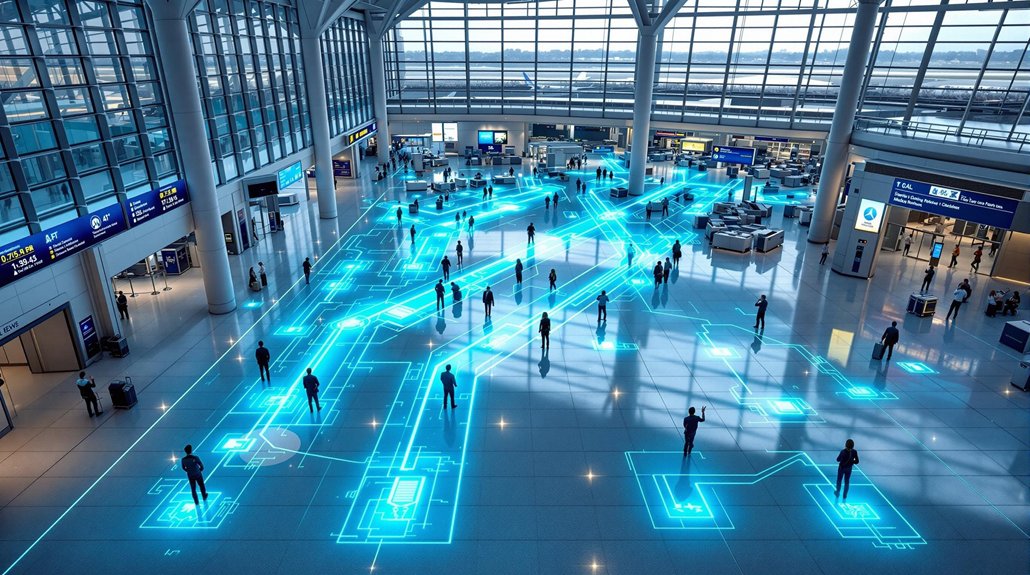
Throughout terminals, AI-powered cameras track crowd movements and density. When bottlenecks form, the system can immediately alert staff to open more lanes or redirect passengers. Edge processors analyze this data locally, allowing for quick responses to changing conditions.
For lost travelers, AI chatbots provide 24/7 assistance in multiple languages. Similar to healthcare applications, natural language processing enables these systems to understand passenger inquiries regardless of dialect or phrasing. These virtual guides offer personalized directions, flight updates, and recommendations for dining or shopping. Navigation apps use AI to guide passengers through complex terminal layouts, automatically adjusting routes based on real-time conditions.
Behind the walls and under the floors, AI monitors airport equipment for signs of potential failure. Predictive maintenance systems analyze data from sensors on baggage carousels, HVAC systems, and transport vehicles to schedule repairs before breakdowns occur. This technology significantly reduces flight cancellations by identifying issues before they cause operational disruptions.
The result is a smoother, more personalized airport experience. While passengers may not notice all these AI systems working behind the scenes, they do notice shorter lines, fewer delays, and less confusion. The airport of the future is already here, quietly powered by artificial intelligence. However, designers must ensure these systems don’t perpetuate discrimination by treating passengers differently based on gender conformity which could undermine the core benefit of global connectivity.