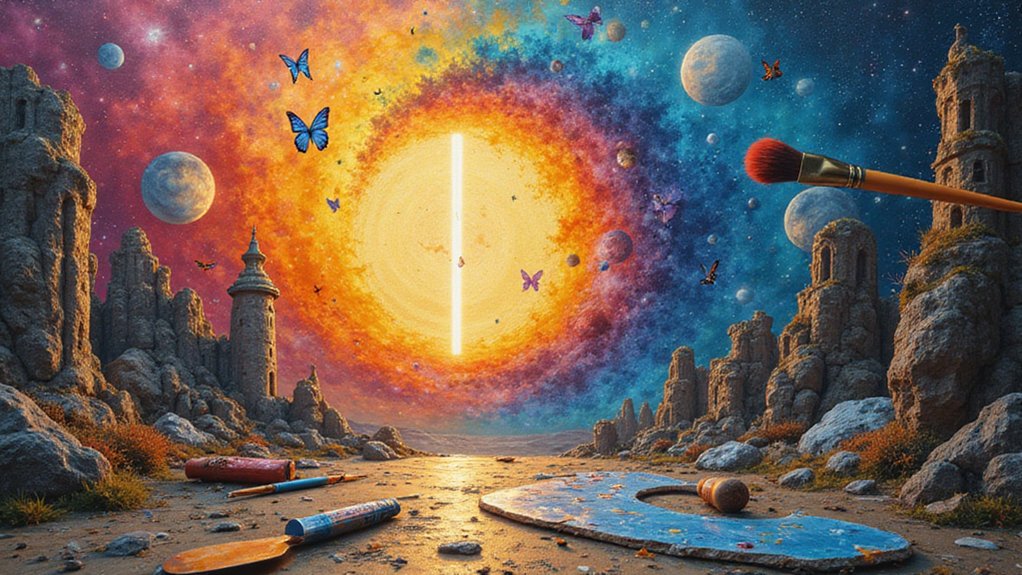
Creativity stands at the heart of what makes us human. People can dream up ideas that don’t exist yet and build something from nothing. This ability to imagine has helped humans survive, evolve, and build cultures throughout history. Unlike machines, humans use judgment, intuition, and subtle communication in their creative process.
Human creativity is deeply connected to emotions. When people create art, music, or stories, they draw from real feelings and life experiences. They understand what moves others because they’ve felt joy, sadness, and everything in between. This emotional intelligence helps creators connect with their audience in meaningful ways. While Bill Gates predicts AI will transform education and healthcare jobs within a decade, these systems cannot replicate the emotional depth of human connections.
Memory plays a unique role in human creativity too. Our minds store experiences with emotional attachments, creating a jumbled collection of memories. Sometimes, the best ideas come from unexpected connections between these memories. Even the limits of human memory can lead to creative solutions and new approaches. Psychometric measurements like the Divergent Association Task indicate that making unusual connections between unrelated ideas strongly predicts creative ability.
AI has made impressive strides in creativity. It can analyze patterns, generate content, and even mimic emotional responses. These machines excel at finding patterns in massive amounts of data and can produce original work in specific areas. However, AI lacks true imagination and emotional understanding. The development of models like GPT-3 in 2020 marked significant advancement but still couldn’t replicate human creative consciousness.
Machines don’t have human experiences that inform authentic creativity. They can’t truly empathize or grasp emotional nuances. AI operates within programmed boundaries rather than thinking beyond them. It follows rules instead of breaking them in inspired ways.
The future likely holds partnerships between human imagination and AI tools. Together, they might open new creative possibilities that neither could achieve alone. As AI becomes more advanced, questions about ownership and attribution of creative works will need answers.
Despite AI’s growing capabilities, human creativity remains uniquely valuable. The authentic experiences and emotional depth that inform human imagination can’t be replicated. In a world with more AI, the human creative spirit may become even more precious.
References
- https://www.registrationchina.com/articles/human-imagination-and-ai/
- https://www.psychiatrictimes.com/view/artificial-creativity-humans-versus-ai
- https://www.techtarget.com/searchenterpriseai/tip/Artificial-intelligence-vs-human-intelligence-How-are-they-different
- https://www.psychologytoday.com/us/blog/the-digital-self/202403/is-ai-more-creative-than-humans
- https://www.ericsson.com/en/blog/2023/7/artificial-intelligence-vs-human-cognition-the-epic-battle-of-think-tanks