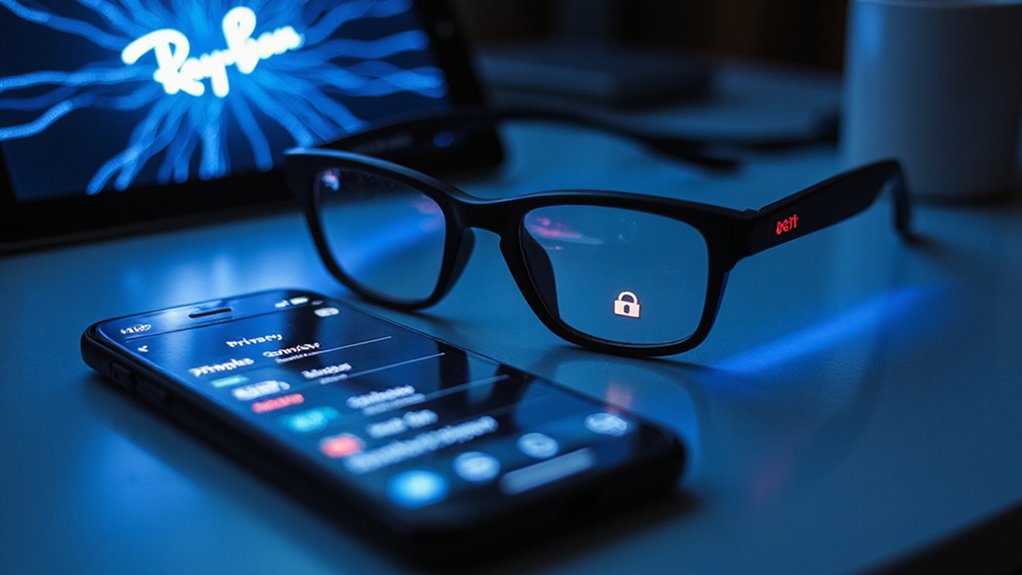

Meta updated its Ray-Ban smart glasses privacy policy in April 2025, enabling AI features by default. These changes allow the glasses to analyze photos and videos while storing voice recordings for up to a year without an opt-out option. Users must manually delete recordings through the companion app. Critics point to Meta’s history of data breaches affecting hundreds of millions of users. Privacy settings can be managed through the Meta AI mobile app, though concerns remain about data collection practices.
While Meta pushes forward with its high-tech Ray-Ban glasses, privacy concerns are mounting after the company’s latest policy update. In late April 2025, Meta changed its privacy policy for Ray-Ban Meta glasses, turning on AI features by default. This change means the glasses will now analyze photos and videos when certain AI features are active.
The updated policy also allows Meta to store voice recordings for up to a year with no opt-out option. Users who don’t want their voice data used for AI training must manually delete each recording from the companion app. This move follows Amazon’s similar change with Echo devices, removing local voice processing options.
Meta claims the glasses only record speech after hearing “Hey Meta” and collect only data needed for reliability and security. However, critics point to Meta’s troubled privacy history, including a 2019 data breach that exposed 540 million users’ data and another leak in 2021 affecting half a billion users. This controversy highlights growing ethical considerations around AI systems that collect personal data without transparent oversight.
Privacy experts warn that smart glasses create new risks as they gather sensitive information. The Meta View app reportedly continues running in background processes even when forcibly closed, raising additional concerns about continuous data collection. Users can swipe left or right to select specific devices when managing privacy settings for multiple paired devices.
Users do have some control options. They can access privacy settings through the Meta AI mobile app to view and manage their voice activity log and cloud media processing. The glasses include a physical power switch, and voice control features can be disabled through settings. Users should also be mindful about respecting others’ preferences regarding photography in public spaces.
Meta’s business motivation seems clear – collecting voice recordings provides valuable training data for its generative AI products. Diverse audio recordings help AI better process various speech patterns and accents, supporting Meta’s expansion into AI wearables.
For concerned users, settings in the Meta View App allow viewing and managing shared information. Meta AI features can be disabled at any time, and conversations with the AI can be deleted. However, critics note that these opt-out measures put the burden on users rather than defaulting to stronger privacy protections.
References
- https://www.meta.com/ai-glasses/privacy/
- https://www.ray-ban.com/usa/discover-ray-ban-meta-ai-glasses/clp
- https://www.meta.com/help/ai-glasses/483508126732797/
- https://nordvpn.com/blog/facebook-smart-glasses/
- https://techcrunch.com/2025/04/30/if-you-own-ray-ban-meta-glasses-you-should-double-check-your-privacy-settings/