Humanoid robots are now entering schools and hotels worldwide, requiring no technical expertise to operate. About 20% of schools globally use these robots, with 70% of students showing improved learning outcomes. In hotels, robots handle check-ins and room service, increasing efficiency by 40%. They’re particularly helpful for children with special needs and in STEM education. The expanding $6 billion AI education market signals this trend’s growing impact.
Numerous schools across the globe are embracing humanoid robots as educational tools, with 20% having already implemented them and 73% planning future investments. The global AI education market is expected to reach $6 billion by 2025, showing the growing trend. Currently, one in four U.S. schools incorporates robotics in their curriculum, changing how students learn.
These robots aren’t just fancy toys. They’re boosting education in real ways. Teachers report that 70% of students show improved learning outcomes when working with robots. These mechanical helpers enhance student engagement, provide personalized learning experiences, and assist children with special needs.
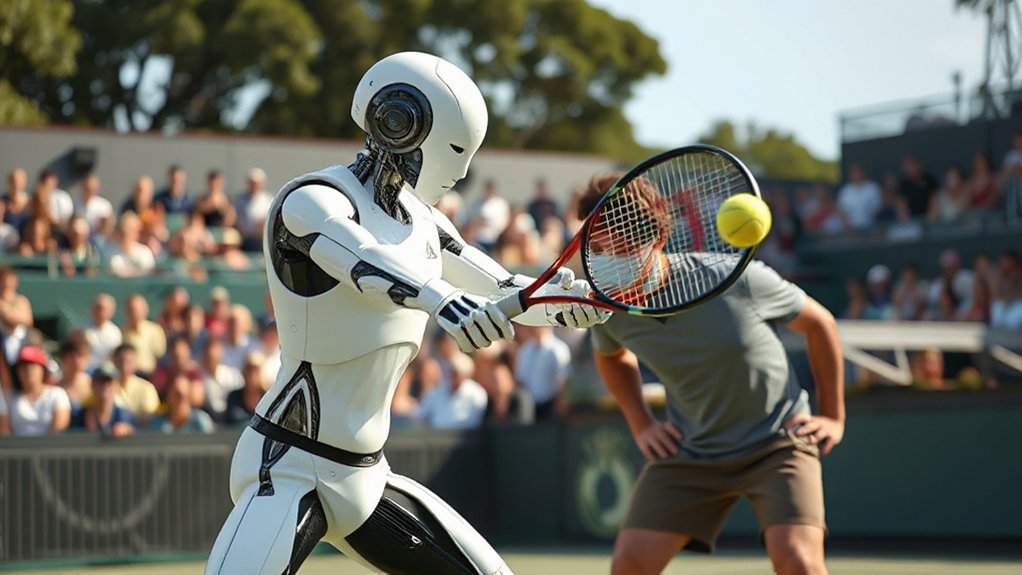
In STEM education, humanoid robots teach programming, math, and science concepts through hands-on activities. They simulate real-world scenarios and encourage participation in robotics competitions. Safety innovations from companies like 3Laws Robotics ensure these educational robots operate reliably around children. Students develop problem-solving skills and learn teamwork while working with these advanced tools. The integration of humanoids allows students to gain valuable 21st-century skills needed for future job markets.
Popular models like NAO help with computer science and mathematics, while Pepper acts as a teaching assistant for group activities. DOBOT teaches coding skills, and some robots specifically help children with autism recognize emotions. The results are impressive: a 27% increase in comprehension and retention with robot assistance.
Despite benefits, challenges exist. High initial costs, data privacy concerns, and the need for teacher training create barriers. Some worry about the potential loss of human emotional connection in the classroom. Still, the technology continues to advance.
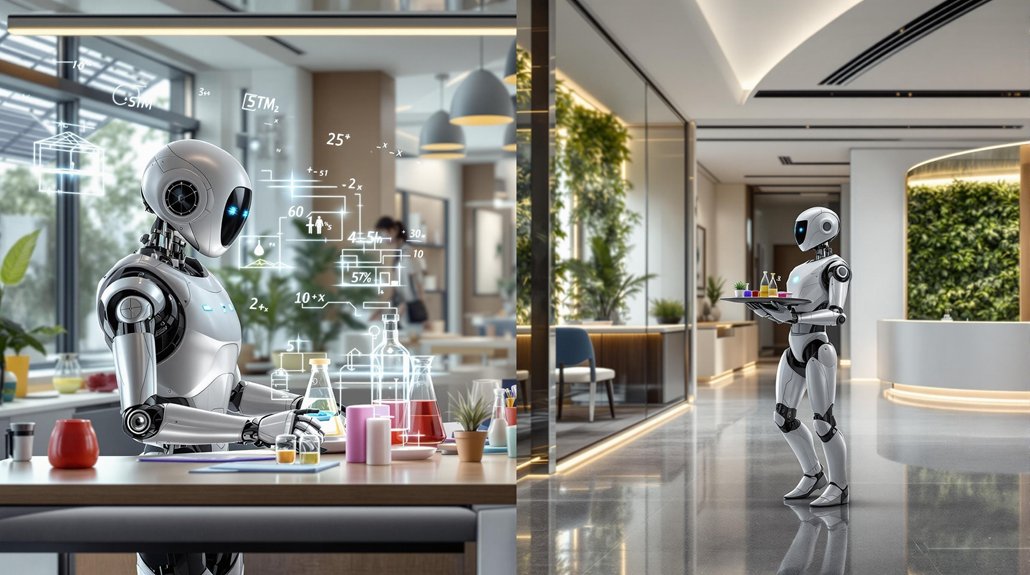
The impact extends beyond schools into hospitality. Hotels are using these same robots to enhance guest experiences. They perform tasks from check-in assistance to room service delivery, requiring no previous experience to operate. Similar to AI in healthcare, these robots raise important questions about informed consent and how facilities should disclose robotic assistance to guests.
Looking ahead, robots will likely integrate with other digital technologies, expand their roles in personalized tutoring, and develop enhanced emotional intelligence. With a 17.2% predicted increase in robot use for special needs education by 2024 and a 40% efficiency gain in some educational settings, the robotic transformation in education and hospitality is just beginning.