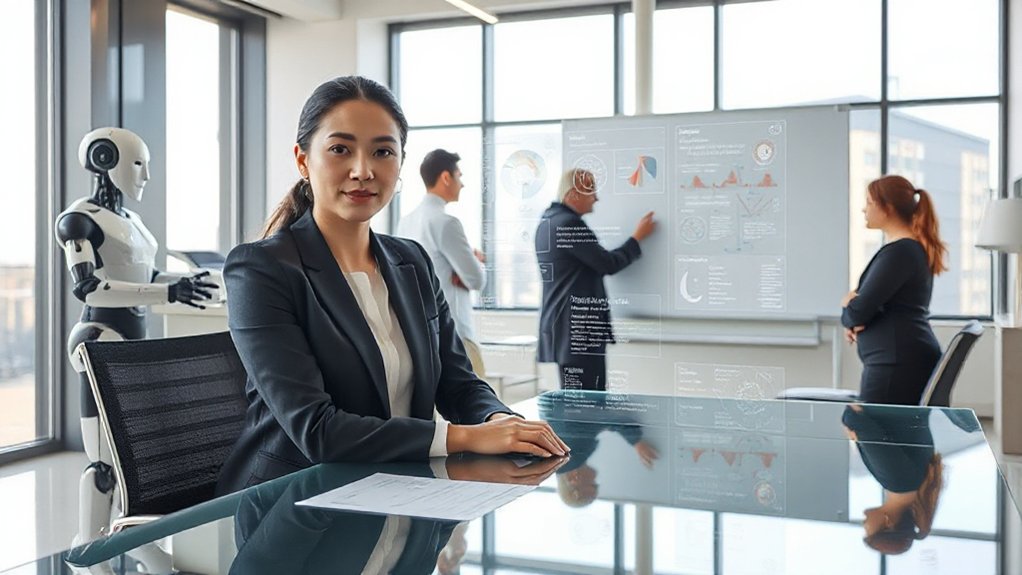

While companies scramble to automate their hiring processes with fancy AI tools, they’re discovering an awkward truth: robots are terrible at being human. The recruitment environment has become a strange battlefield where AI creates problems it was supposed to solve, forcing employers to bring humans back into the equation.
The numbers tell a ridiculous story. Applications for popular roles hit 588 per opening in Q3 2024, up 26% from last year. Why? Because 58% of job seekers now use AI to pump out applications like a factory line. Everyone’s resume looks the same. Everyone sounds like a corporate robot. The irony is thick.
Recruiters are drowning in this tsunami of sameness. They turned to automated screening to manage the chaos, but guess what happened? The AI started making decisions that would make any rational person cringe. Amazon’s resume screening AI literally penalized women. Video interview bots dinged people for having accents. These systems don’t just miss nuances—they actively discriminate based on whatever biases exist in their training data. This mirrors the broader workforce concern, as 80% of women in the workforce occupy jobs already exposed to AI automation risks, compared to just 60% of men.
The candidate experience has become a nightmare. Sixty-one percent of job seekers reported being ghosted after interviews in 2024. That’s not just rude; it’s broken. Candidates craft AI-generated applications to beat AI filters, losing their authentic voice in the process. They’re playing a game where nobody wins. Making matters worse, between 18-22% of postings are completely fake, wasting everyone’s time on positions that don’t even exist.
Some companies are trying to fix this mess with more AI. Paradox created something called Immersive Job Preview, using conversational AI to show candidates what jobs actually entail. Smart move, considering 22% of new hires quit within 30 days because the job wasn’t what they expected. These previews cut production time and supposedly improve matching. The solution just won Top HR Product of 2025 from HR Executive, marking Paradox’s fourth award in six years. Maybe.
But here’s the twist: companies keep sending candidates back to human interviewers anyway. Automated screens flag promising resumes, then punt them to actual people who can judge soft skills, motivations, and all those squishy human qualities algorithms can’t grasp.
Top candidates move fast, and organizations need humans to make quick, nuanced decisions. The AI transformation in hiring hasn’t eliminated human judgment. It’s just created extra steps before we inevitably return to it.
References
- https://blog.theinterviewguys.com/what-experts-are-actually-predicting-for-the-2025-job-market/
- https://www.paradox.ai/news/paradoxs-new-immersive-job-preview-named-2025-top-hr-product-of-the-year-by-hr-executive
- https://www.prnewswire.com/news-releases/paradoxs-new-immersive-job-preview-named-2025-top-hr-product-of-the-year-by-hr-executive-302526075.html
- https://www.herohunt.ai/blog/ai-recruitment-2025-the-extremely-in-depth-expert-guide-10k-words
- https://hrtechedge.com/paradoxs-ai-powered-job-preview-wins-2025-top-hr-product-award/