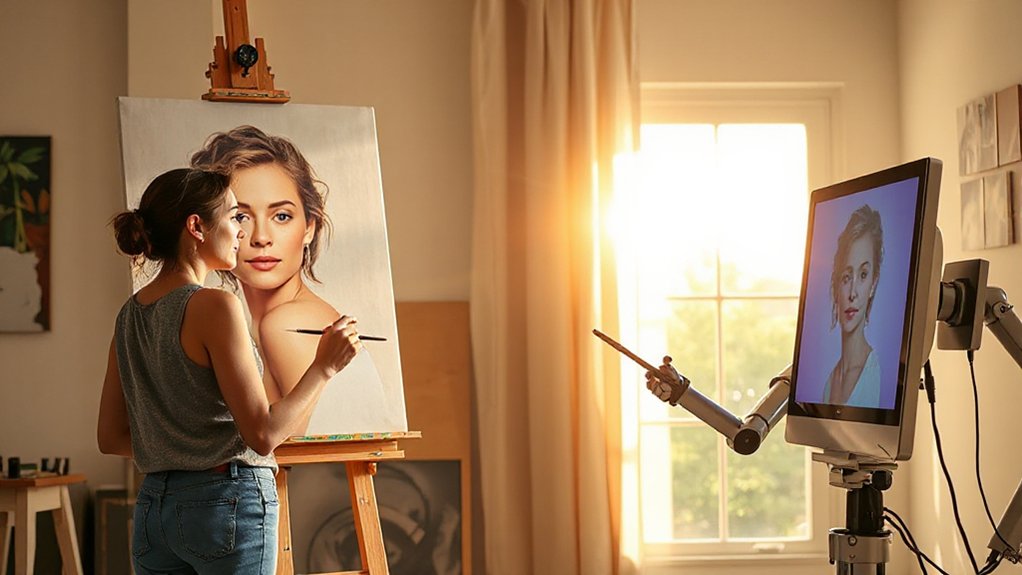
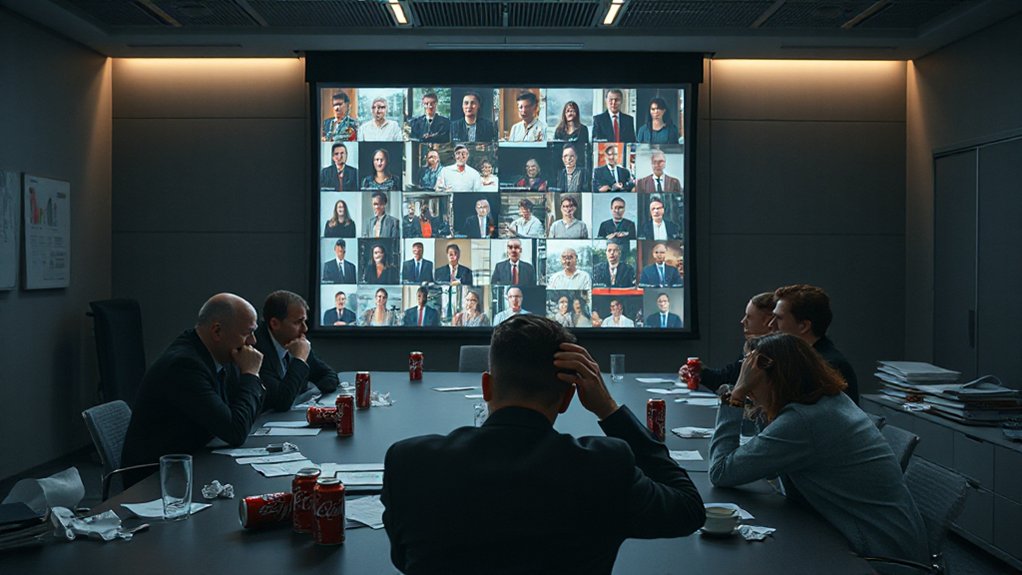
When does a digital creation cross from mere imitation to genuine art? This question challenges art lovers as AI-generated images flood social media and galleries worldwide. Recent studies show that while people often can’t tell AI art from human art by looks alone, they still prefer artwork made by humans.
The difference lies in emotional depth. Human artists pour their feelings, memories, and life experiences into their work. A painting might reflect grief, joy, or political views. AI lacks these personal experiences. It creates images by analyzing patterns in data, not by feeling emotions or having intentions. Each human artwork contains cultural contexts that reflect the artist’s unique position in society and history. These biases can lead to automation bias when viewers unquestioningly accept AI-generated art as equally valuable or meaningful.
The essence of art isn’t in the image itself, but in the human emotions and experiences it carries.
Scientists have found that people rate AI art lower in creativity and skill than human art when they know who made it. Even art experts show stronger biases against computer-created pieces. They note that AI work often seems flat or lacking in meaning compared to human artwork.
Technical differences also exist. Human art contains deliberate mistakes and unique brushstrokes that show the artist’s physical presence. AI art tends to be too perfect or has strange inconsistencies that don’t make sense in traditional art techniques. Close inspection often reveals unnatural patterns that human artists wouldn’t create.
The debate continues about whether AI can truly create art or just mimic it. Critics point out that AI can’t explain why it made certain choices or what message it’s trying to send. Without intention or meaning behind the creation, some question if it deserves to be called art at all.
Despite making art creation more accessible to everyone, AI faces criticism for potentially reducing art to mass production without soul. Research by Samo and Highhouse reveals that participants report more positive emotions when viewing human-created art compared to AI-generated pieces. The public generally values human creativity, effort, and authentic expression more highly.
As technology advances, the line between human and AI creativity may blur further, but for now, that human touch remains something special that viewers can sense and appreciate.
References
- https://newbuffaloartgallery.com/post/11911-the-debate-on-ai-art-vs-human-made-fine-art-a-perspective
- https://techxplore.com/news/2023-12-people-struggle-ai-human-art.html
- https://goldpenguin.org/blog/ai-vs-human-art/
- https://pmc.ncbi.nlm.nih.gov/articles/PMC10319694/
- https://business.columbia.edu/press-release/cbs-press-releases/when-machines-mimic-dont-create-why-ai-art-isnt-true-art
- https://www.frontiersin.org/journals/psychology/articles/10.3389/fpsyg.2025.1509974/full
- https://www.youtube.com/watch?v=MKw7O2BPKJ0