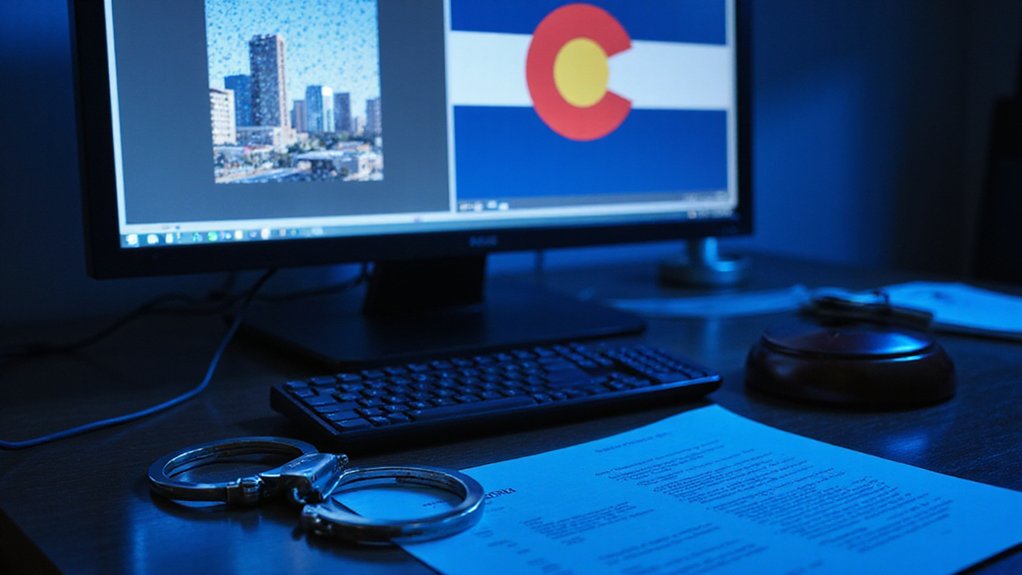

Colorado’s Senate Bill 288 aims to criminalize AI-generated deepfake sexual content. The bipartisan legislation, sponsored by Senate Majority Leader Robert Rodriguez, expands existing revenge porn laws to include artificially created images. It addresses growing concerns after multiple incidents involving fabricated explicit content of real people. The bill has received unanimous committee approval and would make Colorado one of 39 states with such protections. The full Senate vote will determine the bill’s fate.
As technology continues to advance at a rapid pace, Colorado has taken a bold step to combat the growing threat of AI-generated deepfake pornography. Senate Bill 288, sponsored by Senate Majority Leader Robert Rodriguez, aims to expand Colorado’s existing laws on revenge porn and child sexual abuse materials to include AI-created sexually exploitative content.
The new law comes amid increasing concerns about deepfakes, which involve creating false sexual images and videos that impersonate real individuals without their consent. Public attention to this issue grew following high-profile cases, including a recent scandal involving Taylor Swift. Victims have included public officials, teachers, and high school students across the country.
Deepfakes threaten everyone—from global celebrities to local teachers—as AI makes creating false sexual content increasingly accessible.
Colorado’s legislation explicitly includes AI-generated imagery in laws against intimate image abuse. It criminalizes the creation, possession, and distribution of AI deepfakes with sexually exploitative content. The law also addresses the use of AI to fabricate child pornography, aligning Colorado with federal standards and laws in 38 other states that have already criminalized such content.
Victim advocates and prosecutors have emphasized that these images aren’t harmless virtual creations but real violations that cause significant psychological and reputational harm. “These images are not harmless. They’re not virtual, they’re violations,” noted one advocate during legislative testimony. Will Braunstein from the Denver Children’s Advocacy Center reinforced this view during his compelling testimony about the harmful nature of these images.
The law provides clear definitions of what constitutes a “deepfake” under state law and establishes penalties for offenders equivalent to traditional forms of image-based sexual exploitation. Law enforcement and prosecutors will now have updated tools to address these digital threats.
Colorado’s approach is among the most extensive in the nation, addressing both political and sexual misuse of deepfakes. While most U.S. legislative efforts have focused on deepfakes in pornography, politics, and celebrity misuse, Colorado had previously lagged behind in this area.
This legislative action represents part of a broader nationwide expansion of AI regulation as lawmakers attempt to modernize protections in response to rapid technological advancements and their potential harms. The bill has already passed its first hurdle, receiving unanimous committee approval before heading to the full Senate for a final vote.
References
- https://www.cpr.org/2025/04/25/ai-deepfake-sexually-exploitative-material-bill-colorado/
- https://coloradosun.com/2025/04/25/colorado-ai-laws-sexual-exploitation/
- https://leg.colorado.gov/bills/hb24-1147
- https://leg.colorado.gov/sites/default/files/documents/2024A/bills/2024a_1147_01.pdf
- https://www.governing.com/policy/deepfakes-dominate-early-attempts-to-regulate-ai