Consumer watchdogs are sounding the alarm over Mattel’s new partnership with OpenAI, calling it a “dangerous experiment” that could mess with kids’ heads. The toy giant plans to launch AI-powered products by year’s end, marking OpenAI’s first major push into children’s entertainment. Public Citizen and other advocacy groups aren’t having it.
Consumer groups blast Mattel’s AI toys as dangerous experiments that could scramble kids’ developing minds
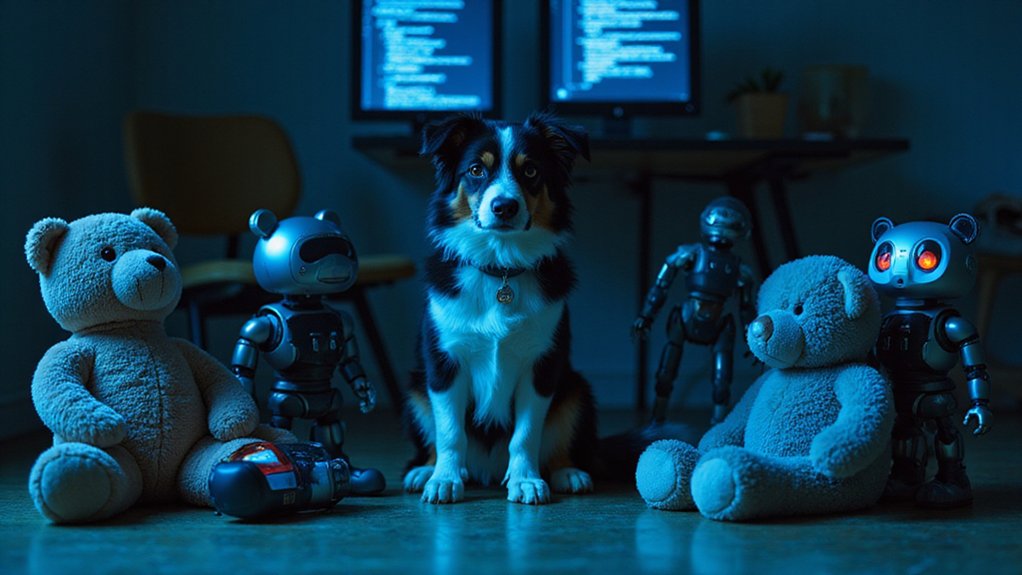
The critics’ main beef? AI toys might seriously scramble how kids develop socially. When children start treating chatbots like real friends, that’s a problem. These groups argue that young kids can’t tell the difference between AI-generated responses and actual human conversation. They’re not wrong – most adults barely understand how ChatGPT works.
Traditional playtime could take a hit too. Why bother negotiating with Tommy over the swings when your AI teddy bear never argues back? Experts warn that constant interaction with artificial voices might kill kids’ motivation for real-world play. Mattel’s rollout of ChatGPT Enterprise across its business operations signals a massive shift in how toys will be designed and marketed to families. The environmental impact of these AI toys could be substantial, with data centers already projected to consume 1,050 terawatts of electricity by 2026.
Those messy, complicated peer relationships? They’re actually essential for learning empathy, conflict resolution, and basic social skills. But hey, who needs those when you’ve got a robot bestie? While Mattel claims their first AI product won’t target kids under 13, critics argue the damage extends beyond age restrictions.
Then there’s the privacy nightmare. These smart toys vacuum up data like nobody’s business. Without proper regulations – which don’t exist yet – all
References
- https://www.ciodive.com/news/mattel-ai-openai-partnership-chatgpt-enterprise/750719/
- https://www.axios.com/2025/06/12/mattel-openai-partnership-toys
- https://www.digitalcommerce360.com/2025/06/12/mattel-partnership-openai-ai-toy-development/
- https://techcrunch.com/2025/06/12/openai-and-barbie-maker-mattel-team-up-to-bring-generative-ai-to-toy-making-and-content-creation/
- https://www.citizen.org/news/mattels-open-ai-collaboration-is-dangerous-for-children/