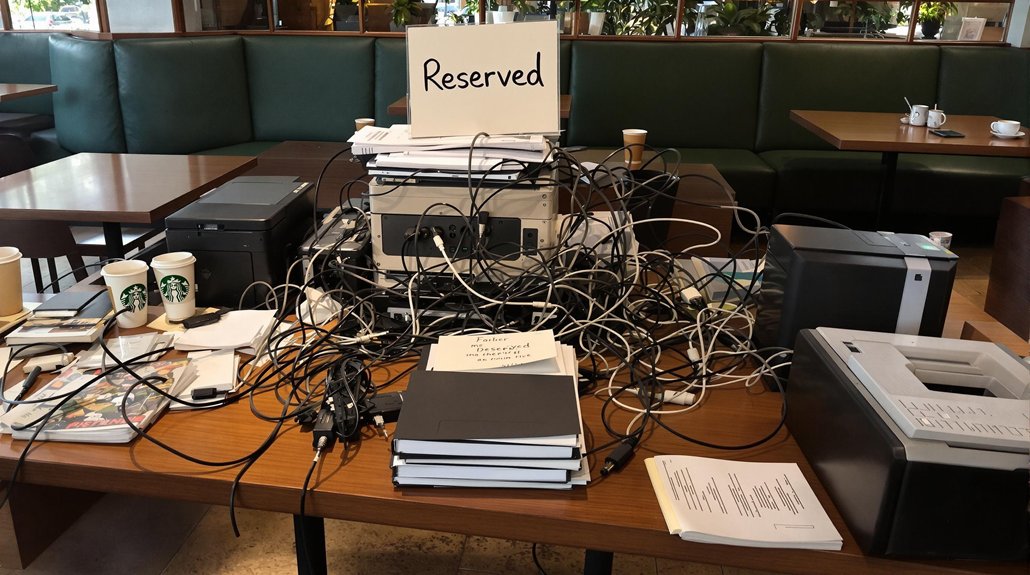

Starbucks Korea just declared war on the “cagong” crowd—those café squatters who transform coffee shops into personal offices complete with desktop computers, printers, and enough power strips to run a small tech startup.
The coffee giant has banned desktop PCs, printers, multi-tap power strips, and large partitions from all its stores nationwide. Laptops? Still fine. But the days of hauling your entire home office to the local Starbucks are officially over.
The term “cagong” combines “café” and “study” in Korean, describing people who camp out for hours with elaborate workstation setups. These folks weren’t just sipping lattes with their MacBooks. They were plugging in multiple devices, setting up privacy partitions, and yes, actually bringing printers to coffee shops.
Some viral photos showed setups so extensive they looked like someone had relocated their entire cubicle to a corner table.
Store employees—or “partners” as Starbucks calls them—will now verbally tell customers to pack up their excessive gear. Notices are posted at all branches spelling out the new rules. If you leave your stuff unattended to reserve a table, expect it to be removed.
Solo customers hogging four-person tables during rush hour? They’ll be asked to move. It’s not exactly subtle.
The crackdown comes after mounting complaints from regular customers who couldn’t find seats because someone turned three tables into a makeshift WeWork. Other patrons were frustrated watching people monopolize space with multi-device stations while families with kids stood around waiting for somewhere to sit.
The viral images of these office-style setups probably didn’t help either—nothing says “we need new rules” quite like a photo of someone’s desktop monitor and printer setup at what’s supposed to be a casual coffee spot.
Starbucks insists they’re not banning studying or remote work entirely. You can still work on your laptop, charge your phone, and spend a reasonable amount of time nursing that overpriced coffee. The company hopes the restrictions will improve table turnover and create a more balanced environment for all customers.
They’re just drawing the line at turning their stores into rent-free coworking spaces. The policy change comes as independent cafes across Korea have already started implementing time limits and disabling power outlets to combat the same problem. No fines, no security escorts—just staff asking you to dial it back. Fair enough, really.
References
- https://koreajoongangdaily.joins.com/news/2025-08-07/national/socialAffairs/Leave-your-printer-at-home-Starbucks-Korea-cracks-down-on-people-working-studying-all-day-in-cafes/2370762
- https://www.sunny923.com/i/starbucks-korea-bans-customers-from-bringing-in-desktop-computers-printers/
- https://www.breitbart.com/news/starbucks-korea-bans-customers-from-bringing-desktops-printers/
- http://koreabizwire.com/starbucks-korea-doubles-down-on-cashless-stores/126386
- https://www.instagram.com/p/DNCzuXnRXr0/