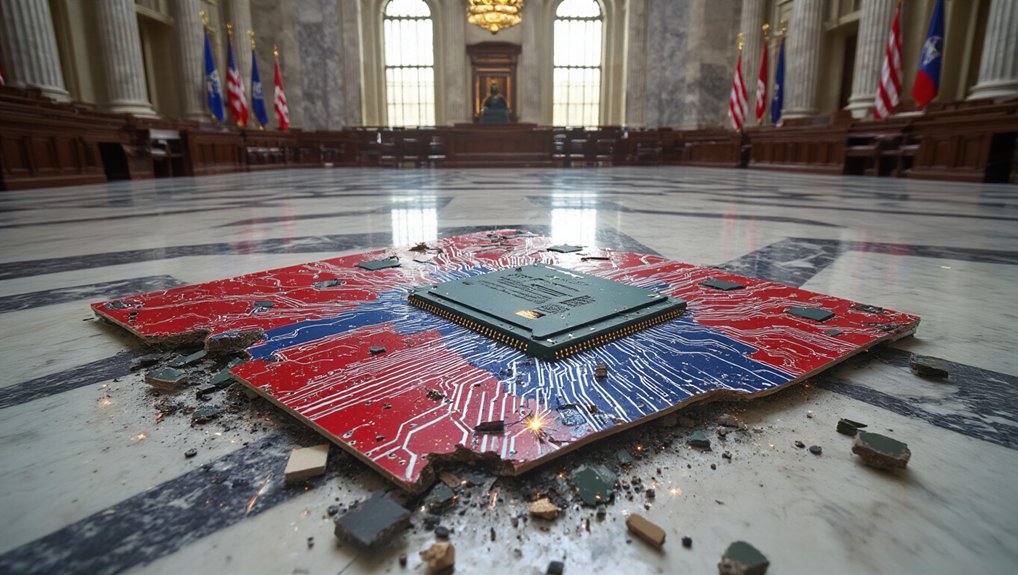
In what could become a landmark case for AI copyright law, The New York Times has filed a federal lawsuit against Perplexity AI, accusing the company of systematic copyright infringement. The lawsuit claims Perplexity AI scraped and used NYT’s content without permission to train its artificial intelligence systems.
The Times alleges that Perplexity’s large language model technology incorporates copyrighted NYT articles and archives. The lawsuit seeks both injunctive relief to stop this practice and monetary damages for past usage. NYT argues this unauthorized copying harms its digital subscription business.
Perplexity faces legal action for allegedly using NYT content without permission, potentially damaging the publisher’s subscription model.
At the heart of the legal battle is whether Perplexity’s use of news content falls under “fair use” protection. The Times rejects this defense, pointing to the commercial nature of Perplexity’s services and the potential market substitution effect. They argue that Perplexity’s AI doesn’t merely transform content but reproduces it wholesale without proper licensing.
Court proceedings have begun with initial hearings on motions to dismiss and requests for preliminary injunctions. The discovery phase will likely reveal details about how Perplexity processes and uses NYT content in its AI systems.
The case has sparked reactions across industries. Many media companies support the NYT’s stance on protecting journalism investments, while some AI advocates worry about overly strict copyright enforcement limiting innovation. Legal experts are closely watching how courts will balance these competing interests.
This lawsuit isn’t just about two companies. It raises fundamental questions about how AI companies can legally obtain training data and whether they must pay for access to quality content. The outcome could establish important precedents for future AI development.
As the legal battle unfolds, discussions about potential licensing models for AI training data have intensified. Whatever the court decides, this case will likely influence how news content and artificial intelligence interact for years to come.
The lawsuit also raises urgent concerns about privacy and fairness in AI systems that are trained on copyrighted materials without proper authorization.