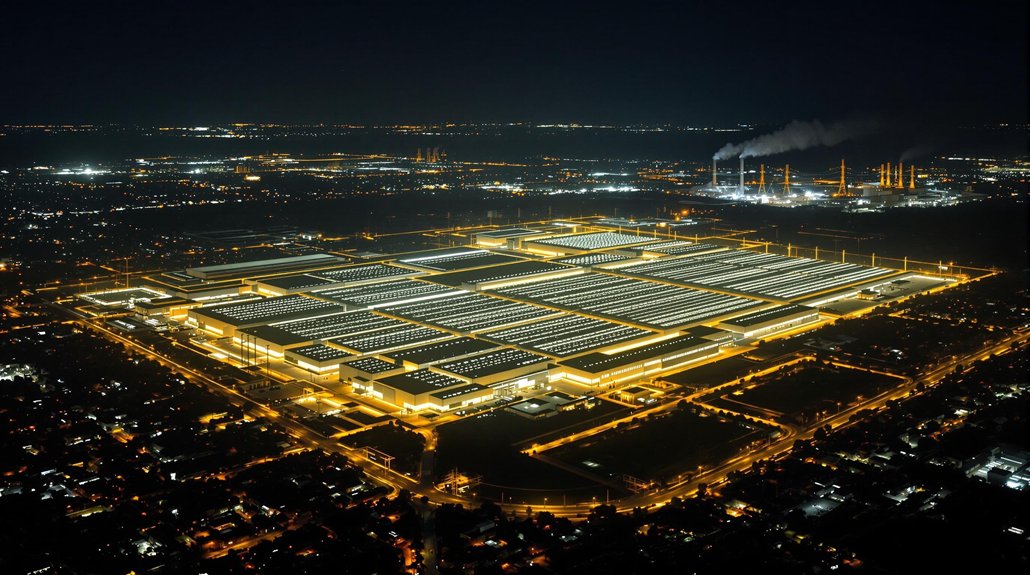

AI-powered data centers are straining America’s aging power grid. These facilities consume massive amounts of electricity, with AI computational power doubling every 100 days. They also create “bad harmonics” that disrupt normal electricity flow, potentially causing appliances to overheat. Concentrated in areas like Northern Virginia, these centers could use up to 12% of all US electricity by 2028. Experts warn this growth demands urgent infrastructure upgrades to prevent widespread failures.
While artificial intelligence brings incredible benefits to society, it’s also creating an unprecedented strain on America’s power grid. AI systems like ChatGPT require massive data centers that consume around 500,000 kilowatt-hours of electricity daily. These power needs are skyrocketing, with AI computational power doubling approximately every 100 days.
AI’s insatiable appetite for energy threatens our grid as computational demands double every 100 days
The burden on our electricity system is growing at an alarming rate. A simple AI interaction like a ChatGPT query uses nearly ten times the electricity of a standard Google search. Experts predict AI data centers could use between 6.7% and 12% of all US electricity by 2028. This represents a growth rate of 26-36% annually, far beyond what our current infrastructure was designed to handle.
The problem isn’t just about quantity but also quality of power. Data centers create “bad harmonics” – disruptions in the normal wave pattern of electricity. Over 75% of severe power distortions occur within 50 miles of these facilities. These disruptions can cause appliances to overheat and even trigger electrical fires.
Geography plays a key role in this crisis. Northern Virginia hosts a massive concentration of data centers, with twice the operational capacity of Beijing. In Loudoun County, Virginia, bad harmonics are four times higher than average. Likewise, areas like Portland, California, and Ireland are seeing enormous growth in energy demand from these facilities.
Our aging grid infrastructure wasn’t built for this kind of growth. The US needs $3.1 trillion in grid investments before 2030. The integration of intermittent renewable sources requires additional technological solutions to ensure reliable power supply. Utility companies typically plan for 2-3% yearly growth, not the 20% increases some areas are experiencing. A large hyperscale data center adds the equivalent power demand of 400,000 electric vehicles to the grid.
Some solutions are emerging. Virginia now requires data centers to build their own substations. Utilities are installing special equipment to stabilize electricity flow. Companies are also creating renewable microgrids near data centers.
Ironically, AI itself might help solve some problems it creates. It’s improving load forecasting, renewable energy integration, and grid efficiency. While the North American Electric Reliability Corporation studies these impacts, experts warn that without proper planning, the risk of grid failures and power distortions will only increase in coming years.