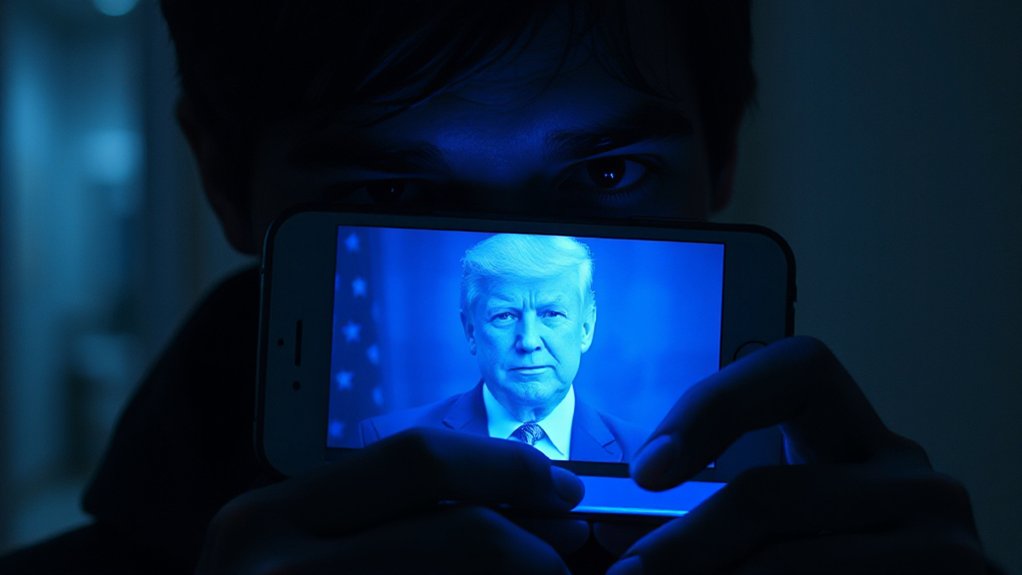

As artificial intelligence systems like ChatGPT become more integrated into daily life, researchers have uncovered consistent political biases in their responses. Studies show these AI tools often lean toward left-wing political values in both text and image outputs.
When tested against standardized questionnaires from Pew Research Center, AI systems show systematic deviation toward left-leaning perspectives compared to average American responses. These models often decline to engage with mainstream conservative viewpoints while readily producing content aligned with progressive values.
The bias stems largely from training data sources. With 60% of training data coming from internet content, 22% from curated sources, and smaller percentages from books and Wikipedia, political leanings embedded in these sources transfer to the AI. Human preference labeling compounds this issue, as evaluators tend to assign higher scores to statements that align with left-wing positions. Similar to Google’s DolphinGemma AI which analyzes patterns in dolphin vocalizations, political bias detection requires sophisticated pattern recognition in human language. AI systems may also reflect existing socio-political patterns, thereby perpetuating social inequalities that disadvantage certain political groups.
Research published in top journals reveals these biases aren’t just academic concerns. AI chatbots can sway users’ political opinions, with studies showing participants leaning further left after interacting with liberal-biased AI. Both Democrats and Republicans perceive this leftward tilt when discussing contentious topics. A University of Washington study found that people interacting with politically biased AI models tend to shift their views in the direction of the chatbot’s bias.
The bias isn’t uniform across all issues. It appears stronger on topics like climate change, energy policy, and labor unions, while sometimes weaker or even reversed on issues like taxation and capital punishment. Curiously, responses in English tend to be more politically neutral than those in other languages.
This political skew raises concerns about potential societal impacts. In already polarized countries like the United States, AI systems could deepen divides and erode trust in institutions if their biases remain unchecked. Unlike racial or gender biases, political biases are often harder to detect and address.
Experts suggest addressing this challenge requires collaboration among policymakers, technology companies, and academics. Increasing AI literacy among users may also help mitigate manipulation effects, as research shows those with greater AI knowledge are less influenced by biased responses.
References
- https://phys.org/news/2025-02-generative-ai-bias-poses-democratic.html
- https://pmc.ncbi.nlm.nih.gov/articles/PMC8967082/
- https://www.washington.edu/news/2025/08/06/biased-ai-chatbots-swayed-peoples-political-views/
- https://cacm.acm.org/news/identifying-political-bias-in-ai/
- https://www.brookings.edu/articles/the-politics-of-ai-chatgpt-and-political-bias/
- https://news.mit.edu/2024/study-some-language-reward-models-exhibit-political-bias-1210
- https://www.gsb.stanford.edu/insights/popular-ai-models-show-partisan-bias-when-asked-talk-politics
- https://news.vcu.edu/article/here-are-five-primary-dangers-from-political-ai-chatbots-vcu-expert-jason-ross-arnold-says