
China’s factories are changing fast. Robots and artificial intelligence are taking on bigger roles in making heavy machines and other products. Companies like Zoomlion, UBTech, and AgiBot are leading this shift.
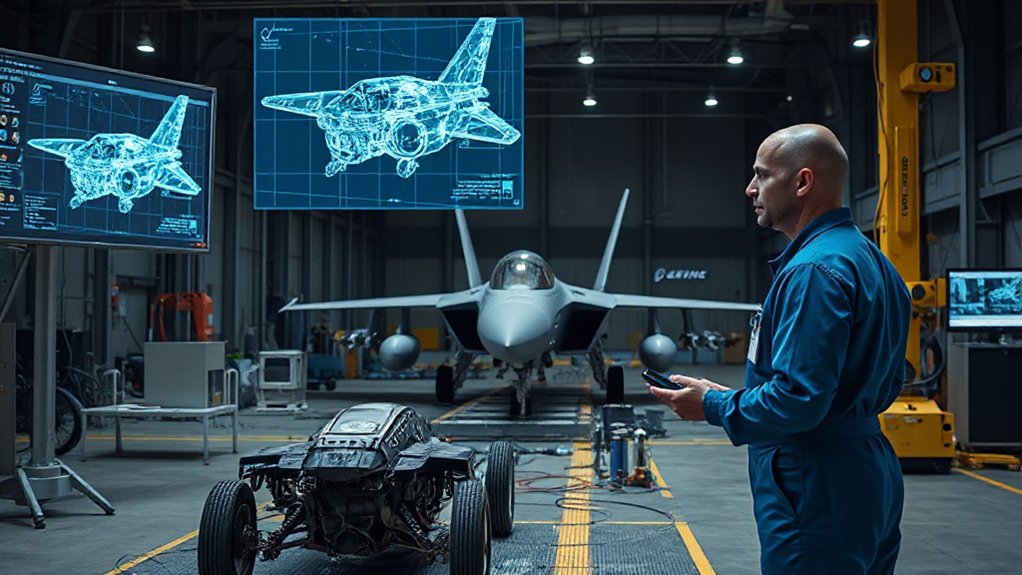
Zoomlion uses AI to run its production lines. Its system makes excavators every six minutes. Trucks roll out every 27 minutes. Cranes are built every 18 minutes. The AI also runs voice-activated diagnostics that are accurate more than 95% of the time. This helps workers spot problems quickly.
Zoomlion’s AI-powered lines churn out an excavator every six minutes — with diagnostics accurate more than 95% of the time.
Zoomlion’s also stepping into humanoid robots. The company entered the humanoid space in 2024. It calls this its “third growth curve.” Its training facility has 100 stations for collecting movement data. These robots connect to 1.7 million equipment units worldwide. The goal is robots that can sense their surroundings and adapt on their own.
Unitree’s H2 robot is another big step forward. It builds on the H1 model, which runs at 3.3 meters per second. The H2 has a lifelike face and moves like a human. It uses advanced control systems and motion planning. Many experts say it shows China’s growing lead in humanoid robot technology. The H2 features 31 joints, making it 19% more flexible than its predecessor.
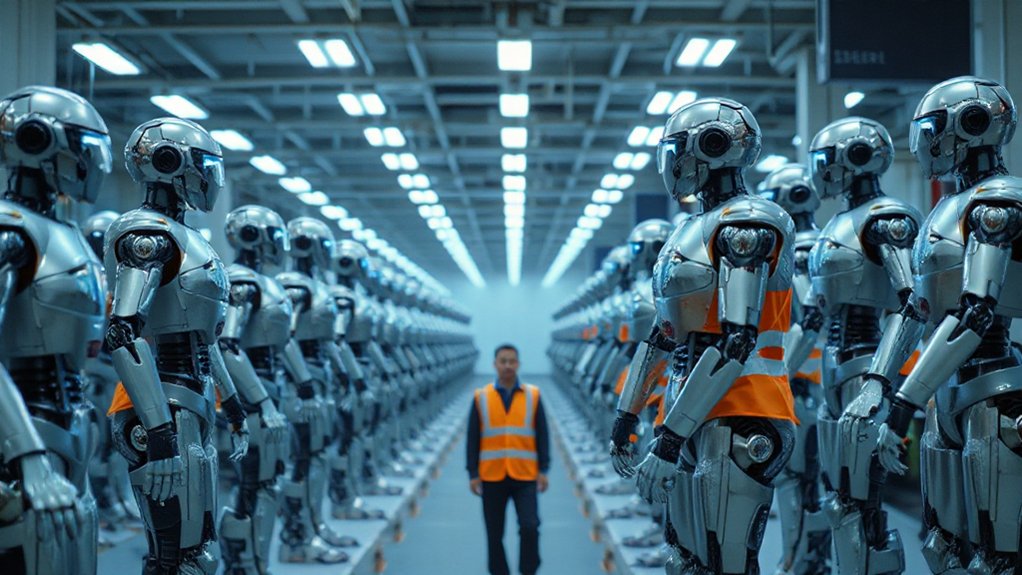
UBTech is planning to mass-produce 10,000 humanoid robots per year by 2026. The company signed a deal with Siemens to scale up. Orders jumped sharply in 2025, reaching 1.4 billion yuan. UBTech combines robotics with digital manufacturing software to improve output. AI tools also analyze these systems for performance and security issues, helping maintain coding standards across large-scale robotic software projects.
AgiBot’s already hitting big numbers. Its Shanghai factory revealed its 5,000th mass-produced humanoid robot. The factory plans to build 2,000 A2 robots by the end of the year. At full capacity, it could produce more than 5,000 A2 robots annually.
These robots aren’t just walking around. They’re running, jumping, playing soccer and tennis. Some can even read brain signals to avoid mistakes. This makes human-robot teamwork safer.
China showcased many of these advances at the 2024 World Robot Conference in Beijing. The country’s factories aren’t slowing down. Zoomlion alone manages over 100,000 material types across more than 400 distinct products in its smart manufacturing operations. They’re building the future, one robot at a time.
References
- https://interestingengineering.com/ai-robotics/humanoid-robots-help-china-construction
- https://www.youtube.com/watch?v=JI64Ka_tM3c
- https://www.youtube.com/watch?v=QDRzgF-8-50
- https://www.youtube.com/watch?v=d17f_5dVW7I
- https://thediplomat.com/2026/03/how-chinas-ai-powered-robots-could-reshape-the-global-order/