
Artificial intelligence isn’t just threatening workers’ jobs — it’s threatening entire businesses. Just like travel agents and stockbrokers were wiped out by past tech shifts, entire industries could now face the same fate. That’s got investors seriously worried.
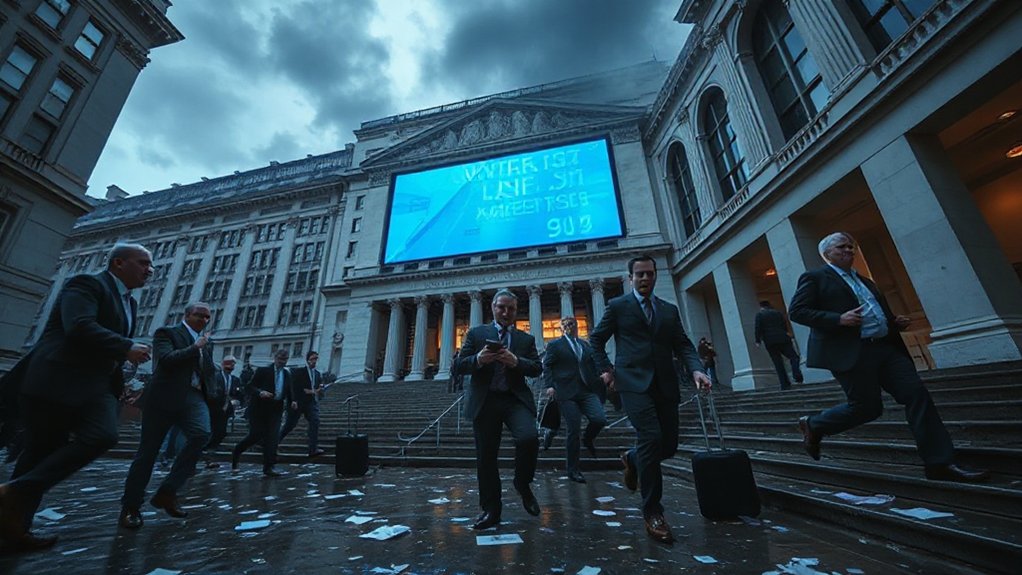
The fear is spreading across stock markets. When a research firm called Citrini published a note about AI’s potential productivity leap, the S&P 500 took a nosedive. Software companies are especially vulnerable. AI agents can now handle code updates and data analysis, which puts many tech firms’ business models at risk. It’s not just about losing employees anymore — it’s about losing entire companies.
The money being poured into AI is staggering. Nvidia, Microsoft, and Amazon are planning to put $60 billion into OpenAI. Amazon alone is considering a $50 billion investment. SoftBank is adding $30 billion, and OpenAI is reportedly seeking another $50 billion from Middle Eastern investors. A lot of this spending is being financed through debt, which raises the risk of a bubble bursting.
Some analysts think that could happen as early as 2026 if AI doesn’t deliver strong enough returns. If that bubble does burst, the economic damage could be massive. A crash similar to the dot-com bust could erase $20 trillion in U.S. household wealth and $15 trillion more abroad. Even a moderate AI stock correction could reduce global economic growth by 0.4%. Countries in Asia and the U.S. could face the worst of it.
Still, not everyone sees doom and gloom. Many economists say fears of a total job apocalypse are overblown. AI’s expected to boost productivity and drive long-term growth. Companies with scalable platforms, strong data networks, and hard assets that can integrate AI are seen as likely winners. Economist Anton Korinek has warned that AI’s disruptive potential could be tenfold greater than previous technological revolutions.
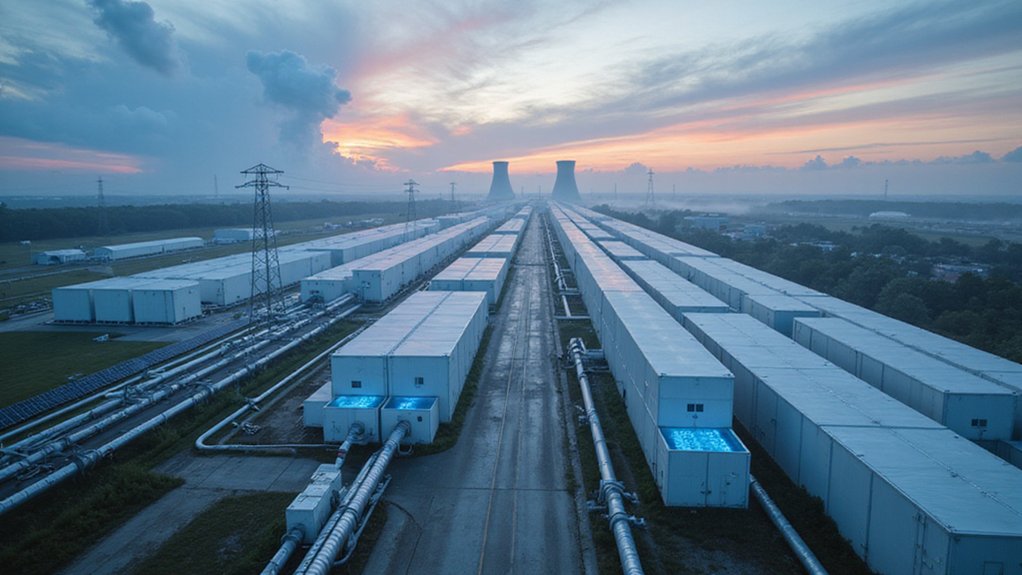
Infrastructure sectors — like energy and connectivity — are also expected to benefit from rising demand. Compounding these concerns, AI data centers are driving massive electricity consumption, putting additional strain on energy grids and raising serious environmental sustainability questions. Adding to market volatility, Chinese traders recorded record Hong Kong stock sales of HK$27.7 billion in a single session, reflecting deepening geopolitical anxieties that could further unsettle global investor confidence.
The core tension is clear. AI’s creative destruction creates both big opportunities and serious risks. It’s reallocating capital, not eliminating it. But the ride’s going to be bumpy.
References
- https://www.businesstimes.com.sg/international/global/wall-street-sees-ais-creative-destruction-coming-entire-companies
- https://johnlothiannews.com/wall-street-sees-ais-creative-destruction-coming-for-entire-companies/
- https://thenextrecession.wordpress.com/2026/02/03/ai-and-creative-destruction/
- https://www.morganstanley.com/im/en-us/individual-investor/insights/the-beat/the-beat-embracing-creative-destruction.html
- https://www.morganstanley.com/im/en-se/institutional-investor/insights/the-beat/the-beat-embracing-creative-destruction.html
- https://www.coutts.com/insights/investing/ai-a-global-tale-of-creative-destruction.html