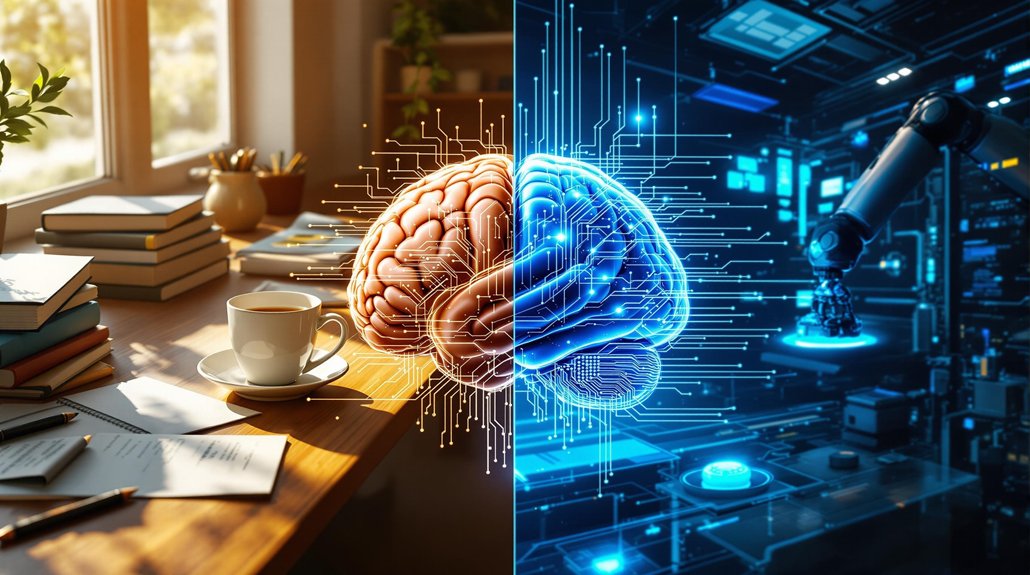

As AI increasingly handles cognitive tasks, concerns about human identity are rising. People now rely on machines for decisions and problem-solving, causing a shift in valued skills from knowledge to creativity. AI companions blur the line between authentic and artificial relationships. While technology offers efficiency and new opportunities, it also raises ethical questions about privacy and bias. The balance between technological advancement and preserving human agency remains a critical consideration for our future.
As artificial intelligence continues to weave itself into the fabric of daily life, society stands at a crossroads between technological progress and human values. AI systems now process data faster than humans ever could, helping doctors detect cancer, assisting scientists in drug discovery, and making daily tasks more efficient. These powerful tools are changing how people solve problems and make decisions.
The impact of AI on human thinking is profound. When people rely on machines to recommend what to watch, buy, or even believe, they may lose critical thinking skills. This “cognitive offloading” means humans do less mental work as AI handles more tasks. While this frees up brain power for creativity, it raises questions about what makes human thought unique and valuable.
In workplaces worldwide, AI is reshaping jobs. Routine tasks are becoming automated, potentially leading to job losses in some sectors. At the same time, new roles are emerging that focus on working with AI systems. Experts predict over 100 million new programmers will be needed in coming years. The most valuable skills are shifting from knowledge-based to wisdom and creativity. The transition could force approximately 14% of workers to completely switch careers by 2030 as AI transforms the global job market.
AI also changes human relationships. Virtual assistants and AI companions are becoming part of daily life. These systems can mimic emotions and persuade users, blurring the line between authentic human connection and programmed responses. This raises concerns about maintaining genuine relationships in an AI-enhanced world.
Ethical questions surround AI development. Algorithms contain built-in values and may perpetuate biases found in their training data. Virtual assistants like Amazon Echo demonstrate how AI integration creates privacy issues when they inadvertently share user recordings. Modern AI testing methods such as the Turing Test challenge our fundamental understanding of what constitutes intelligence and how we identify it in machines. Issues of privacy, fairness, and accountability remain urgent as AI gains access to more personal data and makes more important decisions.
The balance between embracing AI’s benefits and preserving human agency requires careful thought. As society integrates these powerful tools, maintaining transparency in AI systems and prioritizing human autonomy will be essential to guarantee technology serves humanity’s best interests rather than diminishing what makes people human.