While millions of beloved pets go missing each year across the United States, innovative facial recognition technology is dramatically improving their chances of coming home. The Love Lost AI system, launched by nonprofit Petco Love in 2021, has already helped reunite 100,000 owners with their lost pets, addressing a problem where traditional methods often fall short.
The free platform uses advanced machine learning to collect up to 512 data points from each pet’s photo, identifying unique features like eye shape, whisker length, unusual markings, and tail curvature. This technology can recognize pets even when their appearance changes dramatically, working without human intervention to match lost animals.
Traditional reunion rates at shelters hover around 20%, with about 60% of lost pets never finding their way home through conventional methods. Most pet owners don’t check shelters when their pet disappears—only 22% do—while 80% search online, often on just one platform.
The Love Lost system solves this problem by creating a central database that pulls information from over 3,000 shelters and rescue organizations, as well as social media and community platforms like Nextdoor and Neighbors. The system’s success relies heavily on financial donations to maintain its operation as a nonprofit service.
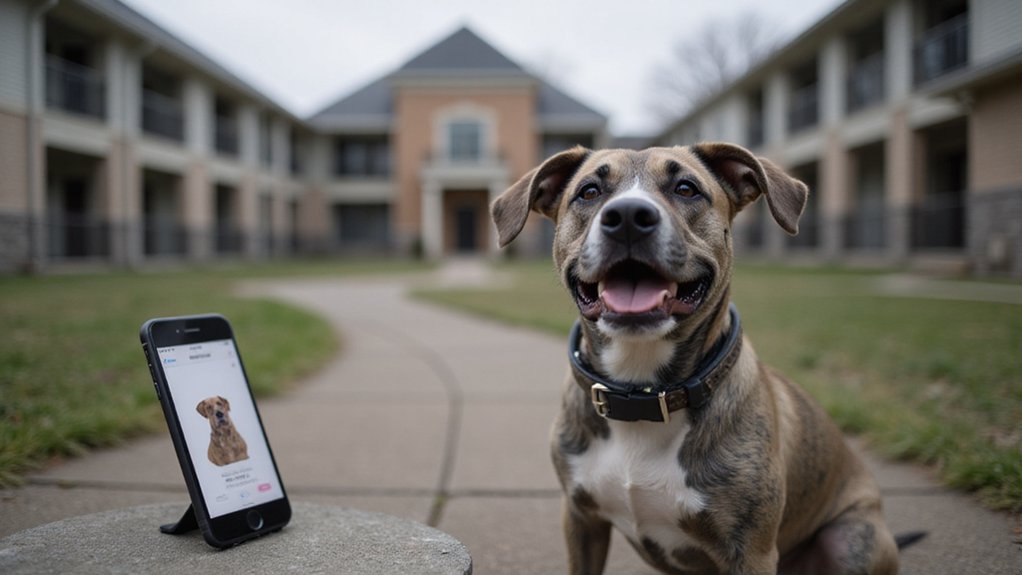
The system is remarkably user-friendly. Pet owners simply upload photos of their animals to the database. If their pet goes missing, the system continues real-time monitoring and sends match alerts via text and email when potential matches are found in any connected source. The platform efficiently utilizes image recognition to identify lost pets across its extensive database.
One success story involves Michael Bown, who was reunited with his pitbull-mix Millie after she ran 10 miles and was hit by a car. Thanks to the Love Lost system, Millie was found within just 14 hours despite these extreme circumstances.
References
- https://www.cbsnews.com/news/ai-lost-pets-petco-love-facial-recognition/
- https://www.foxnews.com/tech/ai-technology-helps-reunite-lost-dogs-owners
- https://www.dvm360.com/view/new-app-uses-pet-biometrics-to-find-lost-cats-and-dogs
- https://www.kiro7.com/news/consumer/free-ai-tracker-reunites-lost-pets-with-owners/T7ZBFS3NPFA47EQTEPOUQNAKQI/
- https://iartificial.blog/en/aplicaciones/la-ia-que-encuentra-mascotas-perdidas-como-funciona-esta-revolucion-en-la-busqueda-de-animales/