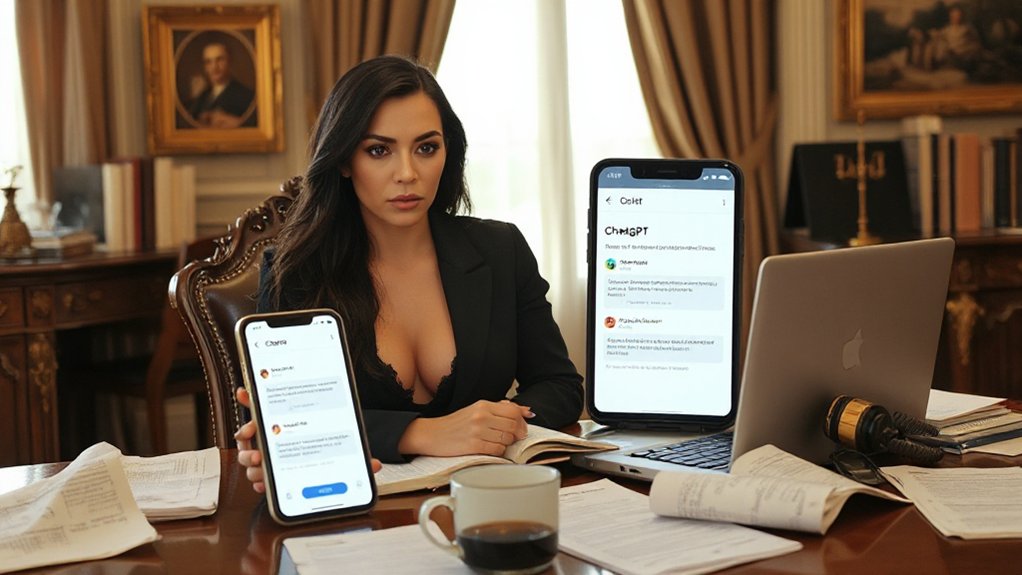

While pursuing her dream of becoming a lawyer, Kim Kardashian has accused ChatGPT of leading her astray during law exam preparation. The reality TV star revealed she used the artificial intelligence tool to help answer legal questions by uploading pictures of exam problems, but found the responses frequently contained incorrect information.
Kardashian’s experience highlights the potential pitfalls of relying on AI for specialized knowledge. She reported that ChatGPT’s inaccurate answers directly contributed to her failing certain exam questions. Despite recognizing these flaws, she continued using the AI tool throughout her studies.
During an appearance on a Vanity Fair lie detector series, Kardashian expressed frustration with ChatGPT‘s performance. She described moments of anger and even accused the AI of being “always wrong” when providing legal advice. Her disappointment was evident as she blamed the technology for her disappointing test results.
The media quickly picked up on Kardashian’s comments, framing them as a cautionary tale about AI limitations. The story sparked conversations about how AI tools fit into educational settings, especially for professional qualifications like law degrees.
Kardashian’s experience raises ethical questions about using AI for exam preparation. While she denied cheating, her use of ChatGPT to answer exam questions occupies a gray area in academic integrity discussions. The case highlights the need for clearer guidelines on AI assistance in education.
Despite these technological setbacks, Kardashian remains committed to her legal aspirations. She’s reportedly weeks away from qualifying as a lawyer and has expressed plans to become a trial lawyer within the next decade, shifting from her celebrity status to legal practice.
Her experience serves as a reminder that AI tools like ChatGPT, while helpful in some contexts, can’t replace traditional learning methods for complex subjects. For specialized fields like law, where precision matters, human oversight and expert verification remain essential when using AI assistance.
AI systems like the one Kardashian used often make decisions without providing clear explanations of their reasoning, making it difficult for users to evaluate the accuracy of the information.