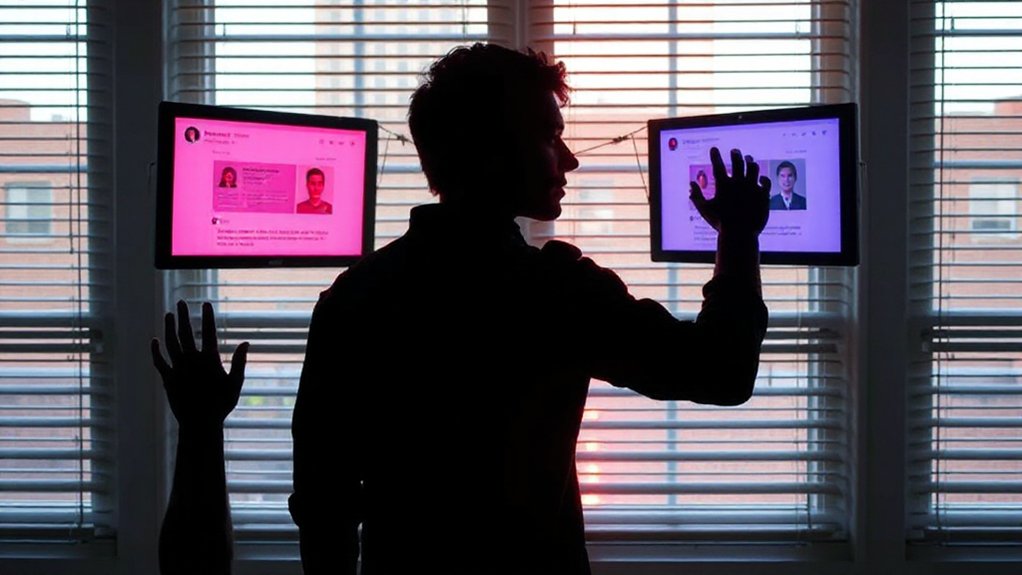

While artificial intelligence promises a brave new world of innovation and progress, it’s delivering something else entirely for half the population. The numbers tell a dismal story: women make up just 12% of AI researchers and less than a third of the global AI workforce. Go figure. In an industry screaming about talent shortages, we’re somehow still keeping women out.
This lack of female representation isn’t just unfair—it’s actively shaping AI into something that works against women. A shocking 44% of AI systems show gender bias. Twenty-five percent double down with both gender and racial bias. Nice work, tech bros.
The AI revolution: built by men, biased against women, and calling it innovation.
The real-world consequences are piling up fast. AI-powered hiring tools penalize women for career breaks (read: having kids). Medical diagnosis algorithms work worse for female patients. Financial systems deny women credit despite identical profiles to men who get approved. It’s not a glitch; it’s the system working exactly as designed.
Why does this happen? Simple. Biased datasets, skewed perspectives, and development teams that look nothing like the diverse world they’re building for. When your AI team is mostly male, guess whose needs get overlooked?
The economic fallout is serious. Women risk missing out on productivity gains from AI. They face employment disruption without the benefits of tech augmentation. And companies pushing biased AI are alienating the gender that controls most consumer purchasing decisions. Smart move.
What’s especially rich is that some AI systems are literally telling women to ask for less money. ChatGPT was caught suggesting women negotiate more “reasonably” than men for the exact same jobs. When called out, tech companies shrug and mumble something about “unintended consequences.”
This isn’t just a tech problem. It’s economic erasure in progress. As AI reshapes everything from healthcare to hiring, women are being systematically disadvantaged by code written in their absence. Much like Muslims and Asians face content moderation bias that restricts their cultural expression online, women are encountering similar forms of algorithmic discrimination. The industry that claims to be building the future is busy replicating the worst parts of the past. Women also maintain significantly less trust in data security from AI providers than their male counterparts. Social media algorithms are even known to shadowban women’s bodies, further marginalizing female perspectives in digital spaces.
References
- https://womensmediacenter.com/fbomb/how-ai-perpetuates-gender-bias
- https://www.deloitte.com/us/en/insights/industry/technology/technology-media-and-telecom-predictions/2025/women-and-generative-ai.html
- https://www.weforum.org/stories/2025/06/amnc25-what-to-know-about-ai-and-the-gender-gap/
- https://www.unwomen.org/en/news-stories/interview/2025/02/how-ai-reinforces-gender-bias-and-what-we-can-do-about-it
- https://www.mckinsey.com/capabilities/mckinsey-digital/our-insights/superagency-in-the-workplace-empowering-people-to-unlock-ais-full-potential-at-work