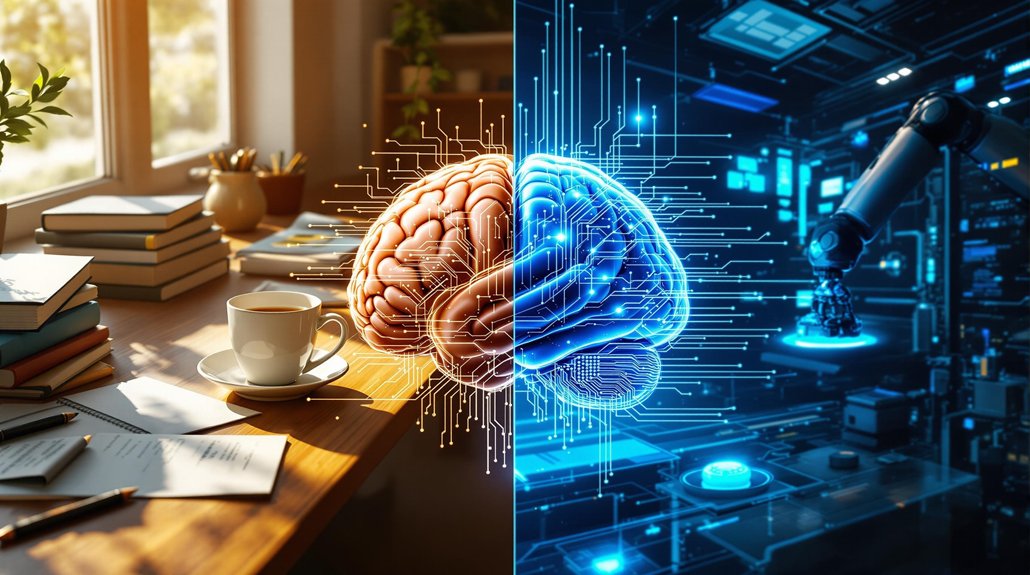

While most people think they’re just scrolling through social media or binge-watching shows, AI is quietly pulling the strings behind every click, swipe, and purchase. The truth? Algorithms have infiltrated nearly every corner of digital existence, and they’re getting better at it every day.
Consider this: 83% of companies now treat AI as their top strategic priority. That’s not just tech giants anymore. Healthcare providers are jumping in too, with 38% using AI-assisted diagnostic tools. Even that guilty-pleasure Netflix binge? AI-powered recommendations generate a cool billion dollars annually for the streaming giant. No wonder over 100 million households rely on AI for daily tasks.
The personalization game runs deep. Social media feeds, streaming suggestions, even those eerily accurate ads that follow users around the internet – all powered by algorithms studying every click and hover. About 40% of households chat with Siri or Alexa like they’re old friends. These AI assistants speak 80-plus languages, making everyone feel special. With over 4 billion voice assistants already in use globally, the invasion of conversational AI shows no signs of slowing down.
E-commerce sites use AI to push products with surgical precision, boosting conversion rates and emptying wallets faster than ever. Home life isn’t safe either. AI vacuum cleaners are set to invade 50% more homes by 2028. Facial recognition security systems already watch over 17% of households.
Fitness apps analyze workout data, creating personalized routines that know users better than they know themselves. More than half of adults turn to AI for research and problem-solving outside work. Surprise, surprise – richer folks love this stuff even more. Behind all this convenience, AI model training now doubles its computing power every five months, ensuring these systems grow smarter at breakneck speed.
Here’s where it gets creepy. AI doesn’t just help; it watches. Every online move gets tracked, analyzed, and stored. Algorithms predict what users want before they know it themselves. Surveillance tools monitor homes and public spaces. Apps secretly track emotional responses through usage patterns. Silent. Constant. Always learning. Despite their growing adoption in mental health, AI therapy bots lack the ability to interpret nonverbal cues essential for effective therapeutic relationships.
The economic impact? Massive. The AI market sits at $391 billion and growing at 35.9% annually. Healthcare alone saved $13 billion in 2025 thanks to AI. But those savings come with a price: 300 million jobs face automation in the US and Europe. Data entry workers? 7.5 million positions gone by 2027.