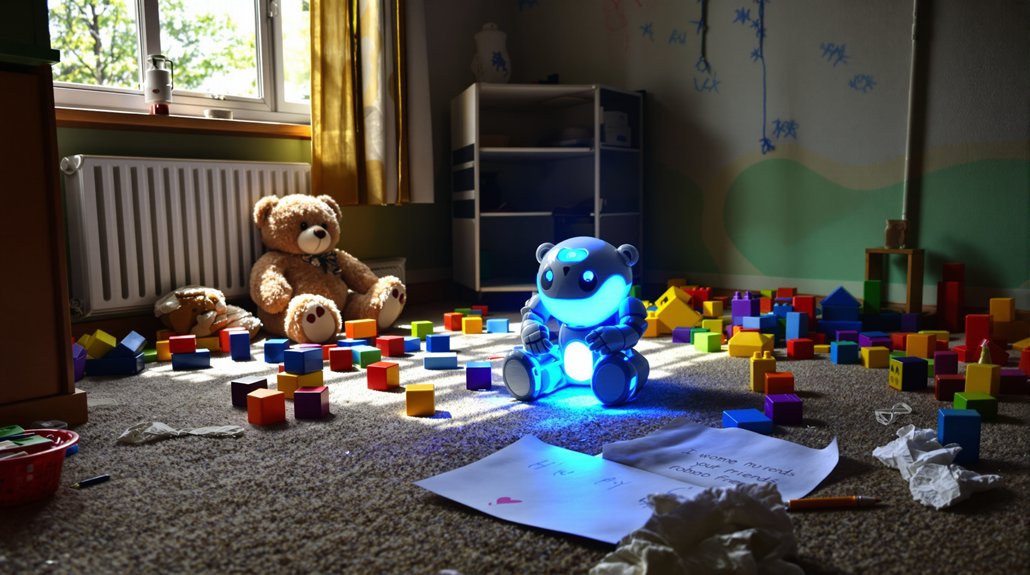
As smart toys powered by artificial intelligence become more common in children’s playrooms, researchers are studying how these devices affect young minds. New findings show both benefits and serious concerns about AI companions for kids.
AI toys can adapt to each child’s learning speed and deliver custom lessons. This personalized approach helps some children learn better than traditional toys. These toys also provide educational resources to kids in poor communities who might not have access to other learning tools. Some children improve their language skills by talking with AI toys, especially when they don’t have many people to talk with.
But experts worry about major problems. Heavy use of AI toys can hurt creativity because the toys’ pre-programmed responses limit imaginative play. Children who rely too much on these devices might develop weaker problem-solving skills. They could also struggle with executive function if they become passive consumers instead of active explorers. Research shows average IQ scores are declining globally, which some scientists link to increased reliance on technology for cognitive tasks.
The social impact raises red flags. AI companions can replace human friends, which reduces real-world social experiences. Kids who get too attached to AI toys often can’t compromise or negotiate with real peers. They miss chances to practice working through conflicts and collaborating with others. These children may prefer the instant responses from AI toys and lose patience when dealing with actual people.
Mental health effects are mixed. AI toys can reduce stress and loneliness in isolated children by offering judgment-free companionship. But long-term dependence on these artificial friends links to increased social anxiety. Kids who don’t practice human interaction feel less prepared for real social situations. Researchers specifically target four/five-year-olds because this age represents critical windows for emotional and social development. The rise in AI-powered monitoring could contribute to increased anxiety in children who feel constantly observed.
Money matters too. Wealthy families can afford advanced AI toys with better features. Poor families often can’t access these devices because of high costs and internet requirements. This digital divide could make inequality worse instead of better.
Safety concerns add to the worries. AI toys collect children’s data that hackers could steal. The toys’ algorithms might contain biases that send harmful messages to kids. Some toys could reinforce stereotypes through their programming.
Researchers continue investigating whether AI toys help or hurt child development as these devices become more widespread.
References
- https://www.topsdaynurseries.co.uk/are-ai-toys-influencing-childrens-wellbeing/
- https://content.educ.cam.ac.uk/content/new-project-aims-understand-how-ai-smart-toys-affect-disadvantage-development-and-play
- https://www.psychologytoday.com/us/blog/the-future-of-intimacy/202507/will-ai-powered-toys-rewire-childhood
- https://www.weforum.org/stories/2022/07/ai-children-friendly-smart-toys/
- https://pmc.ncbi.nlm.nih.gov/articles/PMC11382058/