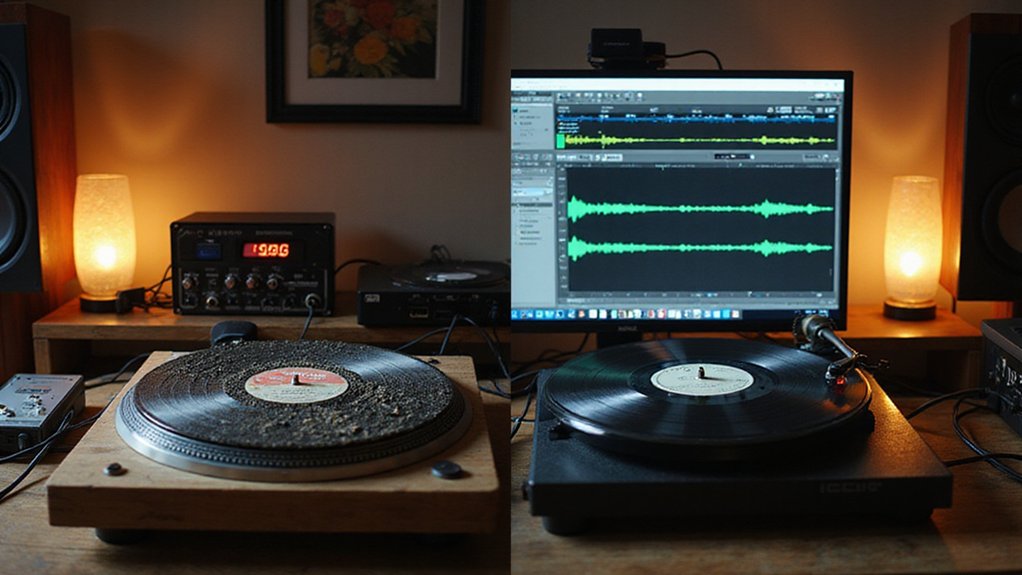

Album remastering gives old recordings new life through modern audio technology. Engineers use specialized software to clean up hisses, adjust bass and treble, and enhance sound clarity. Unlike remixing, which changes individual instrument tracks, remastering only refines the final audio. The process gained popularity with CD releases and continues today for streaming platforms. Format changes often trigger these audio refreshes, giving fans cleaner versions of classic albums. The technical details reveal fascinating behind-the-scenes work.
When music fans hear the term “remastered album,” they’re often unsure what it actually means. Remastering is a process that improves the quality of original recordings to provide a cleaner, sharper listening experience. Audio engineers take previously released music and apply new mastering techniques to optimize it for modern audio standards. This process aims to remove flaws while preserving the essence of the original work.
The technical side of remastering involves specialized tools and expertise. Engineers use digital audio workstations (DAWs) to make adjustments with tools like equalization, compression, and limiting. For older recordings, they might use restoration software such as RX to remove hissing or crackling noises. When possible, they start with original unmastered mixes, but they can also apply remastering principles to previously mastered tracks. Critics have noted that overuse of noise reduction during remastering can introduce unwanted sonic artifacts that affect the original signal.
Remastering artistry demands precise tools, as engineers delicately balance equalization and compression to breathe new life into vintage recordings.
There are several reasons why albums get remastered. Format shifts, like vinyl to CD or digital to streaming, often trigger remastering projects. Modern technology allows for increased dynamic range and frequency response that wasn’t possible decades ago. Streaming services now offer hi-res, lossless tiers that can showcase these improvements. Vintage recordings that sound flat or muffled can be refreshed through remastering. Albums from the ’60s and ’70s may need remastering as they were originally optimized for vinyl rather than today’s digital platforms.
It’s important to understand that remastering differs from remixing. Remastering redoes the final step in production, while remixing goes back to adjust individual instrument tracks, requiring more extensive work. Remixing changes relative levels between song elements and is typically more labor-intensive.
Remastering has a rich history, with the first significant wave beginning when albums were reissued on CD. The practice helps preserve recordings from early eras by removing technical limitations. Record labels have found that remastered releases appeal to loyal fans who want to experience favorite albums in a new way.
These releases generate fresh sales of previously released material and create opportunities for special anniversary editions. Through remastering, music from the past continues to sound its best on modern audio systems, bridging generations of listeners with improved sound quality.
References
- https://en.wikipedia.org/wiki/Remaster
- https://www.abbeyroad.com/news/whats-the-difference-between-mastering-and-remastering-3235
- https://www.izotope.com/en/learn/remastering.html
- https://mixbutton.com/music-production/mastering-basics/what-does-it-mean-when-music-is-remastered
- https://www.soundguys.com/what-is-a-remaster-and-how-does-it-affect-your-music-91463/