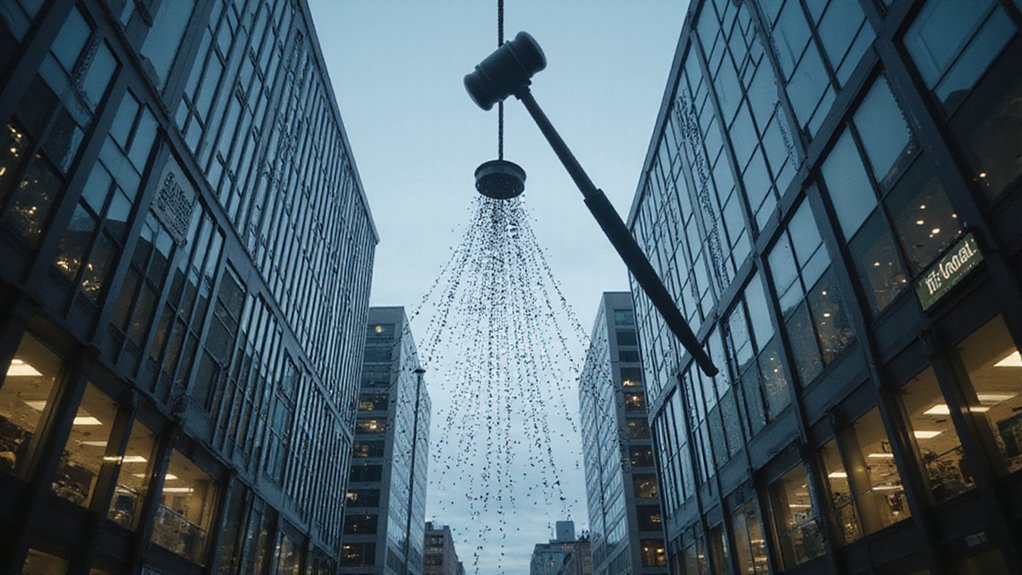

Smart cities transform urban living through connected technologies but raise serious privacy concerns. Only 25% of cities assess privacy impacts before deploying new systems. Facial recognition cameras and sensors collect vast amounts of citizen data, often without adequate consent or oversight. Regulations haven’t kept pace with technological advances, creating inconsistent protections across regions. Some cities demonstrate better approaches by focusing on environmental data rather than tracking individuals. The balance between innovation and personal privacy remains precarious.
As cities around the world embrace smart technology, privacy concerns are growing at an alarming rate. Urban sensors and connected devices now collect vast amounts of data about citizens, including their movements, behaviors, and even biometric information. Studies show that only 25% of smart cities conduct privacy assessments before launching new technologies, leaving many residents unaware of how their personal information is being used.
Surveillance cameras with facial recognition technology have become common in public spaces. These systems help with law enforcement and traffic management but often operate without proper oversight. These systems frequently misidentify minorities due to inherent biases in their algorithms. Even when cities try to protect privacy by anonymizing data, experts warn that combining different datasets can still reveal people’s identities.
The proliferation of facial recognition in our cities creates a false sense of anonymity while our digital identities remain exposed.
The risks are serious and widespread. Data breaches have exposed sensitive information from interconnected devices across entire cities. Hackers can target vulnerabilities in smart meters, traffic lights, and sensor networks. When one system is compromised, the damage can spread to multiple city services at once.
Regulations haven’t kept pace with these rapid technological changes. Laws about data collection vary widely between regions, making compliance difficult for city planners. Many urban areas lack clear rules about how surveillance tools should be used or how private companies can access and use citizen data. Comprehensive federal data legislation would provide consistent standards across all smart cities and better protect residents’ information.
Some cities are finding better approaches. By focusing on collecting non-personal environmental data instead of tracking individuals, they can still improve services while protecting privacy. Strong policies that forbid re-identification of anonymous data also help reduce risks. Leading cities like Barcelona have implemented energy-optimizing streetlights that improve efficiency without compromising personal information.
Citizens often don’t understand the extent of data collection happening around them. Complex consent forms and technical language make it hard for people to control their information.
As smart cities continue to develop, the balance between innovation and privacy protection remains uncertain. Without improved oversight and security measures, the promise of better urban living may come at the cost of personal privacy.
References
- https://trustarc.com/resource/protecting-personal-data-in-smart-cities/
- https://itif.org/publications/2023/03/06/balancing-privacy-and-innovation-in-smart-cities-and-communities/
- https://mcity.umich.edu/wp-content/uploads/2023/03/Privacy-Frameworks-for-Smart-Cities_White-Paper_2023.pdf
- https://mcity.umich.edu/smart-city-technologies-can-enhance-life-for-residents-if-data-privacy-protections-are-in-place/
- https://www.seagate.com/blog/citizen-concerns-data-ownership-and-privacy-in-smart-cities/