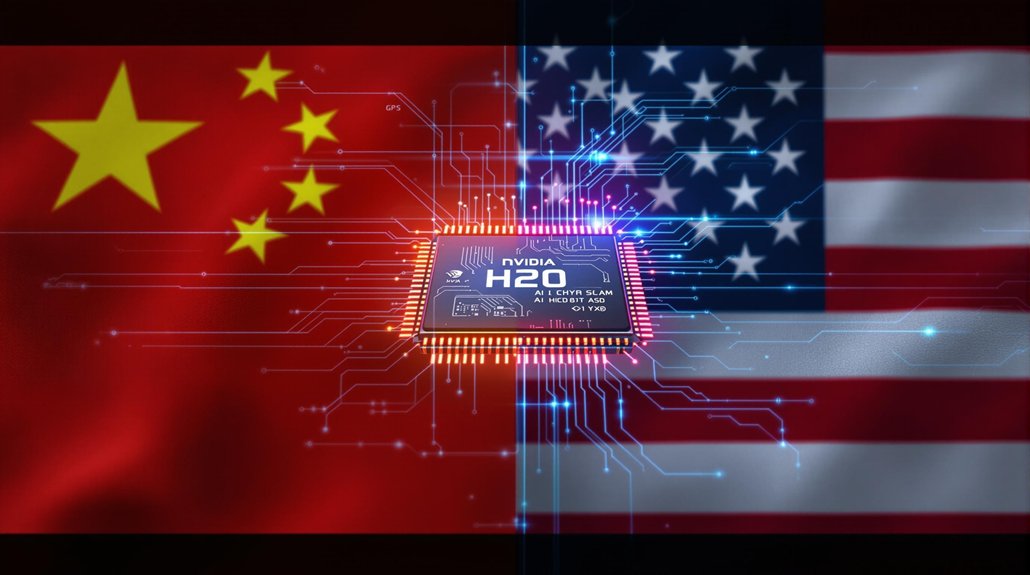
China just called Nvidia to the principal’s office. The Cyberspace Administration of China summoned the chip giant over what they’re calling “serious security vulnerabilities” in those H20 AI chips.
Beijing’s not messing around—they think Nvidia’s hardware comes with some unwanted extras.
Nvidia’s chips might be packing more than advertised—and Beijing’s calling them out.
The allegations? Hidden backdoors. We’re talking tracking systems that work like GPS and remote shutdown features that could, in theory, let someone kill Chinese systems from halfway around the world. Pretty wild stuff.
The timing’s interesting too, considering China just gave Nvidia the green light to sell these H20 chips again after the US export ban drama. These chips are built on Nvidia’s Hopper architecture, the same foundation that powers their high-end H100 models.
Here’s where it gets spicy. The US Chip Security Act actually requires GPS-style tracking in all AI chips exported from America. So Beijing’s paranoia? Not entirely baseless. The CAC specifically cited comments from US lawmakers about the need for tracking capabilities in advanced chips sold to foreign countries.
Chinese authorities want Nvidia to hand over detailed documentation and risk assessments. They’re fundamentally saying, “Show us what’s under the hood, or else.”
Nvidia’s playing defense hard. Their spokesperson came out swinging: “Nvidia does not have ‘backdoors’ in our chips that would give anyone a remote way to access or control them.”
They’re talking up their cybersecurity protocols and swearing there’s no remote control funny business. But here’s the thing—nobody’s presented independent verification either way.
The political backdrop makes this whole situation even messier. The US slapped export bans on high-performance AI chips because, you know, national security and military concerns.
They lifted some restrictions in April, but the damage to trust was already done. Both countries are locked in this tech rivalry that’s turning every chip sale into a potential international incident.
Meanwhile, China’s black market is having a field day. About a billion dollars worth of Nvidia AI chips moved through unofficial channels last week alone.
We’re talking banned models like the B200, H10, and H200 just floating around despite all the regulatory chest-thumping.
The demand for these chips in China isn’t going anywhere, security concerns or not. Multiple whistleblower programs have been proposed in U.S. legislation to combat the ongoing smuggling efforts by Chinese entities. Whether Nvidia’s chips actually have backdoors or China’s just being paranoid, one thing’s clear—this tech cold war is heating up fast.