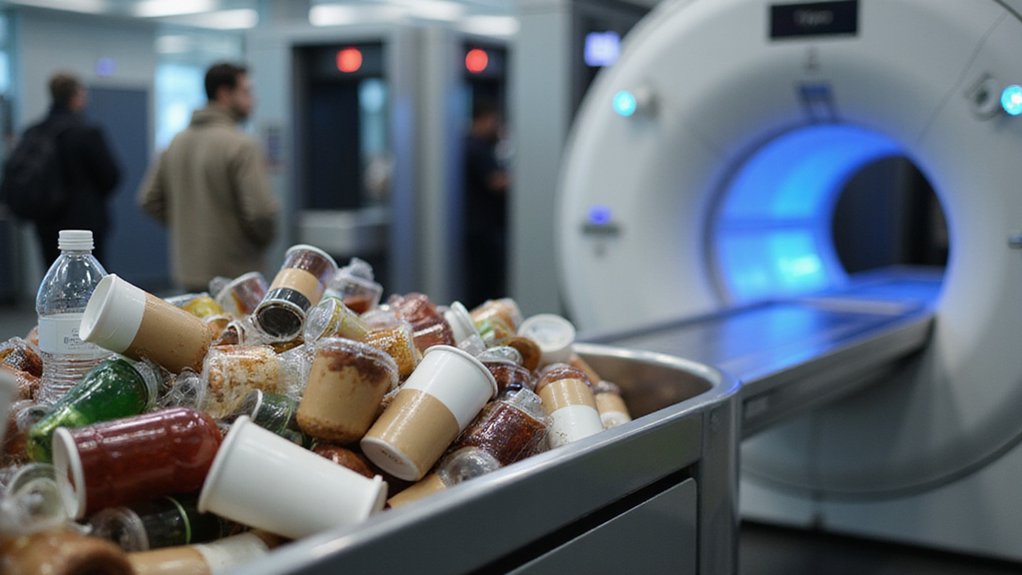
While travelers rush to chug their expensive airport coffee before reaching security checkpoints, over 40% of U.S. airports still use outdated screening technology that can’t detect liquid explosives.
Only 255 out of 432 U.S. airports have installed the new CT scanners capable of spotting dangerous liquids. The rest? Still living in the post-9/11 era.
More than 40% of U.S. airports remain stuck in the post-9/11 era, unable to detect liquid explosives with outdated screening equipment.
The annoying 3.4-ounce (100 mL) liquid rule continues to frustrate passengers nationwide. Perfectly good water bottles, fancy shampoos, and half-finished Starbucks drinks end up in overflowing trash bins daily.
It’s a ridiculous scene repeated thousands of times across the country.
Here’s the catch: modern technology exists that could end this madness. Advanced CT scanners create 3D images of bag contents, easily distinguishing harmless drinks from potential threats.
But at $2 million per unit, plus expensive infrastructure upgrades, airports aren’t exactly rushing to install them.
Full implementation isn’t projected until—wait for it—2043. That’s not a typo. Twenty years from now, people will still be chugging drinks at security checkpoints at smaller regional airports.
The situation creates a bizarre travel experience. Passengers flying from modernized airports might breeze through security with their water bottles on the outbound journey, only to have them confiscated on the return trip from outdated facilities.
Consistency? What’s that?
Security experts warn against premature policy changes, though. Relaxing liquid rules before all airports have proper detection capabilities could create dangerous vulnerabilities.
Nobody wants that.
These restrictions were originally implemented after the 2006 London terror plot involving liquid explosives, which fundamentally changed air travel security protocols.
Meanwhile, the largest and busiest airports get priority for upgrades while smaller facilities wait in line.
Many older terminals require substantial renovations—floor reinforcement, checkpoint redesigns—just to accommodate the bulkier scanning equipment. TSA continues to employ multilayered screening processes to maintain security despite technology gaps.
References
- https://www.foxnews.com/us/noem-teases-next-big-announcement-may-change-airport-security-rule
- https://abcnews.go.com/Business/wireStory/new-airport-scanners-spotting-liquid-explosives-airports-lack-123888542
- https://www.youtube.com/watch?v=ltHmPK0Zl6c
- https://abcnews.go.com/US/tsas-new-airport-security-travelers-2025/story?id=123837407
- https://travelopod.com/blog/post/tsa-s-new-security-rules-2025-11-items-exempted-from-3-1-1-rule