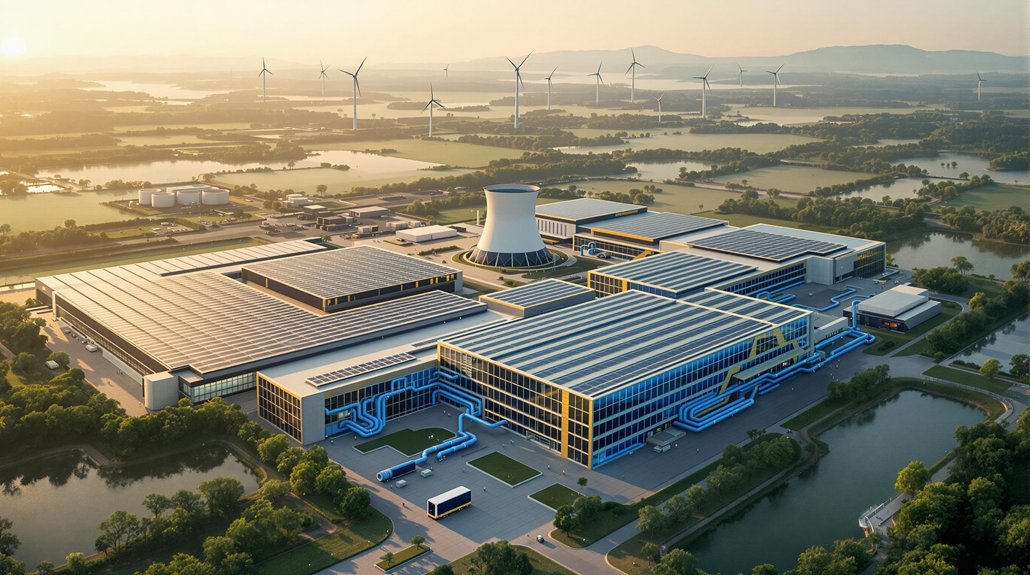
The Department of Energy has announced plans to build AI data centers at 16 federal sites across America. Construction will begin by 2025, with operations expected by 2027. These facilities, including sites at Idaho National Lab and Los Alamos National Lab, aim to strengthen U.S. competitiveness in artificial intelligence. The centers will incorporate sustainable technologies like nuclear reactors and carbon-capture systems. What remains unclear is how these facilities will impact local communities and the nation’s AI capabilities.
AI data centers are becoming a crucial piece of digital infrastructure around the world. The Department of Energy has recently announced an ambitious plan to utilize 16 federal sites, including Idaho National Lab and Los Alamos National Lab, for new AI data centers. This initiative aims to maintain America’s competitive edge in the global AI race.
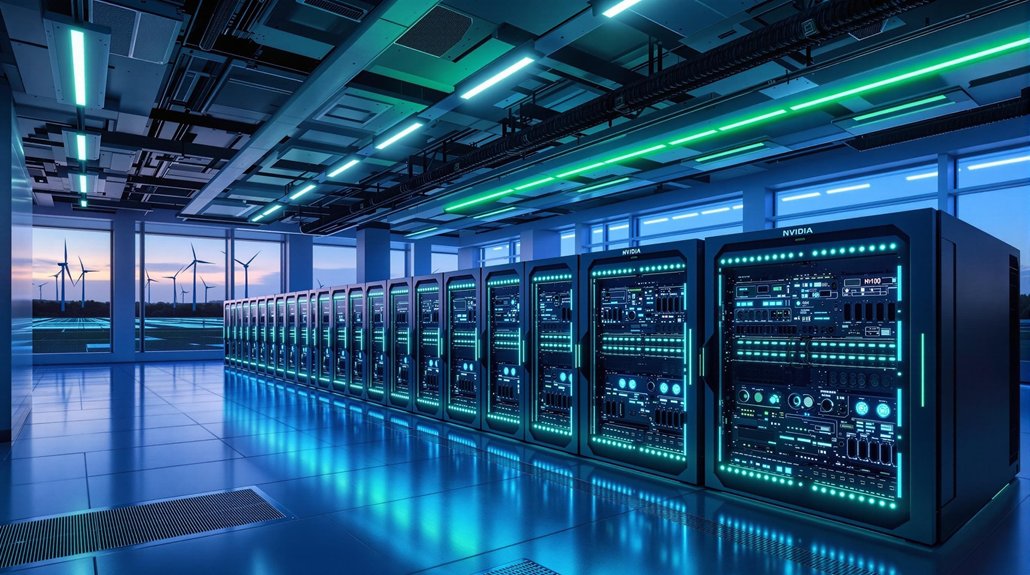
These specialized facilities will be built with cutting-edge technology to support the intensive computing needs of AI systems. Construction is expected to begin by 2025, with the centers becoming operational by 2027. What makes this plan unique is the integration of nuclear reactors and carbon-capture technologies to power these high-demand facilities. These data centers will require significantly more power than traditional facilities, often exceeding 60kW per rack due to the resource-intensive nature of AI workloads.
AI data centers differ from traditional data centers because they need more powerful computing resources like GPUs and TPUs. They also require advanced cooling systems to handle the heat generated by these high-performance servers. Many of these new facilities will use liquid cooling instead of traditional air cooling because it’s more efficient and better for the environment.
The growth in AI computing demand is largely driven by major cloud providers like Amazon Web Services, Google Cloud, and Microsoft Azure. Experts predict that by 2030, these hyperscalers will handle 60-65% of AI computing in the U.S. and Europe. There’s also increasing interest from companies wanting to train their own private AI models.
AI isn’t just the focus of these data centers—it’s also being used to run them better. Technologies like predictive maintenance, intelligent routing, and automated server management help these facilities operate more efficiently and reliably. Similar to healthcare applications, AI systems in these centers will require regular audits to prevent biases and ensure optimal performance.
Energy supply is a major consideration for these power-hungry facilities. The federal initiative prioritizes sustainable energy sources and partnerships with energy developers to meet the massive electricity requirements. The Department has requested formal feedback from AI companies to optimize the planning and implementation of these advanced facilities.
This approach addresses both the operational needs and environmental impact of these transformative AI data centers as they become essential components of national technological infrastructure.