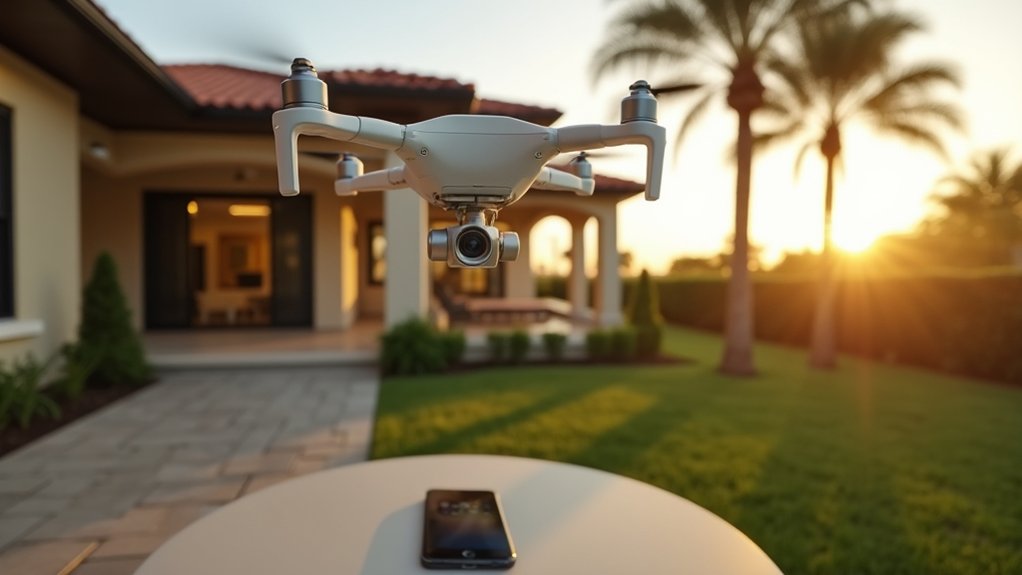

Florida lawmakers are considering legislation that would allow homeowners to use “reasonable force” against privacy-invading drones. Current state laws prohibit drones from capturing images of private property without consent when privacy is expected. Homeowners report drones hovering near windows and over backyards, creating both privacy and noise concerns. While federal law prohibits shooting down drones, this bill aims to balance property rights with drone technology. The debate highlights ongoing tensions between privacy protection and technological advancement.
Countless Florida homeowners are facing new challenges as drone technology becomes more widespread across the Sunshine State. Many residents report drones hovering near windows, flying over private backyards, and creating noise disturbances in residential neighborhoods. These incidents have prompted serious privacy concerns among homeowners.
Current Florida law already prohibits using drones to capture images of private property without consent when a reasonable expectation of privacy exists. The state has taken a firm stance on drone regulation, with laws that prevent local governments from creating their own drone rules. SB 766 from 2015 specifically established these privacy protections statewide. However, municipalities can still address issues like nuisance drones and harassment through local ordinances.
The Florida Legislature is now considering a bill that would go further by allowing homeowners to use “reasonable force” against drones that invade their privacy. This proposed legislation would give residents the right to take action if they believe a drone violates their reasonable expectation of privacy on their property.
The bill doesn’t clearly define what constitutes “reasonable force,” leaving questions about what measures homeowners could legally take against unwanted drones. It represents an attempt to balance property rights with the rapid advancement of drone technology. However, homeowners should be aware that federal law prohibits shooting down drones even if they’re flying over private property.
Homeowners who believe their privacy has been violated by drones currently have limited options. They can report incidents to local police or the Florida Department of Transportation, or pursue civil lawsuits for invasion of privacy.
Operating drones over critical infrastructure is already prohibited in Florida, as is possessing weaponized drones. Violators of state drone laws can face civil penalties.
The increasing conflict between drone operators and homeowners highlights how technology often outpaces regulatory frameworks. Insurance companies are also grappling with questions about liability and coverage for drone-related incidents.
As the Florida Legislature debates this new bill, the state continues to serve as a testing ground for how homeowner rights and drone technology can coexist in the increasingly crowded skies above residential neighborhoods.
References
- https://uavcoach.com/drone-laws-florida/
- https://floridamedianow.com/2025/04/florida-legislature-considering-bill-to-allow-homeowners-to-shoot-down-drones/
- https://wmmbam.iheart.com/featured/florida-news/content/2025-04-21-florida-bill-could-let-homeowners-use-force-against-drones/
- https://wflaorlando.iheart.com/featured/florida-news/content/2025-04-21-florida-bill-could-let-homeowners-use-force-against-drones/
- https://pure.mpg.de/pubman/item/item_3002736_12/component/file_3081810/S 161_Sieber_Billis_Mitsilegas.pdf