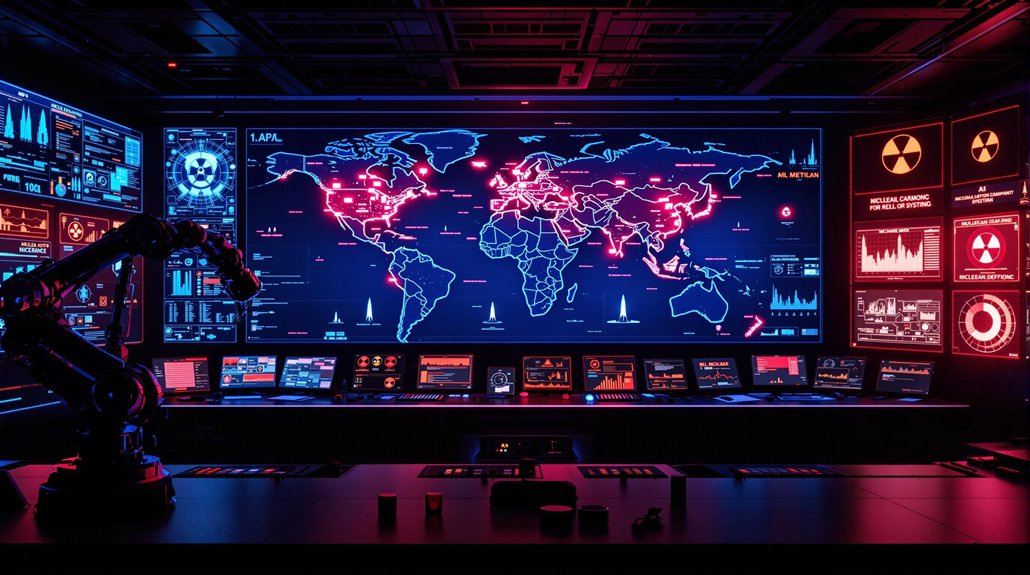

Experts warn that the global AI arms race is creating dangerous risks for nuclear stability. All nuclear powers are now integrating AI into their weapons systems, raising concerns about reduced decision time during crises and increased vulnerability to cyberattacks. AI systems might misinterpret data, potentially triggering unnecessary escalation. International governance frameworks are critically lacking. With AI accelerating military decision-making, the absence of human oversight threatens decades of careful nuclear stability efforts.
As artificial intelligence rapidly advances across global military powers, experts warn that a dangerous AI arms race is emerging with serious implications for nuclear stability. All countries with nuclear weapons are now exploring ways to use AI in their nuclear systems, raising concerns about safety and global security.
AI technology is being added to nuclear command, control, and communication systems worldwide. These AI tools could help detect threats faster and make decisions more quickly during a crisis. Military planners believe AI can process more data than humans and spot dangers that people might miss.
Integrating AI into nuclear systems promises enhanced threat detection but raises profound questions about decision-making speed and reliability in crisis scenarios.
“The technology offers significant benefits, but we can’t ignore the risks,” says Dr. Eleanor Vincent, a nuclear security expert. “AI systems could misinterpret data and recommend actions that escalate conflicts instead of resolving them.”
One major worry is that AI might speed up decision-making too much. Nuclear crises traditionally allowed time for leaders to communicate and find peaceful solutions. AI-driven systems might reduce this vital time for diplomacy and push nations toward faster military responses.
The lack of transparency about how countries are using AI in their nuclear programs is creating mistrust. Nations fear their rivals might develop technologies that could make their nuclear deterrents less effective. This uncertainty is driving more investment in AI military applications, fueling a dangerous cycle. Comprehensive analysis from regional workshops in Sweden, China, and Sri Lanka revealed growing concerns about how competitive dynamics in military AI development are undermining strategic stability.
Security analysts point out that AI systems are vulnerable to cyberattacks and manipulation. A hacked AI system in nuclear infrastructure could have catastrophic consequences. There’s also concern that AI might help countries develop nuclear weapons more easily, undermining non-proliferation efforts. Historical incidents like the 1983 Petrov case demonstrate how false alarms in detection systems can bring the world dangerously close to nuclear conflict.
International governance of AI in military settings remains weak. No thorough treaties address AI’s role in nuclear systems. Experts are calling for new frameworks to guarantee meaningful human control remains over nuclear decisions. The lack of cultural diversity in AI development exacerbates the problem as technologies may reflect Western biases without considering diverse security perspectives.
“We need urgent international cooperation on AI safety standards for military applications,” says United Nations advisor James Chen. “Without proper guardrails, this AI arms race could undermine decades of work on nuclear stability.”