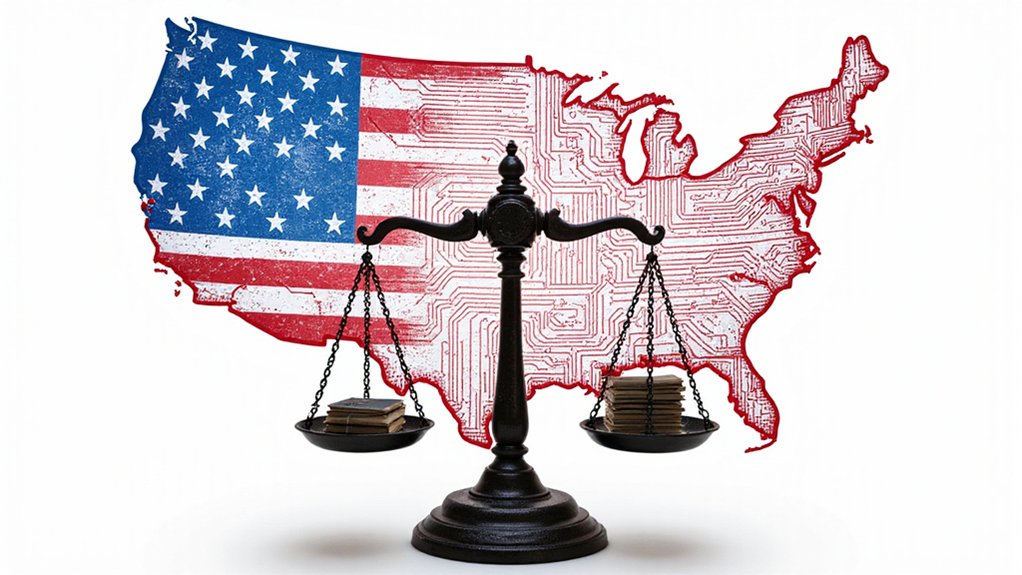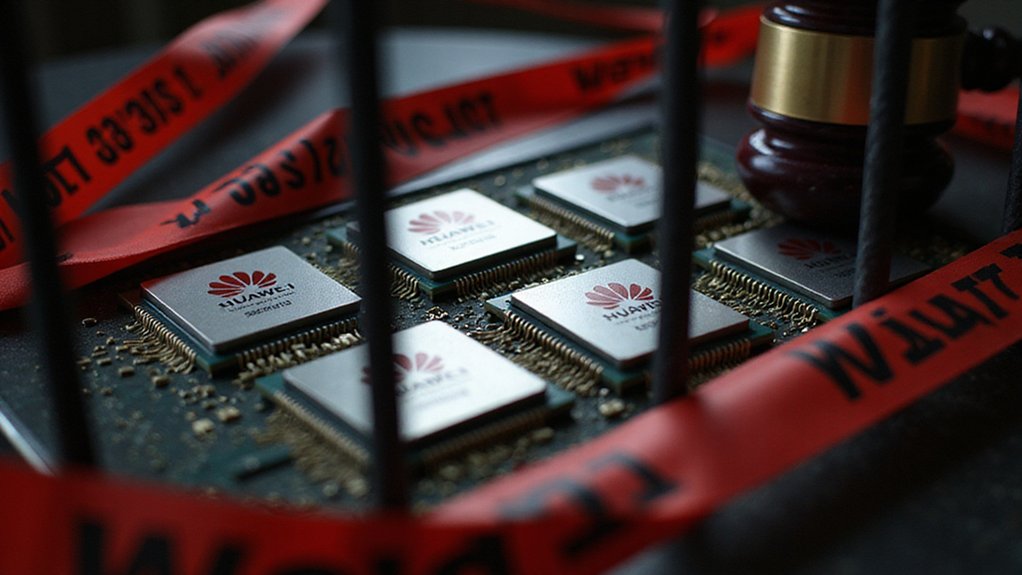

As the U.S. government tightens its grip on technology exports, companies around the world now face criminal penalties for using Huawei’s Ascend AI chips. According to new guidance from the U.S. Commerce Department, even using these chips “anywhere in the world” breaks American export laws. This marks a significant expansion of rules that began in 2019.
The Bureau of Industry and Security (BIS) plans to introduce tougher penalties for companies found using these restricted chips. Firms could face large fines, limits on U.S. business, and even criminal charges in the worst cases. The BIS specifically identified Ascend 910B, 910C, and 910D processors as subject to controls because they likely contain U.S. technology or software. The rules don’t just affect American companies – they apply to any global business using the banned chipsets.
Companies worldwide now face severe consequences including criminal charges for violating the expanded Huawei chip restrictions.
These restrictions cover both direct use of Huawei AI chips and their presence in products or cloud services. Companies must now check if their systems contain any banned parts. The rules also target firms that train or run Chinese AI models on forbidden hardware.
Many businesses are now scrambling to find other suppliers. This has boosted demand for chips from Nvidia and AMD as alternatives. The ban has already pushed several countries to remove Huawei equipment from their telecom networks, helping rivals like Ericsson and Nokia.
The U.S. government says these controls protect national security by reducing risks of espionage, data leaks, or system attacks. Officials point to Huawei’s alleged ties to China’s military and Communist Party. The measures aim to slow China’s growth in key tech areas by limiting access to advanced chips. Despite these efforts, Huawei has demonstrated remarkable resilience with its Ascend 910D processor reportedly rivaling NVIDIA’s H100 performance.
In response, tech supply chains are splitting into U.S.-aligned and China-aligned systems. Companies worldwide are now conducting thorough checks of their products and data centers to guarantee no Huawei hardware is being used, especially for AI work. The risk of losing access to U.S. markets serves as a powerful deterrent for most global firms.
References
- https://news.cgtn.com/news/2025-05-14/New-U-S-chip-guidance-on-Huawei-reveals-deeper-fears-1DniqT0I33W/p.html
- https://www.business-standard.com/companies/news/us-declares-global-use-of-huawei-ai-chips-a-violation-of-its-export-laws-125051401298_1.html
- https://www.capacitymedia.com/article/us-eases-ai-chip-exports-for-allies-cracks-down-on-huawei-hardware
- https://opentools.ai/news/us-takes-a-stand-huawei-ai-chips-violate-regulations
- https://www.globaltimes.cn/page/202505/1334022.shtml