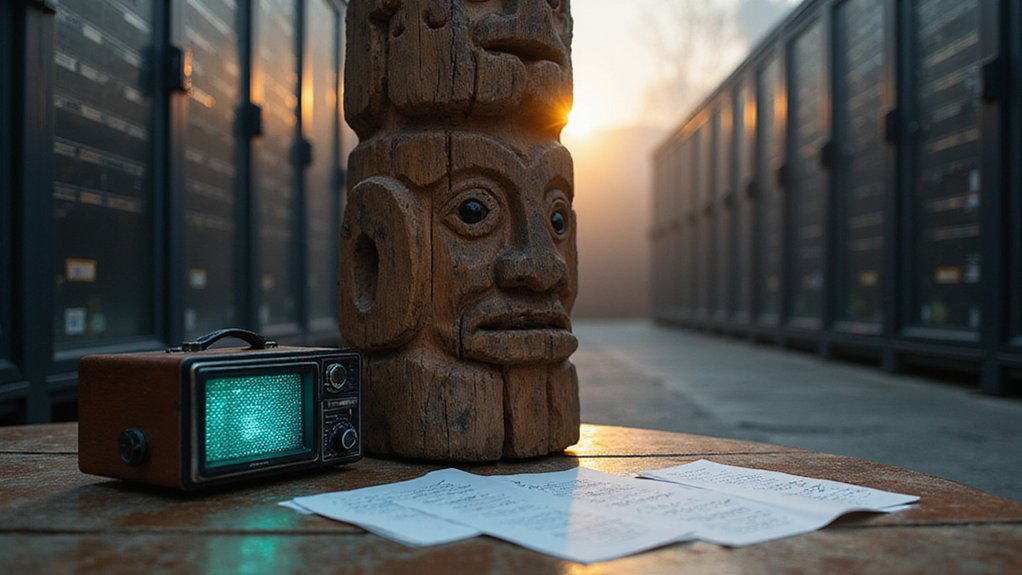

Indigenous languages are disappearing rapidly, with one dying every 14 days. AI technologies now offer hope, creating databases and voice libraries even for languages with minimal resources. However, major challenges remain—many languages lack digital support, and preservation efforts struggle with limited funding and keyboard compatibility issues. Success requires both technological innovation and indigenous community involvement. The digital preservation battle combines human expertise with AI capabilities in a race against time.
As indigenous languages vanish from the world at an alarming rate of one every two weeks, artificial intelligence is emerging as an unexpected ally in preservation efforts. The United Nations reports that approximately one language dies every 14 days, taking with it unique concepts and ideas that can never be replaced.
The current digital landscape poses significant challenges. About 30 indigenous languages lack proper documentation, and 23 have no online resources at all. Even widely spoken Native American languages like Navajo aren’t supported by Google Translate‘s language identification system. Less than 5% of languages worldwide are able to successfully bridge the gap into digital environments, further exacerbating preservation challenges.
New AI technologies are changing this situation. Generative AI and large language models have lowered barriers to revitalizing endangered languages. They help create extensive databases of linguistic resources and enable translation tools that simplify the digitization process. Multimodal AI systems that integrate visual inputs with text and audio are proving particularly valuable for preserving cultural contexts that extend beyond written language.
Success stories show this approach works. Mozilla Common Voice has collected 4,000 hours of Santali language voice data. Researchers at Dartmouth have proven AI can produce valuable linguistic resources even with minimal data. Simple yet accurate language-identification models now exist for previously unsupported languages.
However, major obstacles remain. Linguistic neglect, keyboard limitations, and perceived low profitability discourage investment. AI models may also introduce biases from dominant cultures if not carefully designed.
Experts emphasize that effective preservation requires both AI and human collaboration. Native speakers and linguists must participate to guarantee linguistic authenticity. While AI can centralize and distribute resources, only humans can preserve cultural nuances and contexts. Beyond technology, increasing community involvement in these preservation efforts is essential for ensuring these languages survive as living communication systems.
Funding presents another challenge. Most digital preservation work depends on personal commitment rather than institutional support. There’s an urgent need for policies that support indigenous language preservation efforts.
As the clock ticks for endangered languages, the partnership between communities and technology offers hope. With adequate support and collaboration, AI tools might help indigenous languages not just survive but thrive in the digital age.
References
- https://www.historica.org/blog/ai-powered-preservation-of-endangered-languages
- https://www.unesco.org/en/articles/national-consultation-indigenous-languages-call-preservation-and-technology-integration
- https://home.dartmouth.edu/news/2025/04/language-preservations-efforts-get-ai-boost
- https://blog.westerndigital.com/indigenous-languages/
- https://www.welocalize.com/insights/ai-in-language-preservation-safeguarding-low-resource-and-indigenous-languages/