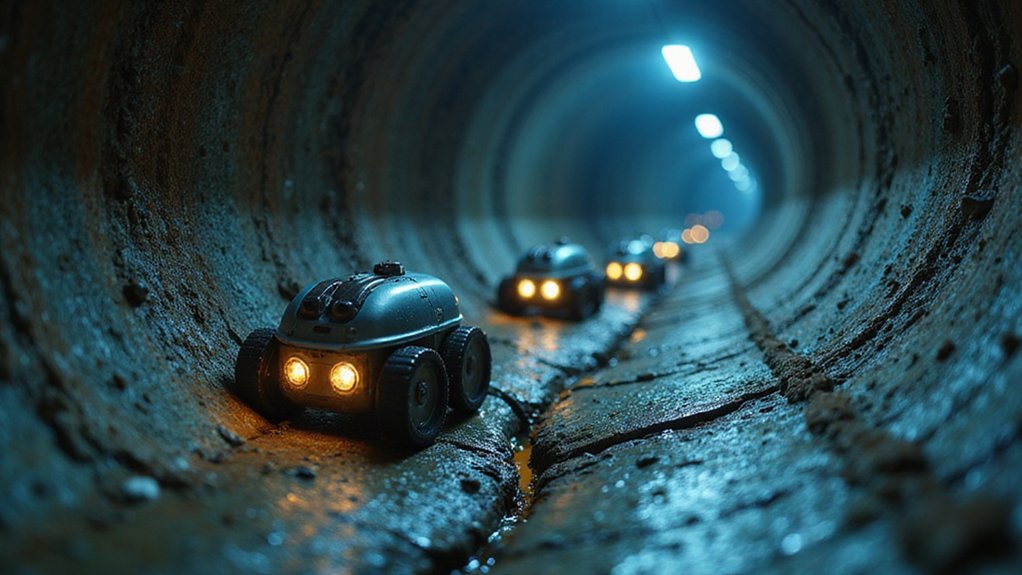

While most of us sleep soundly in our beds, tiny mechanical warriors are about to wage war against leaky pipes beneath our streets. They’re micro-robots, and they’re changing how we fix our crumbling water infrastructure. No more jackhammers at 7 a.m. No more orange cones that stay for weeks. Just robots. Tiny ones.
These pipe-crawling machines are smart. Really smart. Equipped with cameras and acoustic sensors, they detect leaks and cracks that human eyes never could. Some Pipebots are just 40mm wide—small enough to navigate the tightest Victorian-era pipes that litter the UK underground. They bend, twist, and crawl through pipelines like mechanical snakes on a mission.
The impact? Massive. England and Wales lose three billion liters of water daily through leaks. Three billion! That’s water literally pouring into dirt while utility companies scratch their heads wondering where to dig. These robots find the problem without guesswork. With 25-30% of freshwater leaking during distribution globally each year, these technologies couldn’t come at a more crucial time.
The economic math is simple. Street excavations cost the UK economy about £4 billion yearly in traffic jams, business disruptions, and pure annoyance. One engineer can deploy an entire swarm of these robots through a single hydrant. Modern inspection robots can travel up to 5,500 ft into pipelines, reaching areas previously inaccessible without excavation. They fan out, communicate with each other, and map entire networks without digging up a single cobblestone.
The largest model—the AIR robot—stretches two meters long with 15 wheels spread across 19 connected modules. It’s basically a pipe-inspecting centipede.
Smaller versions work in swarms, avoiding customer connection points while collaborating to solve problems.
They’re not just for water either. Gas lines, cooling systems, industrial pipelines—they’re all fair game for these mechanical plumbers. The technology represents a complete shift in infrastructure maintenance.
References
- https://mechatronics.mit.edu/projects/pipe/
- https://www.fiberscope.net/pipe-inspection-robot/
- https://www.sheffield.ac.uk/news/tiny-robots-could-help-fix-leaky-water-pipes
- https://hightechsystems.demcon.com/showcases/autonomous-water-pipe-inspection-robot
- https://www.miragenews.com/tiny-robots-could-help-fix-leaky-water-pipes-1480253/