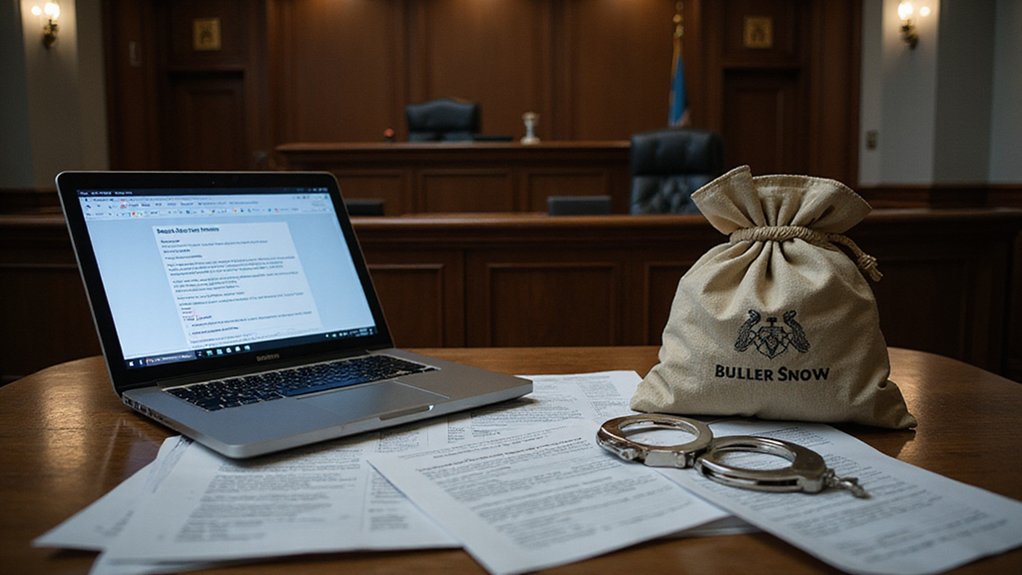

A federal judge is considering sanctions against lawyers from Butler Snow, a major law firm defending Alabama’s prison system, after they submitted fake legal citations that appear to have been created by artificial intelligence. The firm now faces potential reputational damage as the legal community debates whether sanctions are adequate for such errors.
The false citations appeared in a motion asking to depose Frankie Johnson, an inmate who was stabbed multiple times at William E. Donaldson Correctional Facility. Johnson’s lawsuit claims prison officials didn’t keep him safe. When Johnson opposed the deposition request, he pointed out the citations looked fabricated.
During a hearing in Birmingham, Judge Anna Manasco identified five false citations in two federal court filings. Attorney Thomas Reeves from Butler Snow admitted he was solely responsible for the fake citations. Bill Lunsford, who heads the firm’s prison litigation division and serves as Alabama’s deputy attorney general, had signed the documents containing the false information. Lunsford said he only scanned the papers before filing them without reviewing them carefully.
Butler Snow is an Am Law 200 firm that’s received millions of dollars from Alabama to defend the state’s prison system. The firm represents Alabama in a Department of Justice lawsuit about violent prison conditions. Former Alabama prison commissioner Jefferson Dunn is also named as a defendant in Johnson’s case.
The judge issued an order requiring the attorneys to explain why they submitted documents with fabricated legal authorities. Reeves asked the judge not to punish his colleagues for his mistake. The defense team acknowledged that artificial intelligence might have generated the false citations. Butler Snow had reportedly warned its lawyers about AI’s limitations.
This incident isn’t isolated. K&L Gates was recently sanctioned for submitting fake AI citations in another case. Similar problems have appeared in Canadian courts. Latham & Watkins admitted to an AI error while representing an AI company. Even the Department of Justice was suspected of using AI to create a fake Supreme Court quote.
May 2025 has seen multiple cases of lawyers filing papers with fake citations. Legal experts worry that courts aren’t punishing these errors severely enough. They question whether major law firms are properly training staff and reviewing documents. Despite having extensive resources, Am Law 200 firms keep making these mistakes. The incidents show a troubling trend of AI misuse in the legal profession. This case highlights the lack of transparency in AI operations that complicates accountability when technology is misused in professional settings.