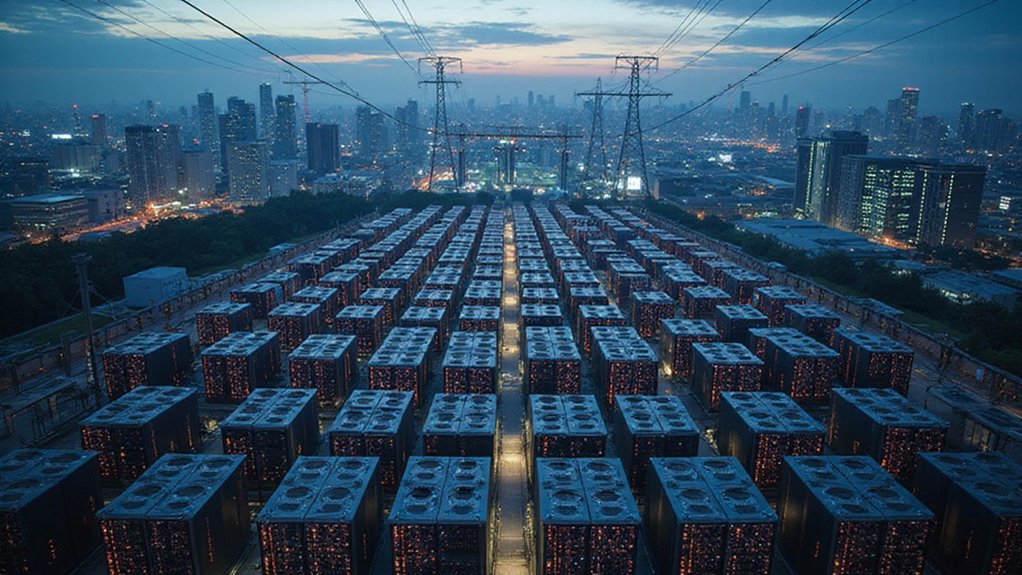

North America’s power grid faces a mounting crisis as AI facilities and data centers drive electricity demand to unsustainable levels. Experts warn that data centers alone could double their power needs by 2030, growing at 10% annually. This surge, combined with aging infrastructure and increased electrification of homes and transportation, threatens reliable power delivery across the continent. Without swift upgrades to generation and distribution systems, blackouts will become increasingly common in the coming decade.
As North America’s power grid faces mounting pressure from all sides, experts warn that a major crisis is on the horizon. The aging infrastructure can’t keep up with rapidly increasing demand, creating a perfect storm for widespread failures. Power outages are becoming more common, affecting homes, businesses, and essential services when they occur.
Electricity demand jumped 3% in 2024, one of the largest increases in recent years. This trend isn’t slowing down. Data centers alone will need twice as much power by 2030, growing at 10% each year to reach 35 gigawatts. The push to electrify heating, transportation, and industry is making the situation worse.
The grid’s problems stem from multiple issues. Old equipment isn’t being replaced fast enough. Maintenance is often neglected until something breaks. Power generation can’t match rising consumption, and the balance between supply and distribution frequently tips into dangerous territory. Recent investigations show these inadequate maintenance practices contribute significantly to repeated system failures.
AI supercomputers and major data centers are driving much of this new demand. These facilities require massive amounts of reliable electricity to operate. At the same time, electric vehicles and digital services are becoming more common, adding stress to an already strained system.
Experts predict more than half of North America could face energy shortfalls within ten years. When the grid fails, the costs are enormous. Factories shut down, supply chains break, and homes lose power for basic needs. Healthcare facilities and emergency services struggle to function.
The situation is made worse by planning challenges. While clean energy targets are ambitious, the upgrades needed to support them aren’t happening quickly enough. New power plants aren’t replacing retiring ones at a sufficient rate. Natural gas supplies for power generation face risks, especially during cold weather. States like Texas that limit renewable energy growth could see household bills increase by 10% while leaving hundreds of thousands vulnerable during extreme weather events.
Without immediate attention to these issues, blackouts and disruptions will likely become more frequent. Nearly 80% of outages are caused by severe weather events, a problem that’s only intensifying with climate change. The growing gap between electricity supply and demand points to a looming crisis that affects everyone who relies on the power grid.
References
- https://ember-energy.org/app/uploads/2025/03/US-Electricity-2025-Special-Report.pdf
- https://theelectricityhub.com/national-grid-disruption-on-march-7-underscores-ongoing-power-challenges/
- https://infrastructurereportcard.org/cat-item/energy-infrastructure/
- https://www.utilitydive.com/news/explosive-demand-growth-blackouts-NERC-LTRA-reliability/735866/
- https://iea.blob.core.windows.net/assets/0f028d5f-26b1-47ca-ad2a-5ca3103d070a/Electricity2025.pdf