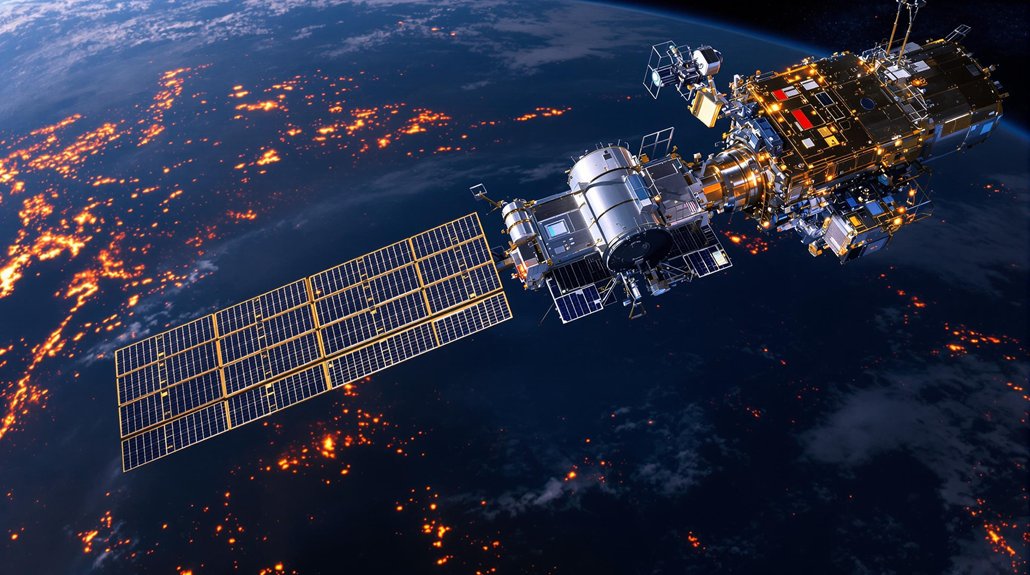

While humans down here on Earth are still arguing about whether to trust self-checkout machines, NASA’s been quietly teaching satellites to think for themselves. The space agency’s Jet Propulsion Laboratory spent over a decade developing Dynamic Targeting technology that lets satellites pick their own observation targets in under 90 seconds. No human required.
These orbiting robots use onboard AI to analyze imagery and decide what’s worth watching. See a wildfire spreading? The satellite pivots and starts recording. Spot a volcanic eruption? It’s already adjusting its sensors before anyone on the ground even knows what’s happening. The AI mimics human interpretation, identifying objects and phenomena in real-time to make autonomous decisions about where to point its cameras next. Similar to how precision agriculture optimizes resource application on farms, these satellites maximize data collection efficiency in space.
Traditional satellites are basically expensive cameras following pre-programmed schedules. They waste time photographing clouds or missing rapidly changing events because they’re waiting for instructions from Earth. Communication delays and bandwidth limits make ground-based commands about as efficient as texting with dial-up internet. This new tech changes everything.
The implications are massive. Earth-observing satellites can now detect and track short-lived phenomena like weather anomalies and natural disasters without waiting for someone to notice and send commands. Disaster response gets faster. Environmental monitoring becomes more precise. The satellites adapt to conditions as they happen, focusing on what actually matters instead of blindly following a script. AI’s role in space debris management becomes critical as these autonomous systems navigate increasingly crowded orbits with 50,000 active satellites expected by decade’s end.
Lockheed Martin reports over 80 space projects already using AI and machine learning to enhance operations. They’re partnering with companies like NVIDIA to push the tech further. Digital twin models powered by space-based AI provide real-time environmental awareness. The company’s collaboration with NVIDIA creates AI-driven Earth observing systems that process live weather data streams to depict global environmental conditions with unprecedented accuracy.
Autonomous satellite constellations promise persistent global coverage with rapid response capabilities. The industry’s betting big on this shift. Climate monitoring, defense applications, communication systems – they’re all moving toward autonomous operations. Modular AI systems can be updated or reprogrammed for new objectives without launching new hardware.
It’s a fundamental change in how we use space. While we’re still debating whether Alexa should order our groceries, satellites are making split-second decisions about planetary observation from hundreds of miles up. The future’s already orbiting overhead.
References
- https://www.nasa.gov/science-research/earth-science/how-nasa-is-testing-ai-to-make-earth-observing-satellites-smarter/
- https://www.nasa.gov/news-release/nasa-awards-2025-innovative-technology-concept-studies/
- https://www.lockheedmartin.com/en-us/news/features/2024/space-technology-trends-2025.html
- https://interactive.satellitetoday.com/via/december-2024/10-tech-trends-that-will-impact-the-satellite-industry-in-2025
- https://ts2.tech/en/state-of-space-and-satellite-technologies-in-2025/