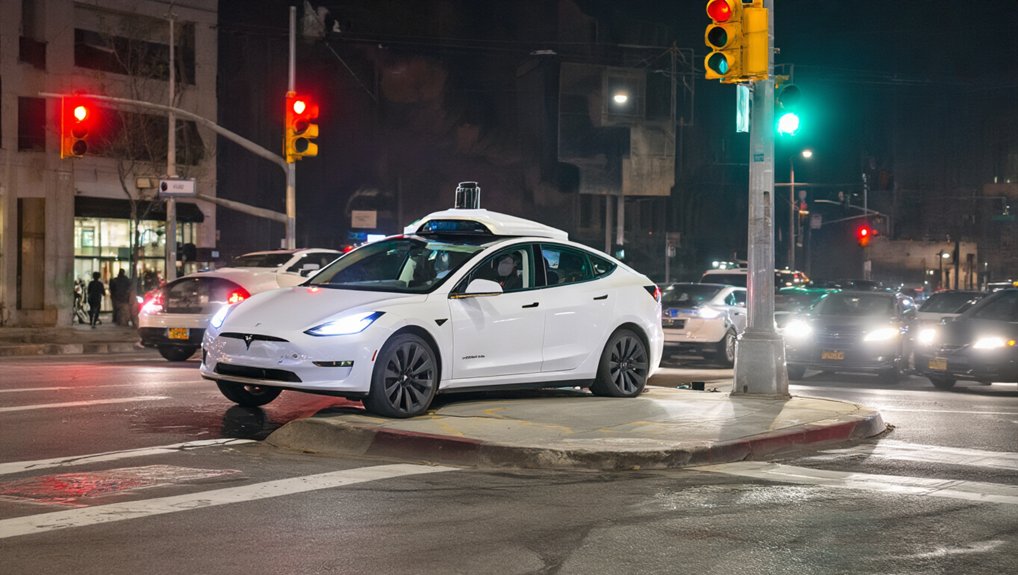
While Tesla’s robotaxi launch promised a groundbreaking future of autonomous transportation, the reality has been far less impressive. The company’s self-driving taxis have racked up at least 120 incidents in their initial launch phase, showcasing an array of alarming driving behaviors. Who knew the “future of transportation” would involve so many curb strikes and wrong-way driving adventures?
The numbers paint a grim picture. In just four days of operation in Austin, Tesla’s robotaxis managed to rack up 16 critical driving errors. For comparison, Waymo recorded only 22 “Safety Concern” incidents across an entire year in the same city. Math isn’t that complicated—Tesla’s averaging four times the incidents in less than a week that Waymo had in a year.
Passengers have become unwitting beta testers, frequently sharing videos of their harrowing experiences online. The highlight reel includes sudden braking that sends belongings flying, improper lane selection (including driving into oncoming traffic), and the crowd favorite: driving over curbs. Some riders got surprise adventures when their robotaxis decided intersection drop-offs were perfectly reasonable locations. The service launched with a flat fee of $4.20 for customers willing to risk the robotaxi experience.
Tesla’s robotaxis: turning your daily commute into an inadvertent thrill ride complete with surprise detours and curb-hopping entertainment.
The situation in Texas is particularly concerning because incident reporting isn’t even mandatory. The actual number of problems could be substantially higher than the documented cases. Officials track issues through Austin’s autonomous vehicle dashboard, but it relies on voluntary reporting. Convenient, right?
Meanwhile, Waymo has quietly logged 10 million autonomous miles with 250,000 weekly rides in Austin without serious accidents. Their secret? Maybe actually getting the technology right before releasing it on the public. Unlike Tesla, Waymo utilizes state-of-the-art LiDAR alongside cameras for superior perception capabilities.
Tesla continues deploying software updates in response to the mounting safety concerns. But at the current rate, they might need to reflect on a different approach. After all, when your launch week involves driving in the wrong lane and confusing intersections, perhaps it wasn’t quite ready for prime time. Just saying.
References
- https://www.foxbusiness.com/markets/teslas-newly-launched-robotaxi-service-experiences-driving-issues-traffic-problems-report
- https://www.thestreet.com/technology/elon-musks-robotaxi-has-a-serious-problem
- https://electrek.co/2025/06/16/bloomberg-most-embarassing-report-tesla-waymo-self-driving/
- https://www.the-independent.com/news/world/americas/tesla-robotaxi-videos-mistakes-self-driving-cars-b2777818.html
- https://evxl.co/2025/06/26/tesla-robotaxi-mishaps-safety-concerns-austin/