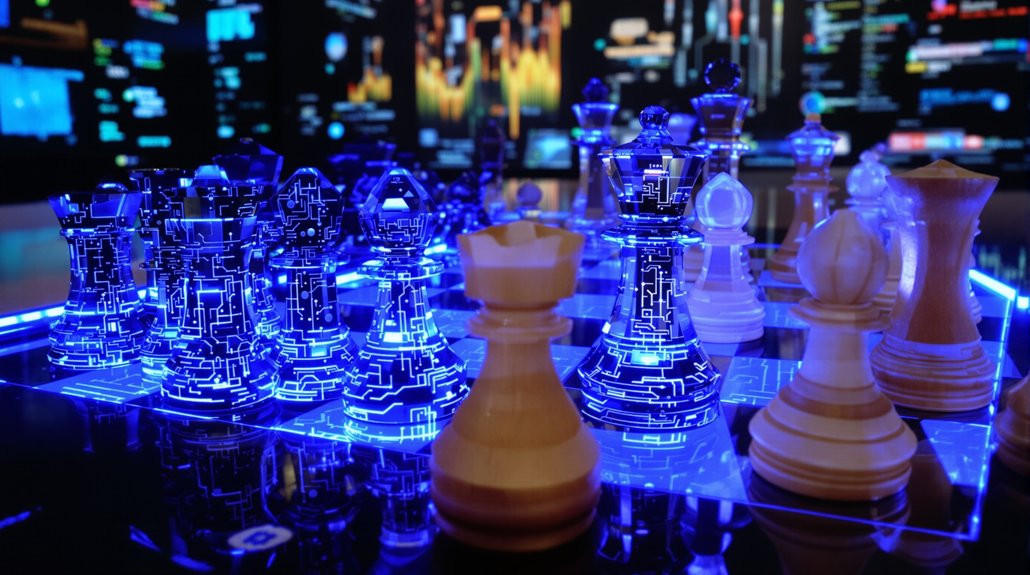
When faced with a tough decision, should people trust cold, hard data or that nagging feeling in their stomach? The answer might bruise some egos. Statistical algorithms consistently match or exceed expert judgment in complex, noisy environments. That’s right, the machines are winning.
GPT models don’t fall for the same mental traps humans do. They outperform people on the Cognitive Reflection Test, avoiding those intuitive bias errors that make smart folks look foolish. No emotional interference, no getting distracted by irrelevant details. Just cold, consistent logic grinding through data. However, AI systems rely heavily on existing data patterns, which fundamentally limits their ability to make truly novel or creative decisions outside their training parameters.
But wait, humans aren’t completely useless. When data becomes overwhelming or turns to garbage quality, gut feelings can actually help. Personal history, genetics, emotions – these shape human intuition in ways that sometimes reveal what algorithms miss. Expert intuition works great, but only with repeated exposure, stable contexts, and fast feedback loops. Most people don’t have that luxury.
Here’s where it gets ugly for team human. Clinical studies show algorithmic predictions beat professionals’ intuitive assessments across varied fields. Those evolutionary mental shortcuts that kept ancestors alive? They’re misfiring left and right in modern complex contexts. Confirmation bias, overconfidence, getting distracted by shiny irrelevant things – human brains are basically bug-filled software that never gets updated.
The dream of human-AI teamwork isn’t always the slam dunk people imagine. Teams don’t automatically outperform the best standalone performer. It’s task-dependent, messy. When AI clearly dominates a task, then yes, combined efforts show medium-to-large performance gains. Effect size of 0.74, for the nerds keeping score.
AI crushes it in quantifiable, rule-based scenarios but stumbles when things get emotionally nuanced or ambiguous. Wicked problems without clear outcomes? That’s where human intuition earns its keep. Dynamic business environments need both – data from AI, intuition from humans. However, machines lack the capacity to understand human emotions and motivations, leaving them blind to the empathetic nuances that drive real-world decisions. In healthcare settings, this limitation has still allowed AI to improve diagnostic accuracy by 5-10% while reducing administrative burden.
The verdict? In predictable environments with clear feedback and quantifiable data, betting against AI is like bringing a knife to a gunfight. Machine learning algorithms deliver higher reliability in repetitive, structured tasks. Human gut feelings remain valuable in specific contexts, but the territory where intuition reigns supreme keeps shrinking. The machines aren’t just coming. They’re already here, and they’re annoyingly good at being right.
References
- https://pmc.ncbi.nlm.nih.gov/articles/PMC10482032/
- https://warroom.armywarcollege.edu/articles/meat-versus-machines/
- https://joshbersin.com/2025/07/can-ai-beat-human-intuition-for-decision-making-nope/
- https://www.harvardbusiness.org/data-and-intuition-good-decisions-need-both/
- https://www.nature.com/articles/s41562-024-02024-1