
OpenAI’s next big leap is taking shape. GPT-6 is in development, and it’s already turning heads. Sam Altman confirmed work was underway in August 2025. The race against Meta and Google has pushed timelines faster than ever. Release gaps that once spanned years have shrunk to months. Most expect a public rollout by late 2026.
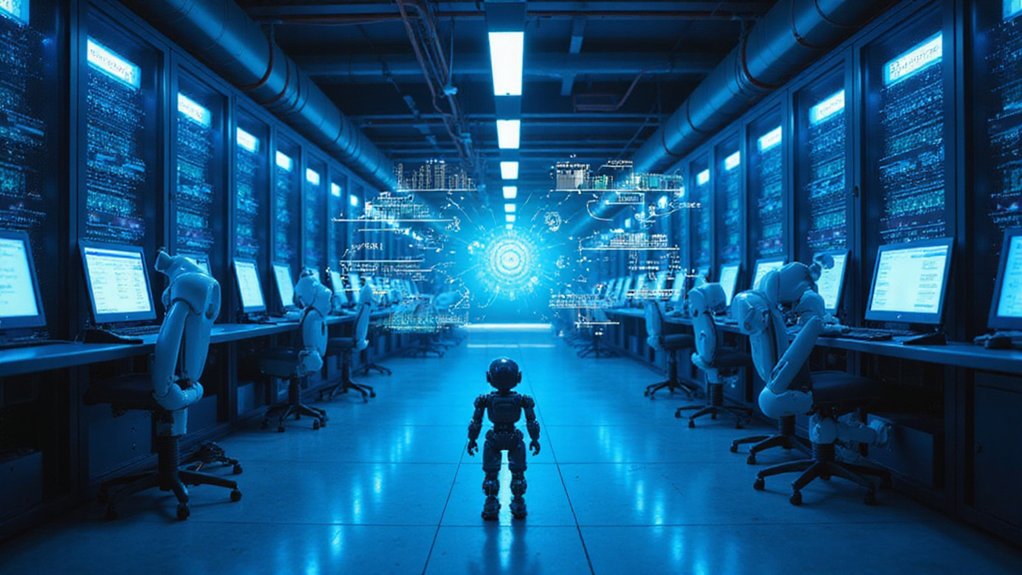
GPT-6 is built on something massive. It runs on the Stargate infrastructure, a $500 billion supercomputing project. A 5-gigawatt facility called Stargate-I powers its training. That’s a level of computing power few thought possible just years ago.
The backbone of GPT-6 is Stargate — a $500 billion supercomputing project drawing 5 gigawatts of raw power.
The model doesn’t just answer questions. It acts. GPT-6 can break complex tasks into steps and execute them on its own. This is called agentic AI. It can handle research, manage projects, and run 24/7 without human hand-holding. The industry calls this Level 3 AGI, a step above the reasoning abilities seen in earlier models.
Memory is another big upgrade. GPT-6 remembers past conversations. It builds on what it knows about a user over time. That makes interactions feel more personal and more useful. Hallucinations, a long-standing problem in AI, are expected to drop. The model also handles text, images, audio, and video.
Some are calling GPT-6 the first real brush with AGI. It has what researchers describe as a true world model. That means it can reason from basic principles, not just pattern-match from training data. A limited version of recursive self-improvement is also built in. That’s where AI gets better by learning from its own outputs.
OpenAI has also secured a deal to run GPT models inside classified Pentagon networks. This came after the U.S. government cut ties with Anthropic in February 2026, citing national security concerns. OpenAI stepped into that role quickly. The contract includes specific terms that prohibit domestic surveillance and autonomous weapons without human oversight in place.
The stakes are high beyond government contracts. The IMF says AI now affects 60% of jobs in advanced economies. Questions about job loss, wealth gaps, and human purpose are growing louder. Analysts warn that sectors like manufacturing and banking face some of the steepest disruption, with up to 30% of jobs potentially automated away by 2030. OpenAI says intensive safety testing will come before any wide release. Its preparedness framework specifically addresses frontier risks including CBRN threats and deceptive alignment as part of that process.
References
- https://www.youtube.com/watch?v=T0Q23wZLbbM
- https://www.youtube.com/watch?v=zqW4HbcLJDI
- https://www.youtube.com/watch?v=44mJb5sKji0
- https://www.youtube.com/watch?v=CQ2fOeKOiMk
- https://www.ainvest.com/news/openai-accelerates-gpt-6-development-enhanced-memory-agentic-ai-features-2508/
- https://www.youtube.com/watch?v=G0cNdTQm8hw
- https://openai.com/index/next-phase-of-enterprise-ai/
- https://www.theinformation.com/articles/new-ai-superagent-race-pitting-openai-anthropic-microsoft-salesforce
- https://www.reworked.co/digital-workplace/2025-was-supposed-to-be-the-year-of-the-agent-it-never-arrived/