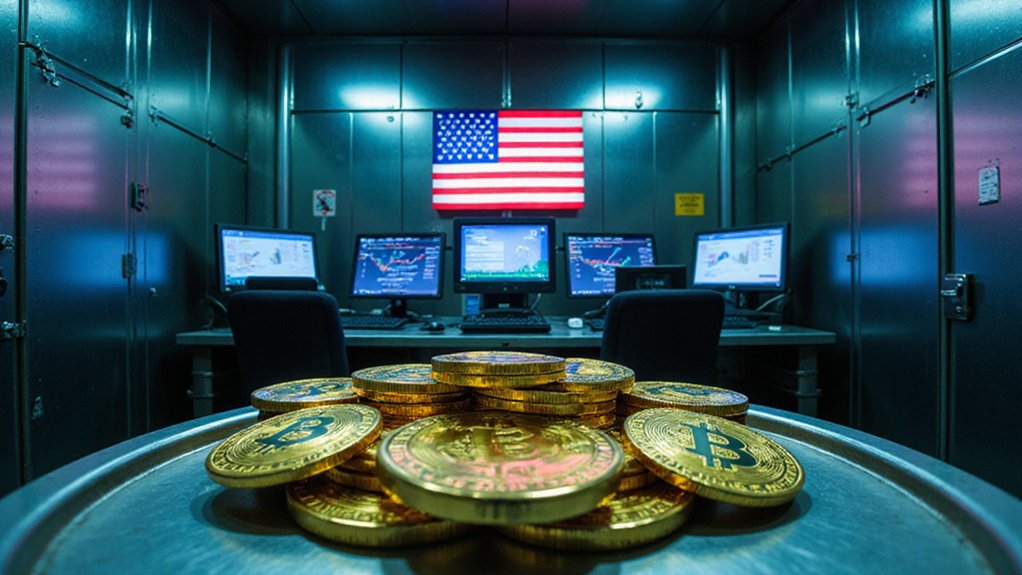

While most Americans struggle to understand what Bitcoin even is, their government has quietly amassed a digital fortune worth nearly $15 billion. The US government holds at least 210,000 Bitcoins, maybe more. That’s right. Uncle Sam is a crypto whale.
These coins didn’t come from some strategic investment plan. No financial advisor whispered in the Treasury’s ear about diversifying into digital assets. The government got them the old-fashioned way: taking them from criminals. Silk Road busts, ransomware rings, hackers who got caught. When the feds knock down doors, they don’t just seize cash and cars anymore. They take Bitcoin wallets too.
The US Marshals Service handles the dirty work. They store these seized coins in ultra-secure digital vaults, using multi-signature systems and cold storage. Air-gapped computers. The whole nine yards. Sometimes they auction the Bitcoin off to the highest bidder. Sometimes they keep it. Depends on the mood, apparently.
US Marshals store seized Bitcoin in ultra-secure vaults, then auction it off or keep it, seemingly at random.
Here’s where it gets interesting. Some folks think the government should hold onto these coins as a strategic reserve. Like gold, but digital. Keep 5% to 25% of all Bitcoin by 2035, they say. The math gets wild fast. We’re talking potential gains between $16 trillion and $81 trillion by 2045. Trillion with a T. This vision aligns with proposals from the recent crypto summit organized by Donald Trump at the White House, where establishing a cryptocurrency reserve became a central discussion point.
The government’s stash already influences crypto markets. When word spreads about an upcoming auction, traders get nervous. Prices wobble. Market sentiment shifts. It’s almost comical. The same government that once dismissed Bitcoin as fake internet money now holds enough to crash the market if they dumped it all at once. Meanwhile, billions in PPP funds meant to save small businesses during the pandemic flowed straight into crypto exchanges, creating an entirely different kind of government-to-Bitcoin pipeline.
Blockchain analytics platforms track every move these government wallets make. Can’t hide anything on the blockchain. That’s the beauty of it. Or the curse, depending on who you ask.
This whole situation represents something bigger than just seized assets. Bitcoin has gone from darknet currency to potential national reserve asset. The government that couldn’t figure out email now manages a $15 billion crypto portfolio. Wild times.
References
- https://www.cointribune.com/en/crypto-summit-michael-saylor-unveils-a-100-trillion-bitcoin-strategy/
- https://www.brettonwoodsskiconference.com/uploads/b/f9bfc8b0-0251-11ed-a646-3dea17112d2f/crypto_full-XM – 20230109(2).pdf
- https://www.taxlitigator.com/wp-content/uploads/2018/04/Cryptocurrency.pdf
- https://sites.duke.edu/thefinregblog/2023/10/26/uncle-sams-stimulus-and-crypto-boom/
- https://bitcoinworld.co.in/cryptoquant-us-government-holds-210k-bitcoins-with-14-4b-unrealized-profit/