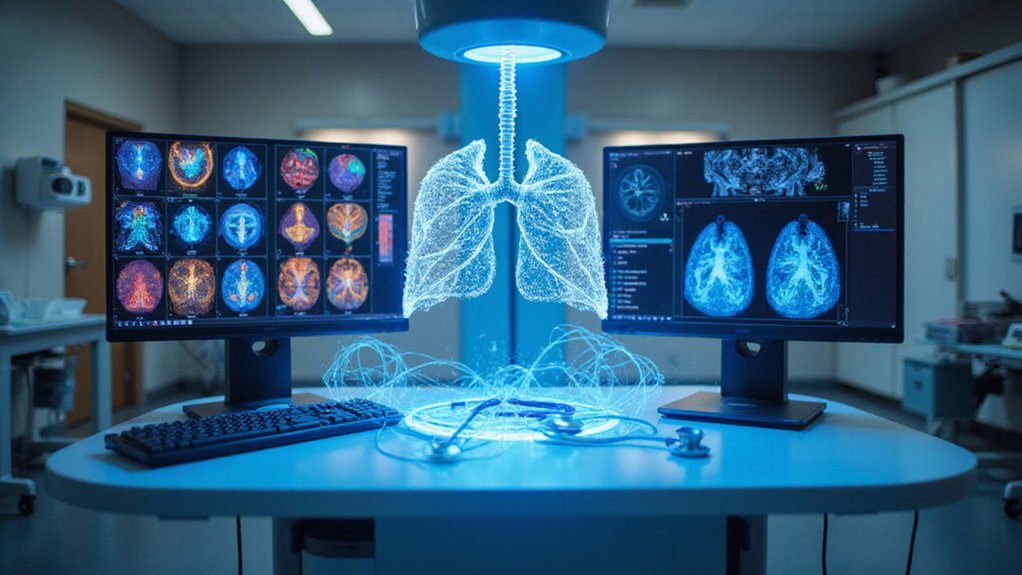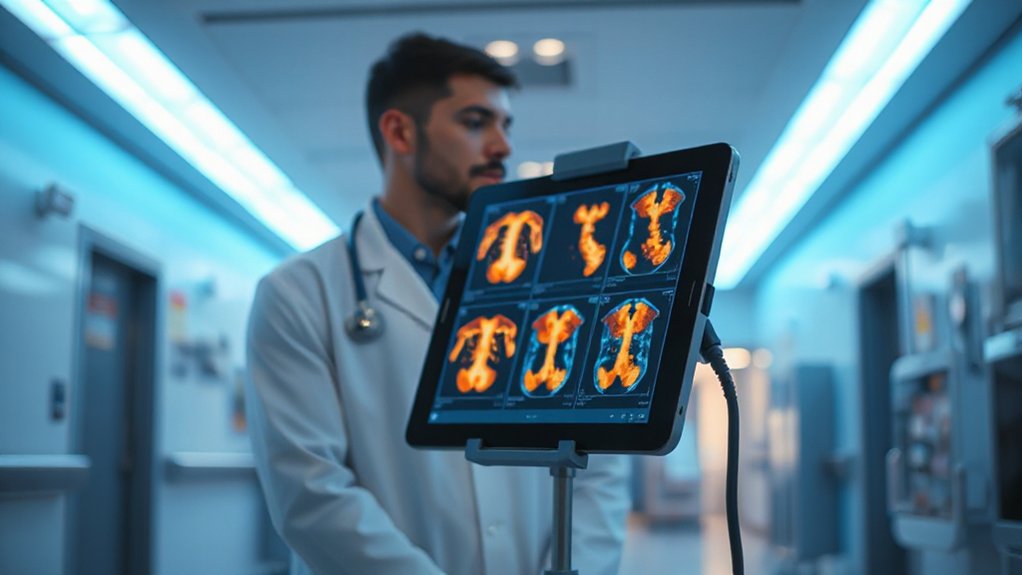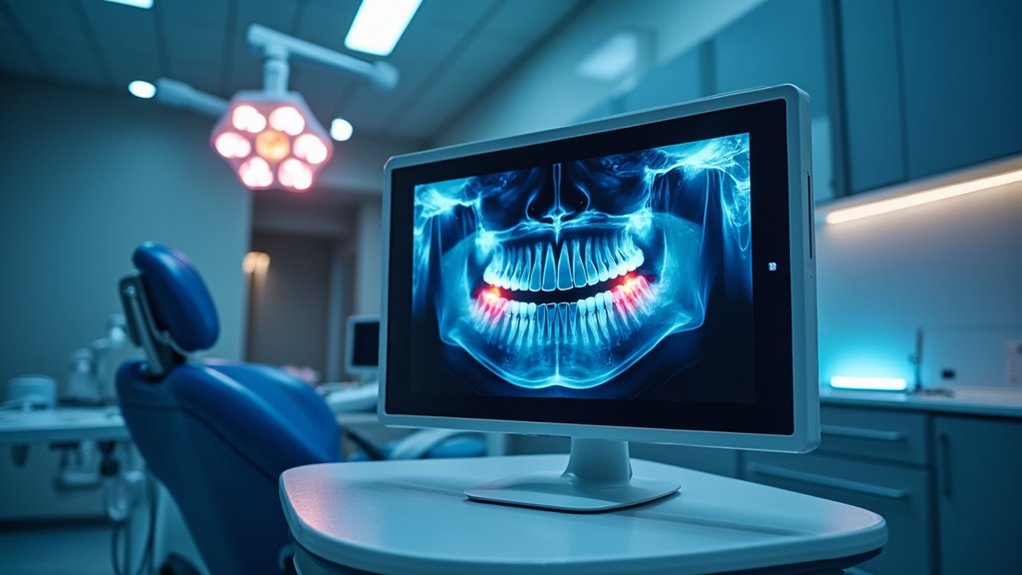

While dentists have always relied on their trained eyes and experience, artificial intelligence is dramatically reshaping the field from the ground up. That drill-wielding professional peering into your mouth now has a digital sidekick that’s scary good at spotting problems. AI-powered diagnostic tools analyze dental images with over 90% accuracy, catching cavities and gum disease that human eyes might miss. Your X-rays? Analyzed in seconds instead of minutes. Your future dental problems? Predicted years before they happen.
Let’s be real. Computers don’t get tired after their fifth patient of the day. They don’t miss that tiny fracture hiding in the corner of an X-ray. In fact, these digital tools can detect dental decay up to five years earlier than traditional methods. That’s the difference between a simple filling and root canal torture. About a third of dental practices have already jumped on this high-tech bandwagon, and patients are noticing.
The AI transformation extends beyond just spotting problems. Orthodontic treatment outcomes can now be predicted with 73% accuracy. Your dentist’s computer simulates how your teeth will move, how that implant will fit, even how your smile might look five years from now. It’s pretty wild stuff. Patients aren’t complaining either—59% actually trust clinics more when they use these advanced technologies.
Behind the scenes, AI handles the boring stuff too. Scheduling, insurance paperwork, documentation—all streamlined while your dentist focuses on your actual teeth. St. Lukes Hospital experienced a 7% increase in surgeries after implementing AI scheduling despite having reduced operating room space. No wonder 77% of dentists report positive outcomes after adopting AI.
Of course, it’s not all perfect. The technology still has limitations. But the trend is clear: dental AI research has surged by 34.5% in five years. AI-driven robots are now performing precise dental implant placements with minimal human intervention, resulting in faster recovery times for patients. Your dentist’s computer really does know your teeth better than ever before. And frankly, if it means catching problems earlier and making treatments more predictable, we should all be opening wide for the robots.
References
- https://www.dentaleconomics.com/science-tech/artificial-intelligence/article/55286570/5-ways-ai-is-on-track-to-reshape-dentistry-in-2025
- https://omni-pg.com/ai-revolution-in-dentistry-how-artificial-intelligence-is-transforming-dental-care-in-2025/
- https://riseapps.co/ai-in-dentistry/
- https://healthfulhelps.com/artificial-intelligence-and-dentistry-usage-statistics-2024/
- https://www.insightaceanalytic.com/report/ai-in-dentistry-market/3004