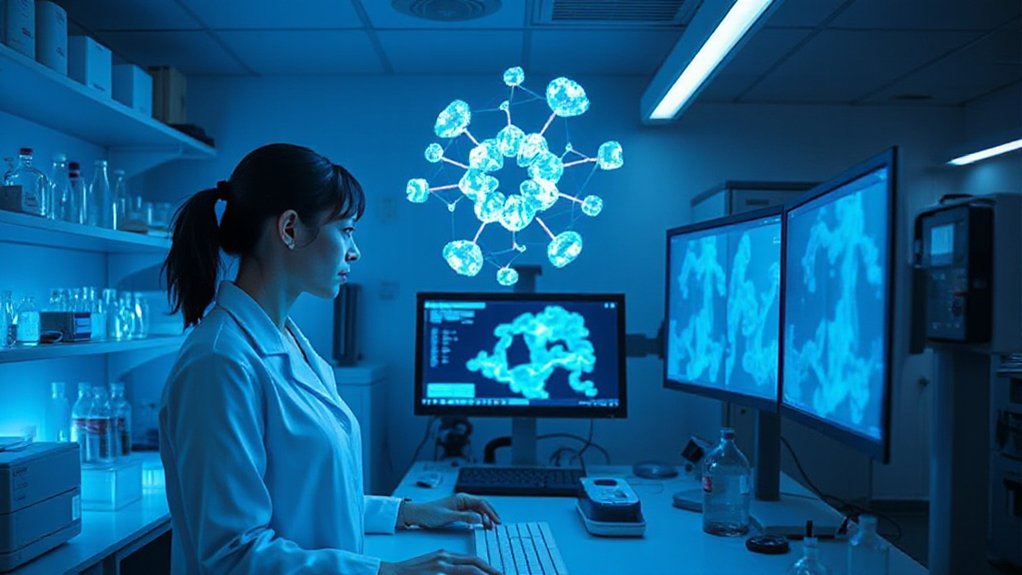

OpenAI has launched a new AI model called GPT-Rosalind. It’s designed specifically for life sciences research. The model targets drug discovery, genomics analysis, and protein reasoning. Experts say it could change how pharmaceutical companies develop new medicines.
Drug development has traditionally taken around 15 years from start to finish. That’s a long and expensive process. GPT-Rosalind aims to shorten that timeline considerably. It does this by running complex simulations and analyzing large datasets much faster than human researchers can.
Drug development once took 15 years. GPT-Rosalind is built to change that dramatically.
In drug discovery, the model helps identify promising compounds early. It predicts how molecules interact with each other. It also optimizes the progression from initial hits to lead compounds. This means researchers can spend less time on dead ends and more time on real possibilities.
The model’s genomics capabilities are also notable. It can read and interpret DNA sequences. It identifies genetic variants that may be linked to diseases. It can also model gene expression patterns and support large-scale population studies. By combining different types of biological data, it helps scientists form stronger hypotheses.
Protein reasoning is another major feature. GPT-Rosalind can predict 3D protein structures from sequences alone. It simulates how proteins bind to drug molecules. It also analyzes folding pathways and enzyme behavior at the atomic level. These features could help researchers design better therapeutic proteins.
The financial impact on pharmaceutical pipelines could be considerable. Lower costs through computer-based experimentation may replace some expensive lab work. Better candidate selection could improve success rates in clinical trials. The model may also support personalized medicine by using a patient’s genetic data to guide treatment decisions.
OpenAI says GPT-Rosalind sets a new benchmark for AI in biotech. The company sees potential for the model to connect with lab automation systems. It could also open advanced research tools to smaller biotech firms that don’t have large budgets.
The broader scientific community is watching closely. If GPT-Rosalind delivers on its promises, it could reshape how new drugs are found and developed for years to come. The AI drug discovery market is projected to reach $4 billion by 2028, reflecting the growing confidence in AI’s ability to accelerate pharmaceutical breakthroughs.