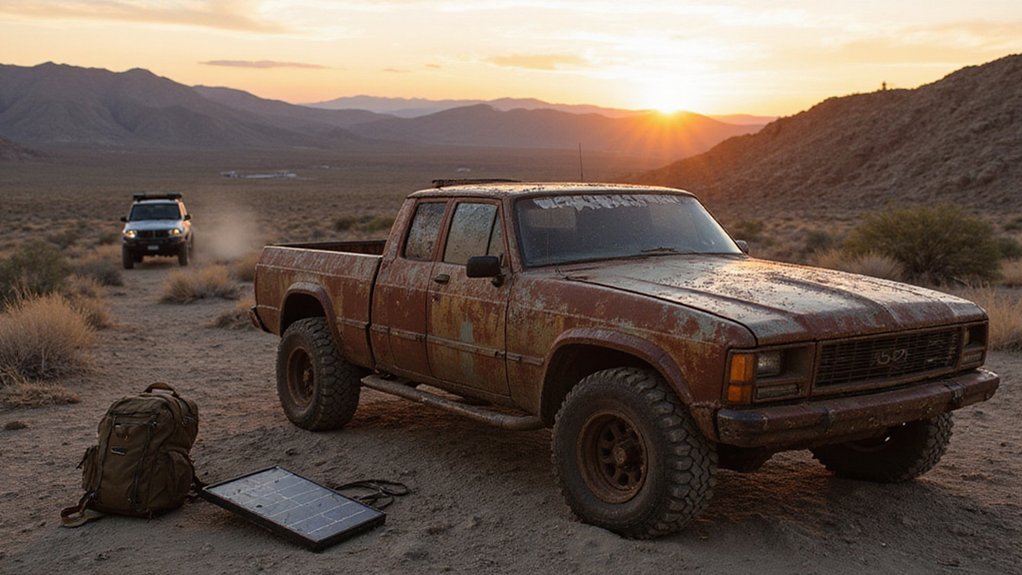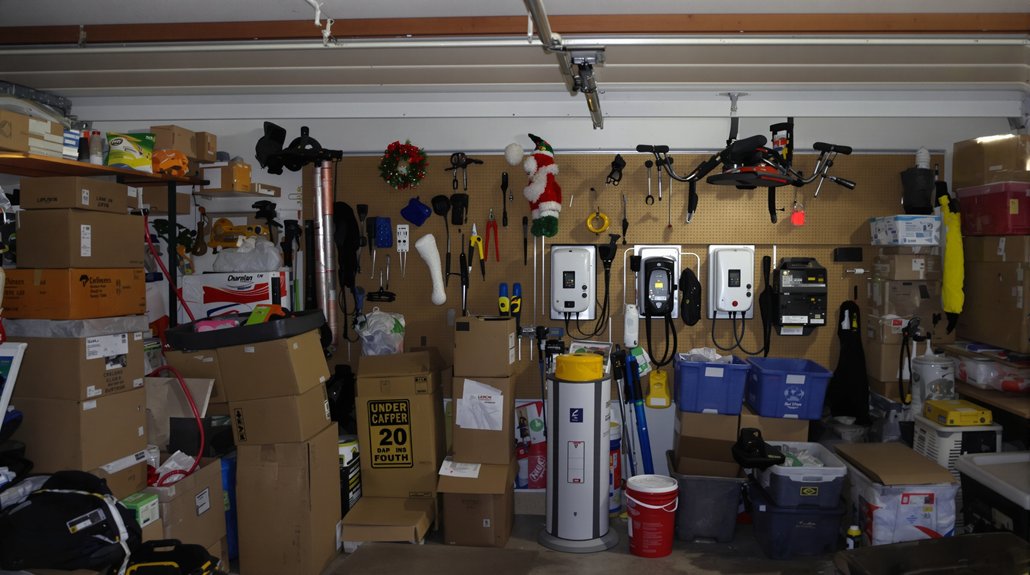

While electric vehicles are becoming more popular across America, many homeowners face an unexpected obstacle to going electric: their cluttered garages. About 25% of two-car garages in the U.S. are so packed with stuff that people can’t park their cars inside. This storage problem is now blocking the country’s shift to electric vehicles.
The garage organization industry is expected to reach $4.43 billion by 2026. This shows how many Americans struggle with garage clutter. But the mess isn’t just annoying anymore. It’s stopping people from installing the charging equipment they’d need for an electric car.
Level 2 chargers need clear wall space and easy access to electrical panels. These areas are often blocked by boxes, tools, and old furniture. Safety codes don’t allow extension cords for EV charging, so homeowners must install chargers directly on walls. When garages are full of stuff, there’s nowhere to put them.
Electric utilities report that crowded garages make installations more complicated, expensive, and time-consuming. Up to 40% of people thinking about buying an electric vehicle say they’re worried about home charging access. Urban households with cluttered garages are less likely to buy EVs that need home charging. Many people use their garages for storage, workshops, or recreation areas instead of parking cars.
New building codes in California and Vancouver require garages in new homes to be ready for EV chargers. California demands pre-wiring for Level 2 chargers. Vancouver says every new single-family home with a garage needs at least one EV-ready parking space. Some jurisdictions now require 20% of spaces in parking structures to be EV Ready, reflecting the growing expectation that electric vehicles will occupy significant portions of parking areas.
But these rules assume garages are actually used for parking cars. They don’t address what happens when garages become storage units. The problem hits single-family homes in crowded cities especially hard. These homeowners often have no choice but to use garage space for things other than cars. Making matters worse, EVs are typically 1,000-2,000 pounds heavier than gas cars due to their batteries, requiring stronger garage floors and more careful parking space planning.
About 15% of home charger installations get delayed or canceled because there isn’t enough space in the garage. As America pushes toward an electric vehicle future, the nation’s cluttered garages have become an unexpected roadblock that nobody saw coming.
References
- https://afdc.energy.gov/laws/11068
- https://afdc.energy.gov/laws/12679
- https://www.wellsconcrete.com/about/news-insights/electric-vehicle-boom-is-parking-garage-infrastructure-ready/
- https://www.energycodes.gov/sites/default/files/2025-01/TechBrief_EV_Charging.pdf
- https://www.structuremag.org/article/electrical-vehicles-and-parking-structures/