
China’s FAW Group says it’s made a major leap in electric vehicle battery technology. The Chinese automaker revealed a new manganese-based semi-solid-state battery. It claims an energy density of 500 Wh/kg at the cell level. That’s roughly double what Tesla’s current battery packs deliver.
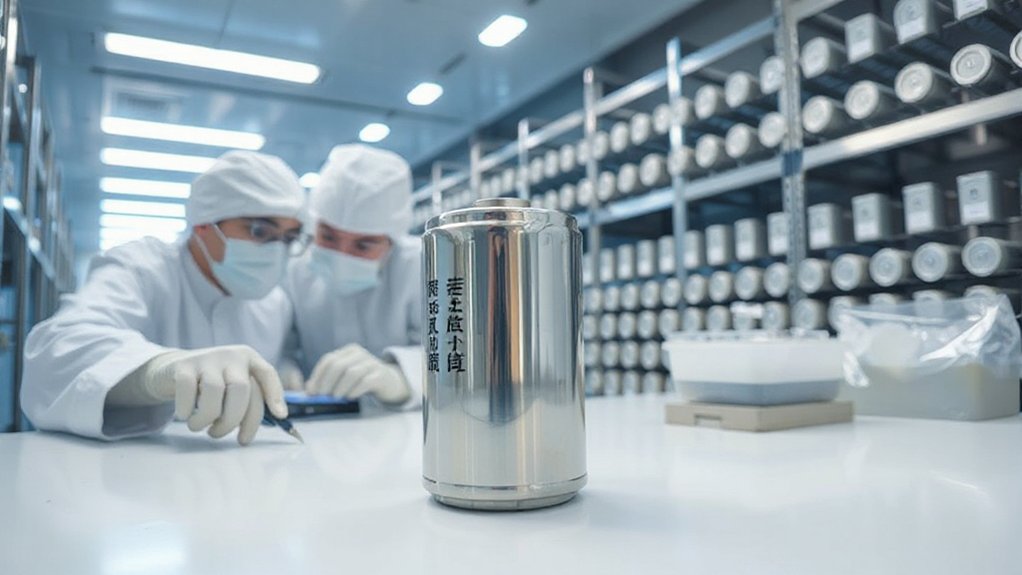
The battery was developed by FAW’s subsidiary CANEB alongside a team from Nankai University. Professor Chen Jun led the university’s research. The battery uses a lithium-manganese cathode and replaces oxygen with fluorine atoms in the electrolyte. FAW says it’s the world’s first lithium-rich manganese solid-liquid hybrid battery installed in a production vehicle.
At the pack level, the system delivers 288 Wh/kg after accounting for cooling, wiring, and safety hardware. The new 142 kWh pack replaces a conventional LFP battery that holds under 70 kWh. FAW says the cost is actually lower than standard LFP batteries because manganese is cheaper and more abundant than nickel.
At the pack level, FAW’s new battery delivers 288 Wh/kg — more than double a conventional LFP pack’s capacity.
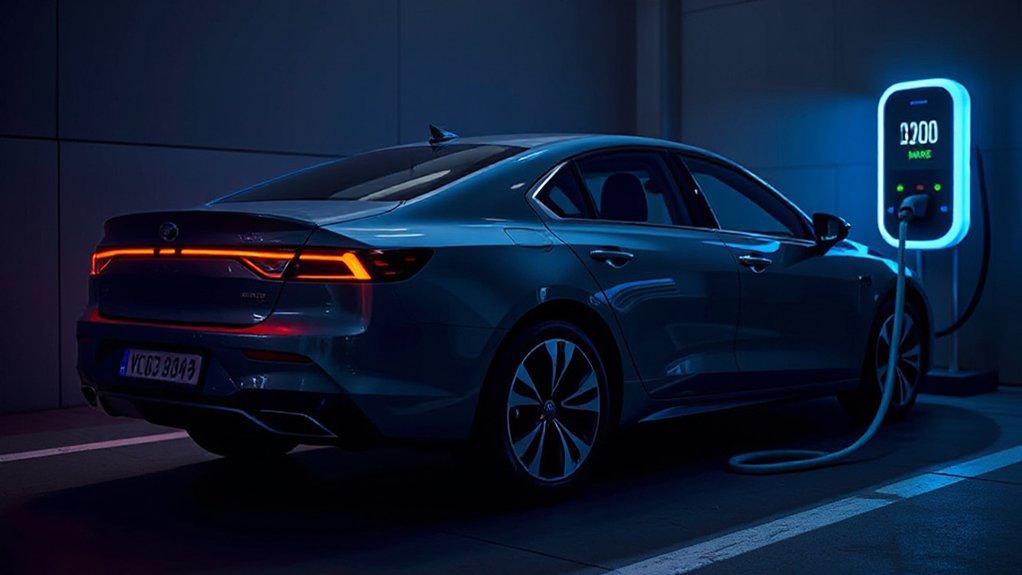
A prototype sedan using this battery achieved over 1,000 km of range under China’s CLTC testing standard. That’s roughly 620 miles in real-world conditions. FAW’s next prototype targets a 200 kWh pack, which could push range close to 700 miles.
Cold weather performance is another claimed strength. The battery reportedly maintains nearly 400 Wh/kg even at -50°C (-58°F). That’s a big deal since most EV batteries lose 40% of their range in extreme cold. FAW also says the battery retains 95% of its capacity after 1,000 charge cycles and can last over 500,000 km.
Range testing in FAW prototypes began on February 10, 2026. CANEB General Manager Lu Tianjun says mass production is expected by the end of 2026. The battery will be used in vehicles under FAW’s Hongqi brand.
Competitors are also working on solid-state batteries. Chery claims 400 Wh/kg with a 1,500 km range potential. Samsung SDI is targeting a 600-mile range by 2027. But FAW’s timeline, if accurate, could put China ahead of Western rivals in bringing this technology to market. The battery also employs an insitu formed lithium negative electrode, a design that improves both safety and long-term cycle life. Solid-state batteries are considered safer overall due to their non-flammable solid electrolytes, which reduce the risk of short circuits caused by dendrite growth and contribute to a longer lifespan than traditional lithium-ion batteries.
References
- https://www.youtube.com/watch?v=OOHt-91dM3w
- https://www.livescience.com/technology/electric-vehicles/chinese-ev-maker-claims-worlds-first-semi-solid-state-ev-battery-with-huge-620-mile-range
- https://cleantechnica.com/2026/02/19/faw-begins-testing-semi-solid-state-battery-with-500-wh-kg-energy-density/
- https://electrek.co/2026/02/27/china-discovers-breakthrough-ev-battery-with-1000-km-range/
- https://oilprice.com/Energy/Energy-General/China-Claims-Cold-Proof-Battery-Breakthrough-That-Could-Double-EV-Range.html
- https://www.youtube.com/watch?v=kjsG2IhoU1k