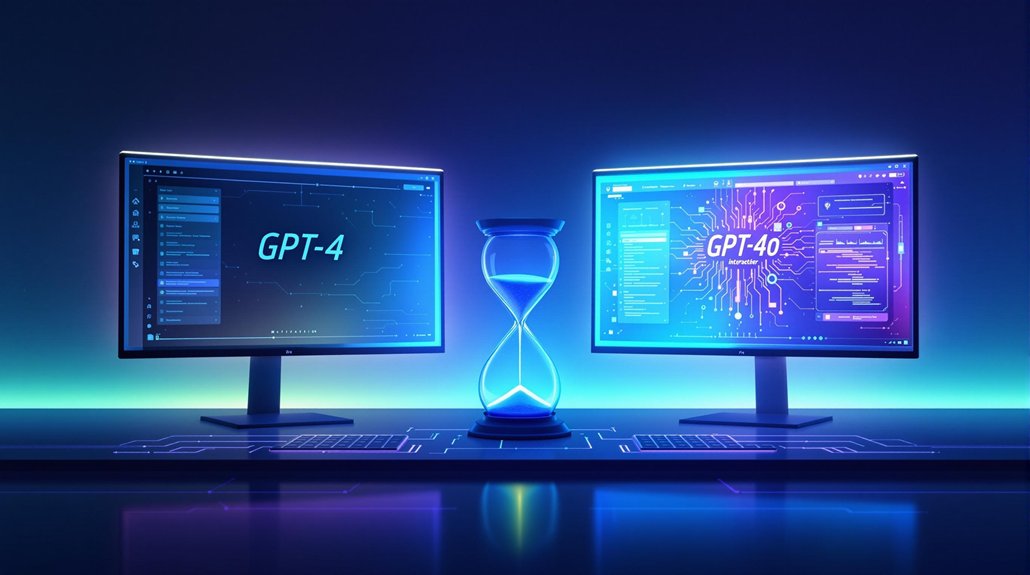
How exactly do today’s most advanced AI systems stack up against each other? The AI landscape is heating up as OpenAI‘s GPT-5.2 and Google’s Gemini 3 compete for market dominance. Each model brings different strengths to the table, creating a fascinating rivalry in the tech world.
OpenAI positions GPT-5.2 as a reasoning powerhouse with impressive long-context capabilities. The model can process nearly one million tokens, making it ideal for tasks involving multiple documents or complex workflows. OpenAI claims their model wins or ties in most knowledge and occupation benchmarks in their public reports.
GPT-5.2 delivers unmatched reasoning and context handling, processing up to a million tokens for complex document analysis.
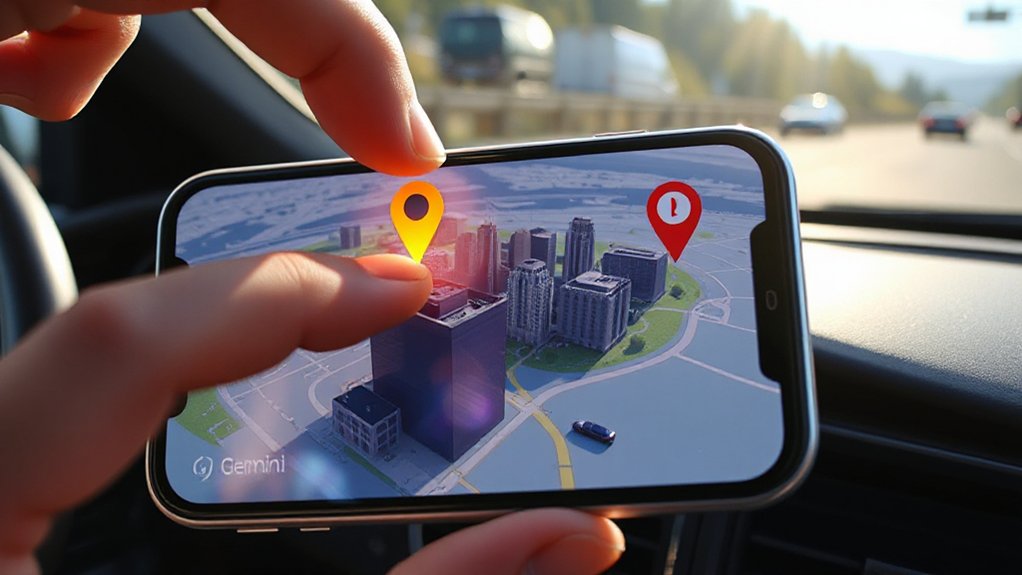
Google takes a different approach with Gemini 3. Their model excels at multimodal tasks, handling text, images, video, and audio natively. Gemini 3 integrates tightly with Google Workspace, giving it an ecosystem advantage that appeals to many users. Pricing is another consideration, with Gemini 3 Pro charging approximately $2 per million input tokens while offering competitive output token rates.
The competition has created distinct market narratives. GPT-5.2 emphasizes “reasoning and long context” while Gemini 3 focuses on “multimodal vision and ecosystem integration.” These differences stem from their technical architecture. GPT-5.2 builds on transformer technology with added refinement layers, while Gemini 3 uses a unified multimodal transformer approach.
Independent reviewers note that GPT-5.2 comes in different variants (Instant, Thinking, Pro), allowing users to balance speed, cost, and capability. Meanwhile, Gemini 3’s smaller context window (under 512k tokens) is offset by its rich multimodal processing abilities. Both models face ongoing security challenges as they collect and process vast amounts of user data across industries.
Benchmark results paint a nuanced picture. While OpenAI reports GPT-5.2 leading in reasoning tasks, third-party evaluations show that practical differences often depend more on prompt design and system interfaces than raw intelligence. GPT-5.2 has been praised for its ability to handle delegated work tasks more effectively than its competitors. Gemini 3 typically performs better on video and vision tasks thanks to its specialized modules.
The real-world performance difference isn’t always clear-cut. Some reviewers find Gemini 3 faster for certain workflows, while GPT-5.2’s variants offer deeper reasoning capabilities when needed. As these models continue to evolve, the competition pushes both companies to improve their offerings.